Does Insurance Cover Unattended Death Cleanup?
Sorting out coverage when the policyholder has died and the home needs cleanup.
An unattended death raises insurance questions that normal claims don't. The policyholder may be the person who died. The home may have sat empty. An executor who never saw the policy must now handle the claim. This page covers which policies might help and which exclusions tend to come up. It explains how to document the loss and what to try after a denial.
Get an email reply about unattended death cleanup
Send a short message to the follow-up inbox. A coordinator can reply by email. This form does not send emergency help; call 911 first if anyone is in danger.
What published figures say about coverage and payment
- 57%
57% of FEP claimants had not known about that benefit beforehand.
Read with care: Historical benefit-service experience, not current entitlement; entirely proxy-completed applications excluded.
Source: UK Department for Work and Pensions et al. (2021)765 UK Bereavement Support Payment (BSP) and 764 Funeral Expenses Payment (FEP) claimants; January 2021 interviews.
- 460
460 of 666 parents reported viewing their child's body in a formal setting.
Read with care: Observational; no causal effect established; item denominators differ.
Source: Omerov et al. (2014)666 Swedish suicide-bereaved parents; surveyed 2–5 years after loss.
- 49
Of 49 who chose to view or identify, 35 described it as the right decision; nine had mixed feelings.
Read with care: Purposeful sample; themes are experiences, not population frequencies.
Source: Chapple et al. (2010)80 UK adults bereaved by suicide or other traumatic death; interviews 2007–2008.
- $200-$300 per hour
Fixr's 2025 guide lists unattended death cleanup at $200 to $300 per hour and hoarding cleanup at $25 to $150 per hour or about $1,000 per day.
Read with care: Fixr figures are editorial cost estimates compiled from contractor and industry data, not a statistical survey of completed jobs; local prices vary widely.
Source: Fixr (2025)United States, residential biohazard cleanup estimates, January 2025
- 4-15%
The American Psychiatric Association estimates that 4% to 15% of bereaved adults experience prolonged grief disorder, diagnosable 12 months after a loss.
Read with care: Range reflects differing study populations and criteria.
Source: American Psychiatric Association (2024)Bereaved adults, APA patient information
- every 3 years
Hazmat employees must receive recurrent DOT training at least once every three years.
Read with care: Records must be kept for the prior three years plus 90 days after employment ends.
Source: DOT PHMSA (49 CFR via Cornell LII) (2024)United States, all hazmat employees
These figures are public research and agency data, not this network's own job records. Keep each number with its population, year and limits; none of them predicts cost, timing or outcome at a specific property.
Which policies may respond after an unattended death?
If the person who died owned the home, their homeowners policy is often the first place to look. Many homeowners policies stay in force for a time after the named policyholder dies. The estate's representative can often step in to handle claims. Some insurers treat contamination from a body as sudden, accidental damage to the house. Others see the loss differently. The exact wording decides the answer.
When the person rented, the landlord's policy usually covers the building. The tenant's renters policy, if there was one, may cover personal belongings. In assisted living or other managed buildings, the facility's business property coverage could be involved. If a death happened in a car, an auto policy's comprehensive coverage may apply. Each policy has its own rules for when you must report a loss, so find all of them early.
- The owner's homeowners policy, often handled by the estate
- Landlord or dwelling policy for a rented unit
- The tenant's renters policy for belongings
- Business property coverage for care homes or managed buildings
- Comprehensive auto coverage for a car
How does the policyholder's death affect the claim?
When the named policyholder dies, the executor or personal representative usually needs to tell the insurer. They must show proof of their authority and confirm who will act for the estate. Until that authority exists, insurers may only speak in general terms. Family members can still report the loss and ask what papers will be needed. That saves time later.
It also helps to find the declarations page, which is the policy's summary page. Find the full policy and any recent renewal notices too. These may be in a file cabinet, an email account, or with the insurance agent. If you can't find a copy, ask the insurer to send a certified one. Knowing the exact policy form and any add-ons lets you and the adjuster start from the same place instead of guessing.
Which exclusions often come up with unattended death claims?
Vacancy rules are a frequent issue. Many property policies limit or exclude some losses when a home has been empty for a set period. An insurer may argue that the home was in effect empty during the time before the person was found. How this applies depends on the policy wording and the facts. It is worth asking the insurer to explain its view in writing.
Other exclusions can involve slow damage, wear and tear, pest or insect damage, mold, or contamination and pollution wording. Odor alone is sometimes treated differently from physical damage. Policies also have deductibles and lower caps for certain kinds of loss, called sublimits. None of these automatically defeats a claim. But knowing them helps you gather the right proof and ask focused questions when the insurer answers.
How should the estate document an unattended death claim?
Records should start before cleanup disturbs anything. Ask the provider to take careful photos of each affected room. They should include close-ups of stained or soaked areas and wider shots that show the setting. You don't need to see the scene yourself. Keep the death certificate, the release from the medical examiner or coroner, and your letters of authority from the probate court together in one place.
Ask for an itemized estimate before work starts. Afterward, ask for a detailed closeout package. It should have photos, moisture readings, a list of removed materials, products used, and disposal records. Keep receipts for related costs like storage, utilities, and lock changes. Write down the date, name, and content of each call with the insurer. Organized records make it easier for an adjuster to review the loss. They also help you respond if part of the claim is questioned.
How can you work productively with the adjuster?
The adjuster may want to inspect the property, look at photos, or talk with the cleanup company. Inviting the provider to take part often helps. They can explain why subfloor removal or long odor treatment was needed. Share papers quickly and answer questions honestly. If you don't know something, say so instead of guessing, and offer to find out. Patience on both sides usually helps.
If the adjuster disputes part of the work, ask for the reason in writing, along with the exact policy wording. Sometimes more photos or moisture readings settle the question. Ask how payment will be sent, whether the provider can be paid directly, and how the deductible applies. Keep talks calm and factual. After important phone calls, send a short written summary so everyone has the same record.
What can you do if the insurer denies or reduces the claim?
Start by asking for the decision in writing, with the exact policy terms it relies on. Compare the explanation with the policy and your records. Say the denial relies on vacancy. Then gather proof of how recently the person was living in the home, like mail, bank activity, or statements from neighbors. Send that through the insurer's process for reconsideration or appeal.
If the insurer's own review doesn't settle it, you can often file a complaint with the state insurance department. Some executors also talk with a licensed public adjuster or a lawyer who handles insurance disputes. This is more common when a lot of money is involved. Deadlines may apply to appeals and lawsuits. Rules vary by state and county; verify with the local authority or your state insurance regulator before any deadline passes.
How should you handle a claim for personal belongings?
Belongings are often handled apart from the building. Before anything is thrown out, ask the provider to photograph and list items that can't be saved. Where possible, they should note each item's rough age and condition. That list supports a claim for belongings under a homeowners or renters policy. It also helps the executor account for estate assets. Items with sentimental value may be worth trying to clean, even if insurance won't pay for it.
Some policies first pay the value of belongings after wear and age are taken off, called depreciated value. They pay the rest of the replacement cost only after items are actually replaced. Other policies pay differently. Ask the insurer which method applies and what proof it needs. If belongings are split among heirs, keep a record of who got what. That keeps the estate's accounting clear and makes later questions easier to answer.
Which other funding sources might help pay for cleanup?
The estate itself is often the main other payer. An executor can usually pay needed costs to protect and preserve estate property. Cleaning a home the estate plans to sell or return to a landlord often fits that description. Money from other assets, including funds that pass through the estate, may cover costs insurance doesn't. Keep careful records of every payment.
Victim compensation programs usually apply only when a crime is involved. So they are usually not available for a natural or accidental death. In some counties, a public administrator steps in when no family member can act. Local public health or social service agencies may offer advice in unusual cases. Landlords sometimes cover costs through their own insurance. Rules vary by state and county; verify with the local authority before relying on any source.
Keep the claim organized
Unattended Death Cleanup insurance claim organizer
A checklist to keep the claim orderly. It stores nothing on our servers; copy the summary to your own notes.
0 of 18 steps recorded (0%)
Print or paste the summary into your own records. Coverage is the carrier's decision under the policy; keep every answer in writing.
Open the full tool page for a worked example and more answers.
What research has found
Findings from published studies of people and properties in situations like this one. They describe what researchers observed in a specific group; they are not predictions for your case.
Encountering the body at the site was not significantly associated with more nightmares or intrusive memories.
BSP claimants with disabilities used the helpline more and the website less than those without disabilities.
Insurance questions about unattended death cleanup
Can I file a claim on my late parent's homeowners policy?
Usually, the person who can act on the policy is the executor or personal representative of the estate. If that is you, tell the insurer what happened. Send proof of your authority when you have it. If someone else holds that role, work with them. You can still call the insurer to report the loss and ask what will be needed. That helps the claim move forward once authority is in place.
Does homeowners insurance treat decomposition as sudden damage?
Some insurers do, and some don't. The answer depends on the policy wording, the facts of the death, and how the insurer reads them. Because there's no single answer, the most useful step is to open a claim and send full records. Ask the insurer to explain its position in writing. A provider's photos and readings can help show the physical damage clearly.
What if the home was considered vacant?
Vacancy clauses can limit coverage for some losses when a home has been empty for a set time. Whether the clause applies depends on the policy's definitions and how long the home was truly empty. Gather proof that someone lived there recently, like mail, utility use, or neighbor statements. Ask the insurer to point to the exact wording it relies on. A professional who handles insurance disputes can help you understand it.
Will the landlord's insurance pay for cleanup in a rental?
The landlord's policy often covers damage to the building itself, though whether it pays depends on its terms. Depending on the lease and local rules, the landlord may also seek payment from the tenant's estate. Personal belongings are usually the estate's job or may fall under a renters policy. Talk with the landlord early to sort out who is arranging cleanup and how costs will be split.
Does life insurance cover cleanup costs?
Life insurance doesn't usually pay a cleanup provider directly. But beneficiaries get the money, and some families choose to use part of it for cleanup or other costs. If the money goes to the estate, the executor may use it to pay estate debts. Whether and how that money is used is a personal and legal choice. Think about talking with an estate lawyer.
Should cleanup wait until the insurer inspects?
Ask the insurer right away whether it wants to inspect first. Many will send an adjuster quickly or rely on the provider's photos. Leaving the scene untreated for long can make damage and odor worse, so make the urgency clear. Make sure the provider carefully records conditions before any materials are removed. That helps preserve proof of the loss if the inspection happens later.
What records will the insurer probably ask for?
Expect requests for the death certificate or other proof of death and letters showing the executor's authority. They will also want the provider's estimate and closeout records, photos, and receipts for related costs. The insurer may ask whether someone was living in the home and when the death was found. Keeping these items in one folder makes answers faster. It also eases the stress of hunting for papers during an already hard time.
What other visitors said
Every count is a real visitor vote; nothing is seeded or padded. One vote per poll per device, and you can change your answer.
As a landlord, how long would you wait for the tenant's family before arranging cleanup yourself?
Which part of an unattended death project would you find hardest to manage?
More on unattended death cleanup
Unattended Death Cleanup services
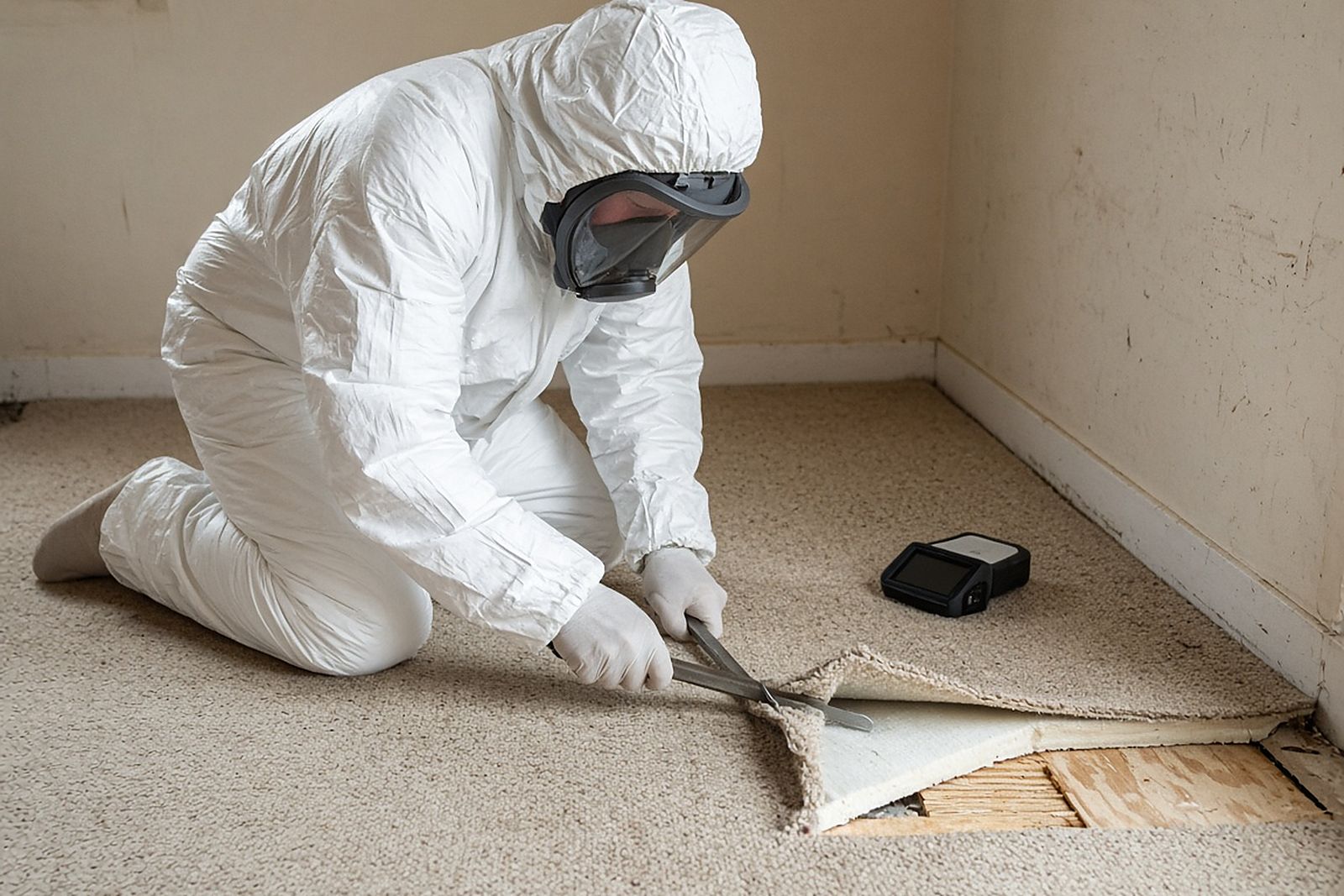
Learn what cleanup after a late discovery involves. It covers tracing how far fluid soaked into the subfloor, odor treatment, listing belongings, and move-back-in records.
Costs explained
What drives the price, published cost ranges, and how to read a written quote line by line.
Planning tools
Six tools for landlords, executors, and families caring for a property after an unattended death. They help from the first day through waste records and claims.
Community polls
See how other landlords, executors, and relatives handled belongings, talking with tenants, telling buyers, and subfloor choices. Share your own view without giving your name.
Knowledge quiz
Test what you know about odor signs, who is in charge, closing off rooms in shared buildings, taking out soaked materials, waste records, and final sign-off papers.
Articles and resources
Longer reads on handling an estate from far away, working with tenants after a death in the building, and what honest cleanup after a death looks like.
Field guides
Guides for landlords and executors. They cover access, who is in charge, telling the insurer, how long to hold belongings, and when people can safely move back in.
City guides
Find cleanup providers by city and state. Then check their licenses, waste handling, and how they inspect the subfloor yourself before you approve any work.