Unattended Death Cleanup: Choosing a Company
Evidence to request from unattended death cleanup providers: business identity, applicable training, insurance, scope assumptions, waste routing, verification, availability, and responsibility for subcontractors.
Posts here help you choose a cleanup provider based on how it works and whether it stands behind its work, not on its ads. You will find question lists for the first call. You will find warning signs, such as a provider eager to cover the smell before checking the floor. You will also find help on training, records, and licenses. Articles compare local and national providers. They explain how to confirm the hauler that will carry the debris away. Other posts show how to tell if a provider will really check the subfloor and a nearby unit. They cover what a useful final job file includes. And they explain why a name from a funeral home or coroner still needs your own checks.
Get an email reply about unattended death cleanup
Send a short message to the follow-up inbox. A coordinator can reply by email. This form does not send emergency help; call 911 first if anyone is in danger.
Choosing with care matters. You may be hiring for a home you have never seen, for someone who cannot speak for themselves, while neighbors or other tenants wait. The right company explains how it will trace fluids. It explains how it treats belongings that belong to the estate, and what records it will give you. Knowing what to ask helps you compare providers fairly. It also gives you words to turn down a rushed offer without feeling guilty. Several posts also show how to check companies by phone and email when you live far away. That way, distance does not force you to take the first offer that comes along.
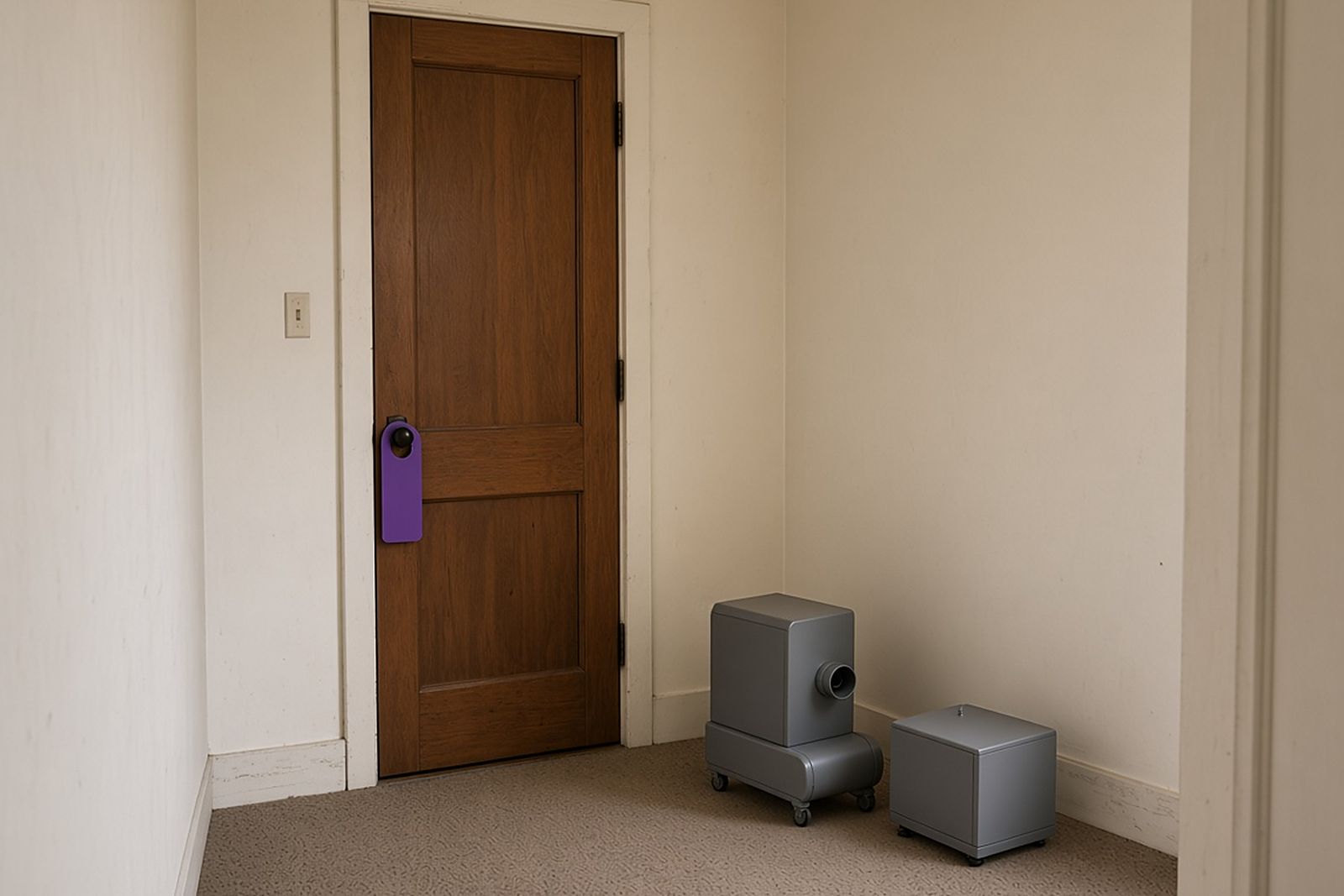
10 Questions to Ask Before Hiring an Unattended Death Cleanup Company
Ten questions for executors, landlords and families hiring an unattended death cleanup company, from subfloor and odor plans to remote updates and estate items.
Before hiring an unattended death cleanup company, ask about their experience with delayed discovery, how they find hidden fluid spread, how they remove and verify odor, whether they treat insects, how they sort documents and valuables for the estate, how they update family members who live far away, who signs the contract, how changes are approved, how waste is documented and how they coordinate with landlords and neighbors.

Red Flags When Hiring Unattended Death Cleanup Services
Warning signs for families, executors and landlords hiring unattended death cleanup: odor masking, sealed-over flooring, lost estate papers and remote pressure.
Red flags when hiring unattended death cleanup include odor-free guarantees without a plan to remove the source, proposals to seal or paint over contaminated flooring, quotes given without checking subfloor or the unit below, no plan for insects, careless handling of estate documents and valuables, poor communication with relatives who live far away, and missing waste records or insurance proof.
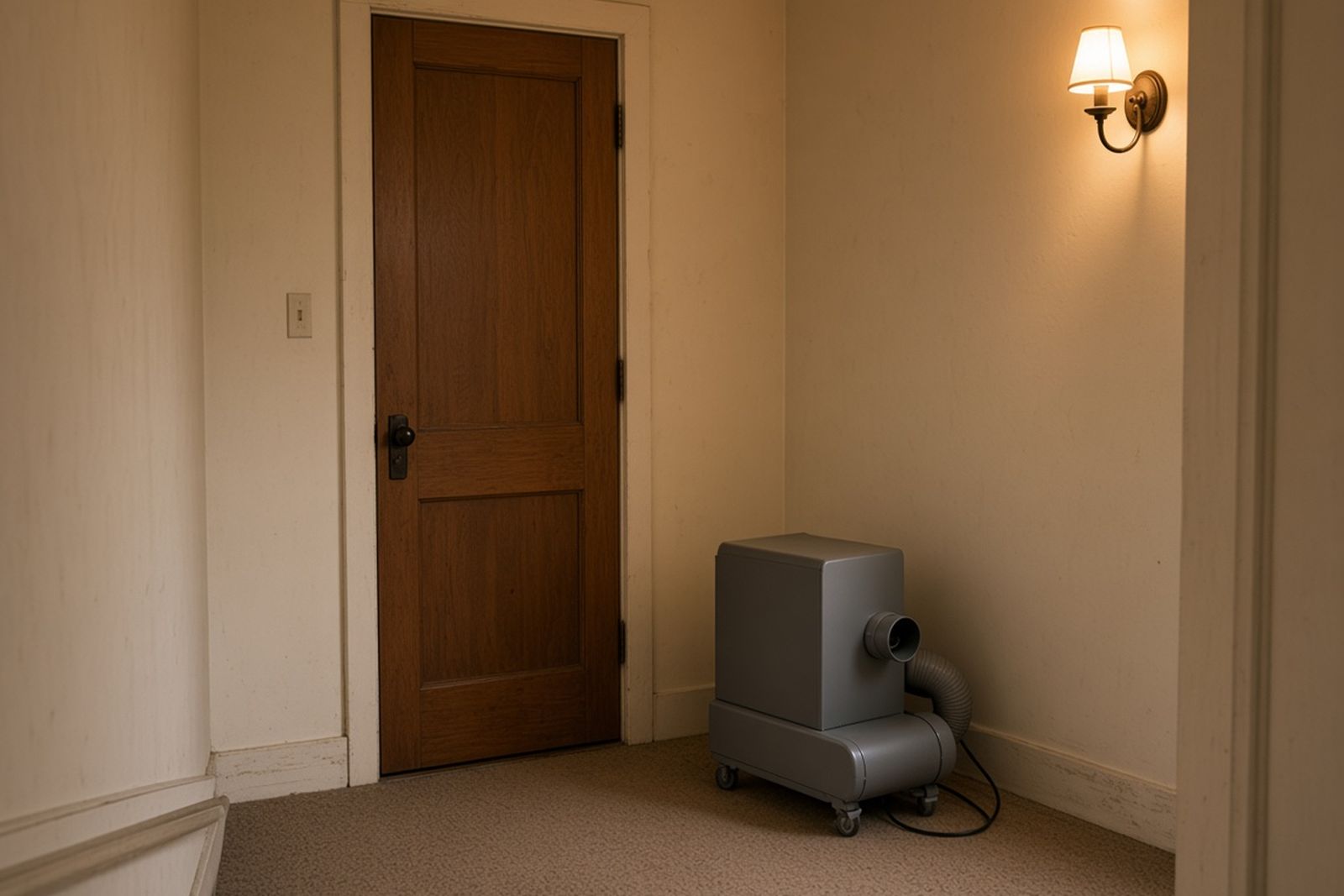
Training, Documentation, and Credentials for Unattended Death Cleanup
Credentials that matter for unattended death cleanup: OSHA training, odor and building skills, pest licenses, handling estate items and records for heirs far away.
For unattended death cleanup, these are the credentials worth checking. Look for current training on bloodborne germs and respirator fit testing. Ask for proof of insurance and any required medical waste registration. Look for a licensed partner for insect treatment and any contractor license needed to remove flooring or drywall. The company should have clear steps for estate items. It should keep detailed records that executors, landlords and relatives far away can rely on when they cannot visit.
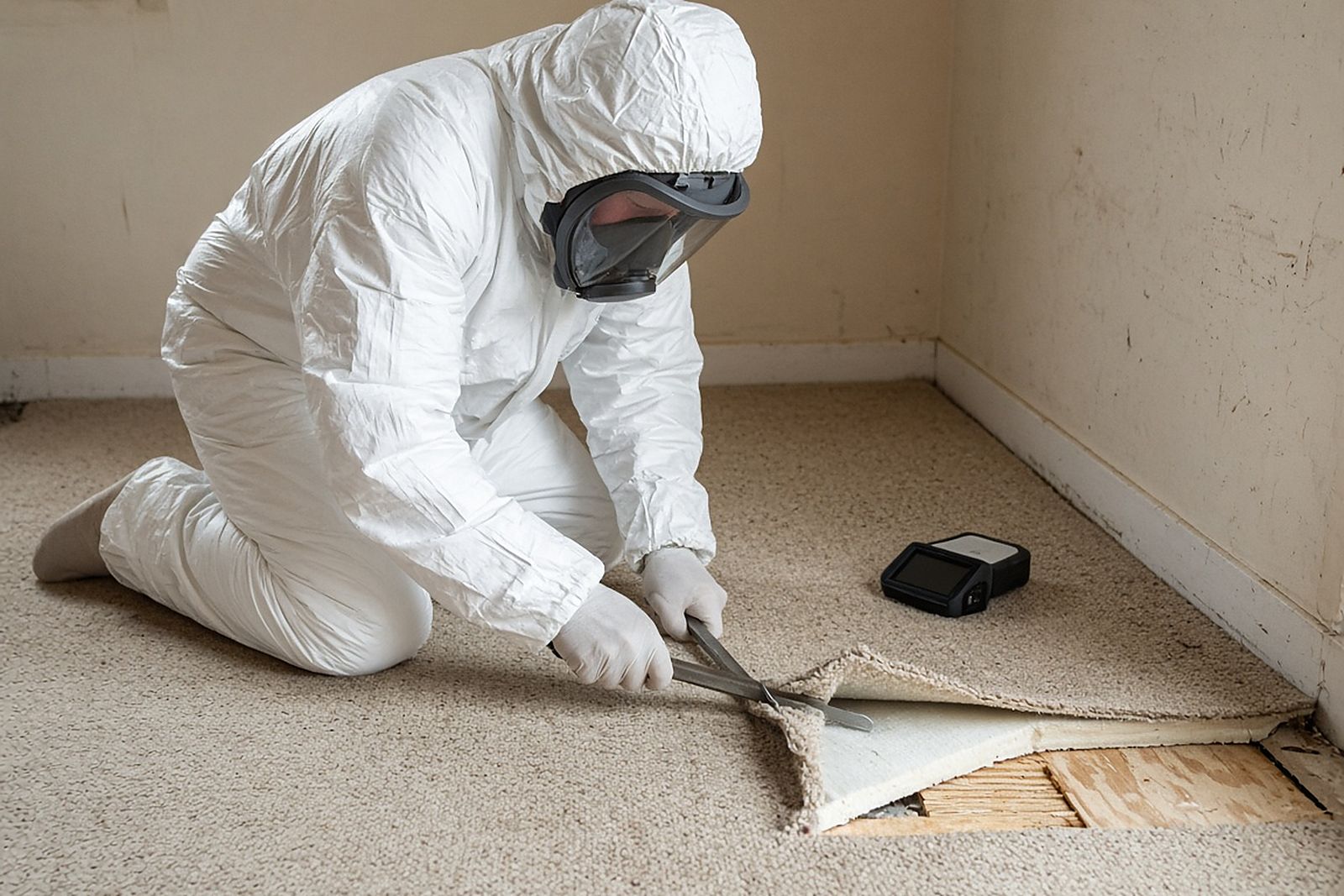
How to Compare Local and National Unattended Death Cleanup Providers
Choosing an unattended death cleanup provider from afar: comparing local firms, national brands and referral lines on crews, odor follow-up and logistics.
When comparing local and national unattended death cleanup providers, focus on who will actually do the work, whether they can return for odor checks, how they coordinate with landlords and distant executors, how they handle belongings and how clearly they document the job. Size matters less than transparency. Ask every company the same questions, and be wary of referral lines that cannot name the crew.
Sourced figures on choosing a company
- 2,040
Nearly 2,040 medical examiner and coroner offices operated in the United States in 2018, and only about 17% were accredited.
Read with care: Accreditation status may have changed since 2018.
Source: Bureau of Justice Statistics (2018)United States, 2018 census of ME/C offices
- 34,696
Federal OSHA conducted 34,696 inspections in fiscal year 2024 and has roughly one compliance officer for every 70,000 workers.
Read with care: Excludes inspections by state-plan agencies.
Source: OSHA (2024)United States, federal OSHA, FY2024
- 10 square feet
EPA says moldy areas smaller than about 10 square feet can usually be handled by the homeowner, while larger areas warrant professional guidance.
Read with care: Applies to mold; contaminated sewage or biohazard materials are treated differently.
Source: US EPA (2026)Residential guidance, United States
These figures are public research and agency data, not this network's own job records. Keep each number with its population, year and limits; none of them predicts cost, timing or outcome at a specific property.
What research has found
Findings from published studies of people and properties in situations like this one. They describe what researchers observed in a specific group; they are not predictions for your case.
Some viewed to confirm that identification was correct.
Rehousing away from established contacts could increase isolation.
Choosing a Company: common questions
What should I ask a provider about belongings in the home?
Ask how it separates soiled items from those that can be saved. Ask whether it will photograph and list what it removes. Ask whether it will box and store clean items for the estate. Also ask how it handles papers, jewelry, and valuables it finds. Get the answers in writing before any work starts.
Is a company that offers a flat price over the phone a red flag?
It can be. The work depends on what is under the floor. So a firm price given without an inspection may be padded, or it may leave room for changes later. A provider can fairly give a range by phone. But it should explain what it needs to see before it commits to a written scope.
How can I compare a local company with a national brand?
Ask each one who will really do the work, who holds the contract, who carries the insurance, and which hauler takes the debris. A national brand may send the job to a local partner. That can be fine if it is clear who is responsible. Compare their answers on checking the floor, keeping records, and handling the estate's property.
How quickly should I expect a provider to return my first call?
Many providers answer or call back quickly because they know families are dealing with urgent problems. What matters more than speed is whether they listen, ask sensible questions about the property, and explain what happens next. If a company is hard to reach before you hire it, think about how contact might go during the job. That matters even more if you are handling things from far away.
Should the provider ask me about the property before visiting?
Yes. A careful provider will ask about the type of property and how long the person may have gone unfound, if known. It will ask about the type of flooring, whether there are neighbors or shared walls, whether pets were there, and who is in charge. These questions help them prepare and give a more accurate plan. A company that asks nothing may not be planning carefully.
Is it acceptable to choose a provider mainly because they were kind?
Kindness matters in this work. A provider who treats you and the person's memory with respect makes a hard time easier. Still, check that they also meet the basics. Those are training, insurance, a written scope, a plan for hidden damage, waste records, and steps for handling belongings. The best choice combines kindness with skill, and it is fair to expect both.
What should I do if I regret my choice partway through the job?
Write down your concerns and talk them over with the provider. Ask for specific changes. Many problems can be fixed once they are named. If the concerns are serious and not fixed, review the contract's terms for ending it. Talk with the estate's lawyer or the property owner. Get the provider's records of the work done so far before you switch companies.
Related community polls
Every count is a real visitor vote; nothing is seeded or padded. One vote per poll per device, and you can change your answer.
As a landlord, how long would you wait for the tenant's family before arranging cleanup yourself?
Which part of an unattended death project would you find hardest to manage?
More on unattended death cleanup
Unattended Death Cleanup services
Learn what cleanup after a late discovery involves. It covers tracing how far fluid soaked into the subfloor, odor treatment, listing belongings, and move-back-in records.
Costs explained
What drives the price, published cost ranges, and how to read a written quote line by line.
Insurance and payment
Which policies may respond, how to document a claim, and what to do if coverage is denied.
Planning tools
Six tools for landlords, executors, and families caring for a property after an unattended death. They help from the first day through waste records and claims.
Community polls
See how other landlords, executors, and relatives handled belongings, talking with tenants, telling buyers, and subfloor choices. Share your own view without giving your name.
Knowledge quiz
Test what you know about odor signs, who is in charge, closing off rooms in shared buildings, taking out soaked materials, waste records, and final sign-off papers.
Field guides
Guides for landlords and executors. They cover access, who is in charge, telling the insurer, how long to hold belongings, and when people can safely move back in.
City guides
Find cleanup providers by city and state. Then check their licenses, waste handling, and how they inspect the subfloor yourself before you approve any work.