Unattended Death Cleanup: Safety
Hazard-assessment articles for unattended death cleanup, including when bloodborne, chemical, respiratory, sharps, structural, or waste controls may apply. PPE and containment must follow the actual exposure—not a universal checklist.
Safety posts cover the dangers of going into a home after a late discovery. They explain why doing the cleanup yourself is a poor fit here. They cover which risks a provider should check before work begins. They also explain how protective gear is chosen for body fluids, odor chemicals in the air, and insects. Articles cover hidden dangers that often turn up in these homes, such as medicines, needles, oxygen equipment, spoiled food, and pets that need care. Other posts describe how odor chemicals and insects can travel into rooms that look untouched. They explain why a provider should check those rooms before anyone treats them as safe for sorting belongings.
Get an email reply about unattended death cleanup
Send a short message to the follow-up inbox. A coordinator can reply by email. This form does not send emergency help; call 911 first if anyone is in danger.
This category matters because the people closest to the property often feel pressure to start. That may be a neighbor with a key, a maintenance worker, or a grieving grown child. Pulling up carpet or bagging bedding without protection can expose you to germs. It can spread the mess to clean rooms. It can also destroy proof an insurer or estate might need. Learning which steps are reasonable, and which should wait, helps you protect yourself and the property until trained workers take over. Several posts also explain how to get an urgent item without walking through the affected room. That might be a will, a phone, or a pet carrier. They also explain why you should change clothes and wash as soon as you leave.
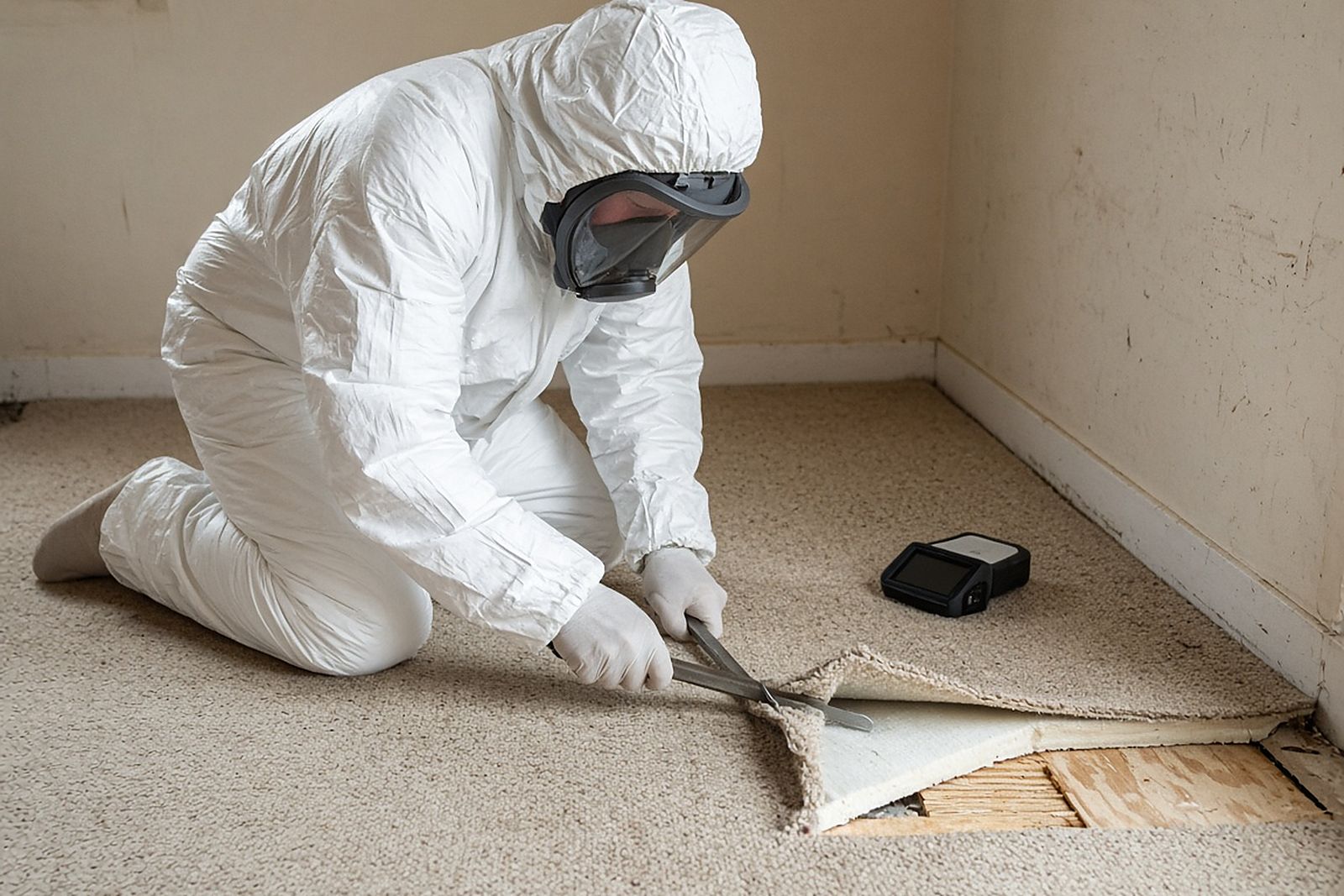
DIY vs Professional Unattended Death Cleanup: The Critical Differences
Why unattended death cleanup is rarely a DIY job: fluids in subfloor, insects, heavy odor, respiratory risk, shared walls, estate records and emotional toll.
After an unattended death, the damage is usually deeper than it looks. Fluids reach subfloor and framing, insects spread, and odor settles into walls and ductwork. Household cleaning and odor sprays cannot reach those sources, and doing the work exposes you to pathogens, bacteria and strong vapors. Professionals remove contaminated structure, control insects and odor at the source, handle waste properly and document the work for the estate.
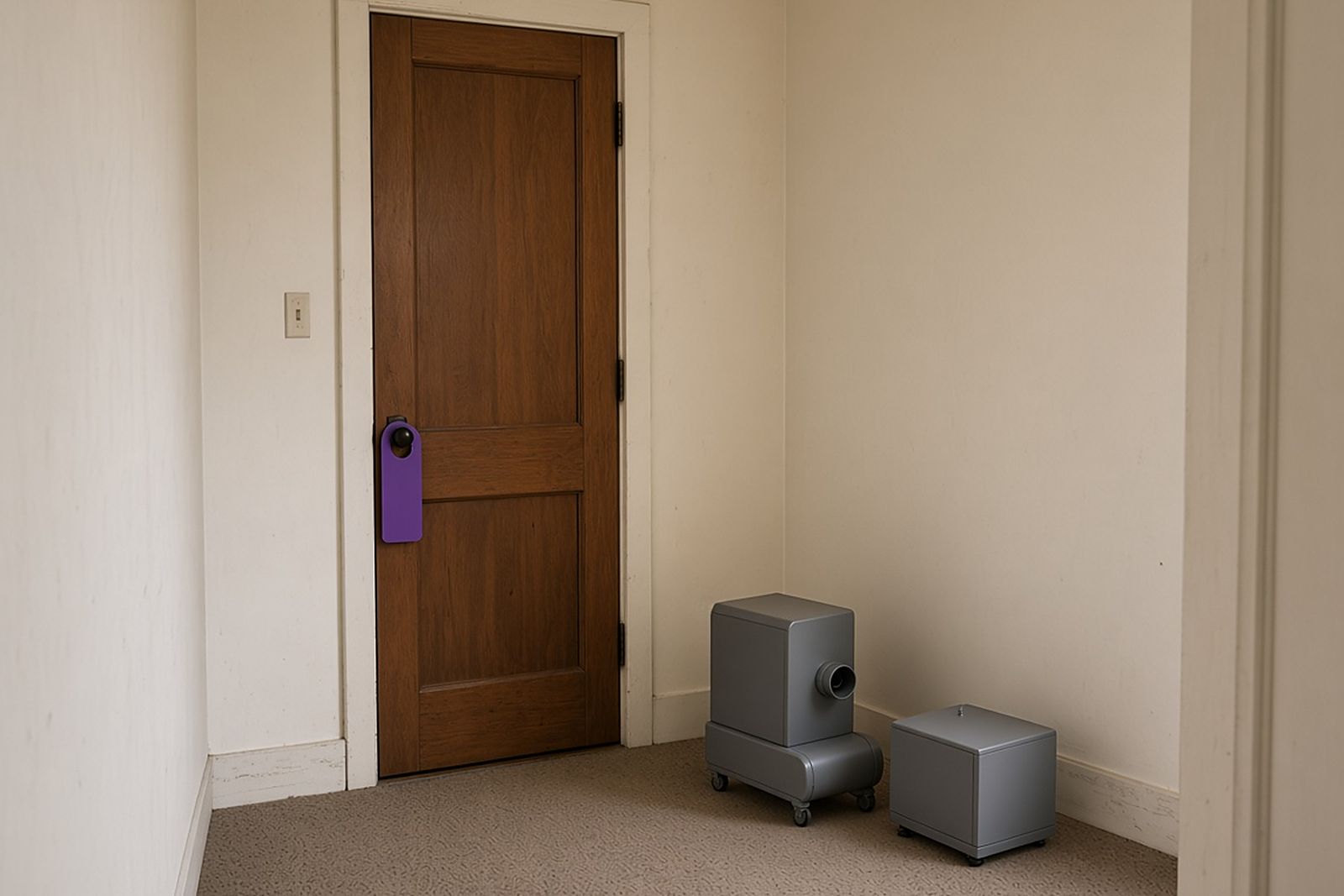
10 Unattended Death Cleanup Safety Risks to Assess Before Work Begins
Ten unattended death cleanup risks to check before entry: pathogens, vapors, weak subfloor, insects, mold, medical sharps, clutter, utilities and neighbors.
Before unattended death cleanup begins, someone trained should assess ten risks: pathogens and bacteria, strong odor vapors, subfloor weakened by saturation, insects and pests, mold and moisture, medical sharps, clutter and heavy contents, utilities and appliances left running, contamination reaching neighboring units, and the emotional weight on family members. Each should be identified in the walkthrough and matched to a clear control.
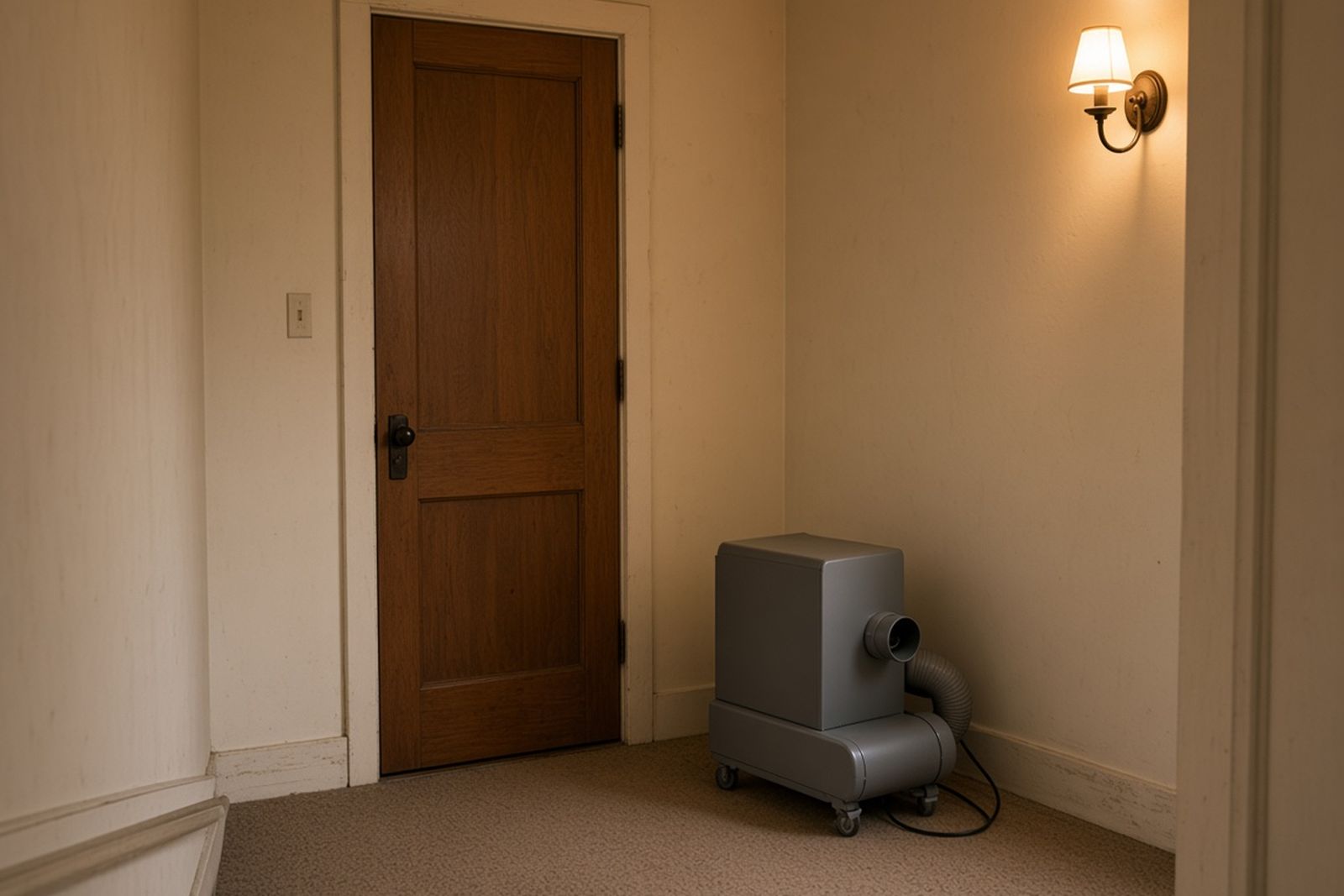
PPE Planning for Unattended Death Cleanup: Start With the Hazard Assessment
How unattended death cleanup crews plan PPE from a hazard assessment, with extra focus on respirators, fluid-resistant suits, insects and heat in closed homes.
PPE for unattended death cleanup is chosen after a written hazard assessment. Because decomposition may have continued for days or weeks, crews evaluate odor and air quality, how far fluids have moved into flooring and furniture, insect activity, heat, clutter and the chemicals they will use. Those findings decide respirator type and cartridges, suit and glove layers, eye protection, footwear and work-rest schedules.
Sourced figures on safety
- 78.4 per 100,000
The age-adjusted fall death rate among U.S. adults 65 and older rose 21% from 64.7 per 100,000 in 2018 to 78.4 in 2024.
Read with care: Rates, not counts; place of fall is not specified.
Source: CDC Injury Center (2024)United States, adults 65+, 2018-2024
- 79,384
U.S. drug overdose deaths fell to 79,384 in 2024 from 105,007 in 2023, a 26.2% decline; adults 35-44 had the highest rate.
Read with care: Overdose deaths are often discovered at home but the report does not give place of death.
Source: CDC National Center for Health Statistics (2024)United States, 2024 final mortality data
- 3,072,666
The United States recorded 3,072,666 deaths in 2024, a rate of 903.4 per 100,000 population.
Read with care: Total deaths; the share occurring at home unattended is not published nationally.
Source: CDC National Center for Health Statistics (2024)United States, 2024, all causes
These figures are public research and agency data, not this network's own job records. Keep each number with its population, year and limits; none of them predicts cost, timing or outcome at a specific property.
What research has found
Findings from published studies of people and properties in situations like this one. They describe what researchers observed in a specific group; they are not predictions for your case.
Survivors who sought mental-health support reported more compassionate early communication.
Images of the encounter could persist into later bereavement.
Safety: common questions
Is the air inside the home dangerous to breathe before cleanup?
The odor itself is unpleasant and can cause headaches or nausea. The space may also hold particles in the air, mold, or insects. Going in briefly for an urgent reason is different from spending time inside. If you must go in, keep it short and stay out of the affected rooms. Let the provider decide what breathing protection its crew needs.
What protective gear should I expect the workers to wear?
Expect throw-away coveralls, gloves, boot covers, eye protection, and breathing protection. The crew picks the gear after checking the dangers on site. The level can change as the job moves from removal to cleaning. Safety posts explain why providers plan gear for each scene instead of using one standard kit. They also tell you what to ask if the protection looks too light.
Does an animal that stayed in the home after the death need medical care?
Yes, it is a good idea. A pet that was alone with the person who died may be dehydrated, underfed, or stressed. It may also have touched soiled areas. Take it to a vet, explain what happened, and ask about bathing and any follow-up care. Local animal services can help if no family member can take the pet.
Is it safe to stand outside the home while the crew works?
Generally yes, as long as you stay away from doors, windows, and areas where waste is being loaded. Odor may drift outside, and equipment or bags may be moved through the driveway. Ask the crew where it is best to wait. If you have respiratory conditions or feel unwell from the odor, wait farther away or in a car with windows closed.
How can I keep children and pets safe while the home is being cleaned?
Keep them away from the property until the provider confirms it is ready for visitors. If the home is shared, arrange for them to stay elsewhere during the work. Pets that were in the home should be checked by a veterinarian. Once the work is finished, a final walkthrough by an adult can confirm the space is ready before children or pets return.
What should I do if I touched something in the home before learning it was contaminated?
Wash your hands and any exposed skin with soap and water, and change and launder your clothes separately. If you had direct contact with fluids through a cut, your eyes, or mouth, contact your doctor for advice. Tell the provider what you touched so they can include it in their cleanup. Most brief contact is manageable with prompt washing.
Can the odor alone make me sick?
The odor can cause headaches, nausea, or other discomfort in some people. It may be very hard on people with breathing problems. It is usually a sign that germs are present, not a danger on its own. Still, it is best to avoid long exposure. Leave the area if you feel unwell, and let professionals deal with the source. Talk to your doctor if symptoms go on.
Related community polls
Every count is a real visitor vote; nothing is seeded or padded. One vote per poll per device, and you can change your answer.
As a landlord, how long would you wait for the tenant's family before arranging cleanup yourself?
Which part of an unattended death project would you find hardest to manage?
More on unattended death cleanup
Unattended Death Cleanup services
Learn what cleanup after a late discovery involves. It covers tracing how far fluid soaked into the subfloor, odor treatment, listing belongings, and move-back-in records.
Costs explained
What drives the price, published cost ranges, and how to read a written quote line by line.
Insurance and payment
Which policies may respond, how to document a claim, and what to do if coverage is denied.
Planning tools
Six tools for landlords, executors, and families caring for a property after an unattended death. They help from the first day through waste records and claims.
Community polls
See how other landlords, executors, and relatives handled belongings, talking with tenants, telling buyers, and subfloor choices. Share your own view without giving your name.
Knowledge quiz
Test what you know about odor signs, who is in charge, closing off rooms in shared buildings, taking out soaked materials, waste records, and final sign-off papers.
Field guides
Guides for landlords and executors. They cover access, who is in charge, telling the insurer, how long to hold belongings, and when people can safely move back in.
City guides
Find cleanup providers by city and state. Then check their licenses, waste handling, and how they inspect the subfloor yourself before you approve any work.