Short answer
Red flags when hiring unattended death cleanup include odor-free guarantees without a plan to remove the source, proposals to seal or paint over contaminated flooring, quotes given without checking subfloor or the unit below, no plan for insects, careless handling of estate documents and valuables, poor communication with relatives who live far away, and missing waste records or insurance proof.
Why this hire is easy to get wrong
When someone dies alone and is not found right away, the people left to arrange cleanup are often in difficult positions. An adult child may live several states away. An executor may have barely known the person. A landlord may be managing the unit while also trying to reach next of kin. Few of them have ever hired this kind of service before.
Time is the defining factor in these jobs. The longer a person goes undiscovered, the more likely it is that fluids, odor and insects have moved beyond the obvious area.
That combination of distance, inexperience and hidden damage creates openings for providers who cut corners. Knowing what to watch for helps you choose a company that solves the problem instead of covering it up.
Red flag 1: a guarantee that the odor will be gone
Be careful. Lingering odor after an unattended death is almost always a sign that some contaminated material remains, whether in flooring layers, wall cavities, furniture or ductwork. Removing that source is the only lasting fix. Deodorizers, fragrances and equipment can support the process, but they cannot replace it.
A company that promises a guaranteed odor-free result, before it has inspected the property, may be planning to rely on masking agents or a single ozone treatment. The smell can seem to disappear for a few days and then return once the windows are closed or the heat comes on.
A more trustworthy answer explains how the crew will locate and remove affected materials first, then which air treatment methods it may use afterward, and how the result will be checked. Ask what happens if odor returns after the job is closed out, and get that answer in writing.
Red flag 2: paint or sealer over the floor
Sealing primers have a legitimate role. After contaminated materials are removed and the remaining surfaces are cleaned and disinfected, a crew may apply a sealer to lock in faint residual odor in structural wood. The problem arises when sealing is offered instead of removal.
If a provider suggests laying new carpet over stained subfloor, painting over a baseboard that absorbed fluids, or simply spraying sealer on the affected area, ask what will happen to the contamination underneath. Covering it can leave a health hazard and an odor source inside the structure, and it may create a disclosure problem if the property is later sold or rented.
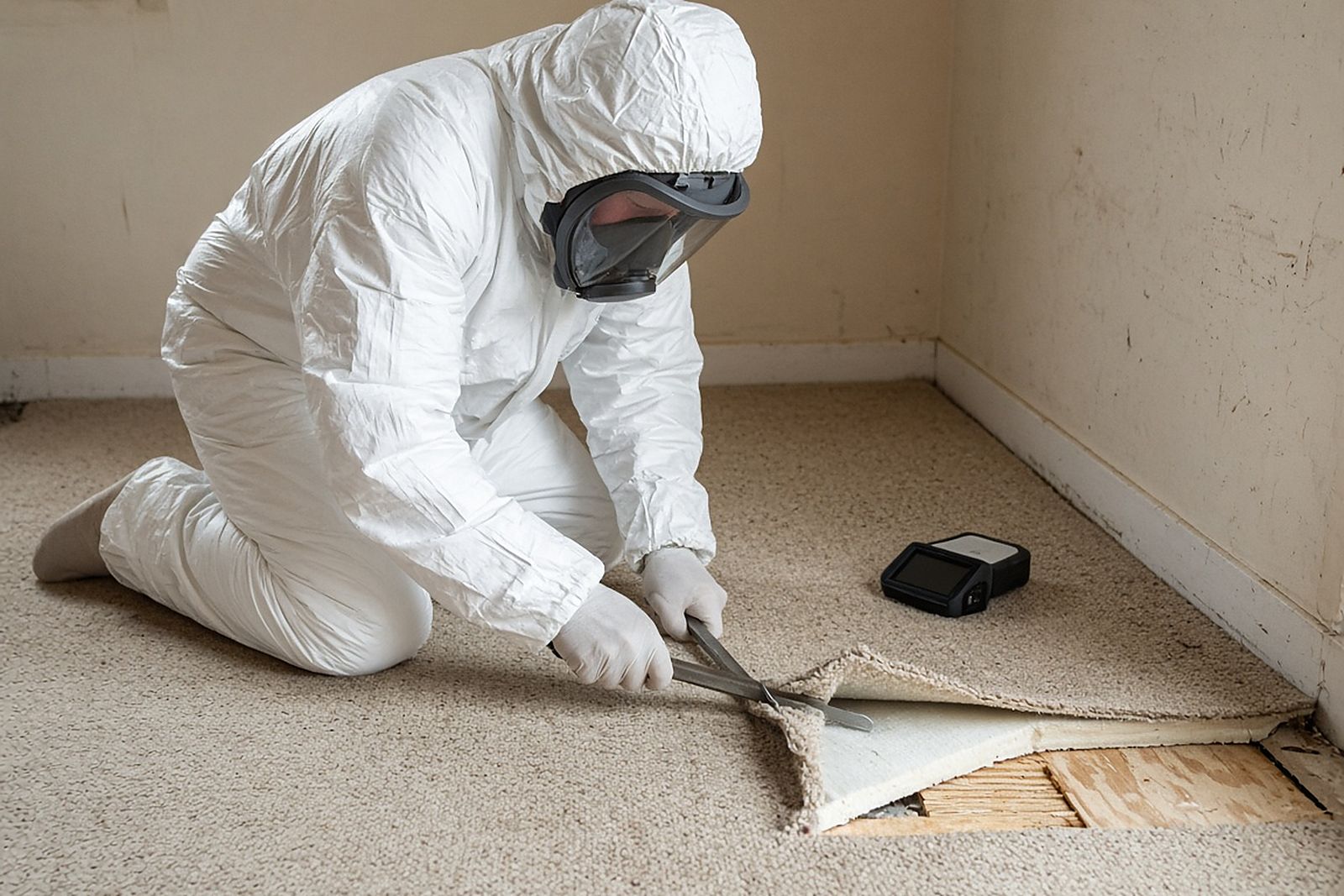
A careful company will describe lifting flooring in stages, cutting out affected subfloor if necessary and photographing each layer. That documentation protects you if a buyer, tenant or insurer asks questions later.
Red flag 3: a firm quote without an inspection
It often is. Fluids from decomposition can travel under walls, along floor joists and, in multi-story buildings, through a ceiling into the unit below. A phone quote based on a photo of the room cannot account for that.
Ask whether the estimate includes checking beneath flooring, behind baseboards, inside nearby cabinets and in any space below the affected area. Ask how the company will notify you, and get approval, if it finds more damage than expected. A provider unwilling to describe its change process may present you with a much larger bill at the end.
It is reasonable for a company to give a rough range up front. The concern is a firm, low number that treats a delayed-discovery scene like a small surface spill.
Red flag 4: no plan for insects
Insects are common in unattended death scenes, and they can spread well beyond the room where the person was found. By the time a home is opened, several generations may be present.
A company that ignores insects, or says they will go away once the room is cleaned, may leave you with an ongoing infestation. Ask whether the crew treats insects as part of the job, coordinates with a licensed pest control operator, or expects you to arrange that separately. Any of those can be fine, as long as it is stated clearly in the scope.
Red flag 5: treating insects late, or not at all nearby
Timing matters here as well. If insects are treated only after cleanup, they may move into clean rooms or neighboring units while the crew works. Ask when treatment will happen, whether adjacent spaces will be checked and whether a follow-up visit is included. In apartment buildings, a company that never mentions the neighbors is overlooking a real risk to people who had nothing to do with the loss.
Finally, ask what the crew does with food, pet supplies and open containers in the kitchen. These can attract pests long after the main work is done, and clearing them is an easy step that careless providers sometimes skip.
Red flag 6: no system for documents and valuables
Unattended death scenes often involve a home full of the person's life: bills, bank statements, a will, titles, photos, medications, firearms, jewelry and cash. Executors and heirs may need many of these items to settle the estate.
It is a red flag if a company treats the whole home as trash, or cannot explain how it separates contaminated items from salvageable ones. Ask whether the crew sets aside documents and valuables for the estate, how it logs them and who receives them. Ask what happens to items that are affected but may be important, such as a wallet or a box of papers near the affected area.
You should receive an inventory, ideally with photos, and a clear record of anything handed to a family member, landlord or attorney. If more than one relative has an interest in the estate, that record can prevent painful misunderstandings later.
- Ask how the crew identifies and sets aside legal and financial papers
- Ask how medications and any firearms found on site are handled
- Ask for a signed record when items change hands
Red flag 7: poor communication with family far away
Many people arranging this cleanup never visit the property. Relatives of people who lived alone are often spread across the country.
Warning signs include a company that will only discuss the job in person, sends vague updates, cannot share photos securely or asks you to approve changes by phone with no written follow-up. You should know who your contact is, how often you will hear from them and how decisions will be documented.
Also ask who has authority to sign. A reputable provider will want to confirm that the person hiring them is the owner, executor, administrator or landlord, and will not accept a signature from anyone who happens to have a key.
Careless vs careful: the same job quoted two ways
The difference between a careless and a careful provider often shows up in the first phone call. One company quotes a flat price over the phone, promises the smell will be gone in a day and says it will clear the apartment completely. Asked about the unit below or the person's papers, it says it will see what it finds, and no written scope arrives.
A second provider asks for photos, requests access to the downstairs unit and sends a detailed scope that includes staged flooring removal, insect treatment and a plan to box documents for the estate. If fluids turn out to have reached the ceiling below, it calls before expanding the scope.
At the end, the careful provider hands over photos of each layer, an inventory of saved items, a waste record and a note on repairs the building will need. Set side by side, the two responses make the red flags above easy to spot.
Documents any provider should be willing to share
Before work begins, ask for proof of general liability insurance and workers' compensation coverage, confirmation that technicians receive bloodborne pathogens training, and the name of the company that will transport regulated waste. After the job, you should receive a disposal record, photos and a written summary of what was done.
Some areas also require registration or permits for medical waste handling or specific types of remediation. Your state environmental or health department can tell you whether any registration applies. A company that hesitates to share any of these documents is telling you something important, and it is worth listening.