Short answer
A defensible unattended death cleanup scope explains why each step is needed: how far fluids traveled into flooring and framing, how odor spread through the building, whether insects are present and what the estate wants done with belongings. This fictional example follows one rental duplex from coroner release to final report, so you can recognize a careful scope and challenge a vague one.
Why a teaching example helps
Families and landlords usually face an unattended death once, with no background and little time. A realistic but invented example gives you a mental picture of how an experienced team reasons through the job, without intruding on anyone's actual loss.
Every name, address and detail in this article is fictional. The purpose is to show what a well-reasoned scope looks like, why it tends to change once flooring is opened and how a good provider documents those changes.
A scope earns the word defensible when an insurance adjuster, a probate attorney or the next property owner can read it months later and understand what was found, what was done and why.
The situation in a fictional duplex
Our made-up case involves Marisol, a 58-year-old woman who rents the upper unit of a wood-frame duplex. She lives alone with a cat and works from home. In midsummer she dies suddenly in her bathroom from a medical event. Because she keeps to herself and her family lives out of state, about two and a half weeks pass before anyone notices.
The downstairs tenant eventually calls the landlord about a smell and a stain spreading across his bathroom ceiling. The landlord requests a welfare check. Police and the coroner respond, the coroner removes Marisol, and animal control takes the cat, which survived on food and water left out. A few days later the unit is released.
Marisol's brother, Tomás, is named executor. He lives in another state and has never been inside the apartment. The landlord owns the building and is responsible for the structure. Tomás controls Marisol's belongings. Both will need to approve parts of the scope.
What did the assessment reveal beyond the obvious stain?
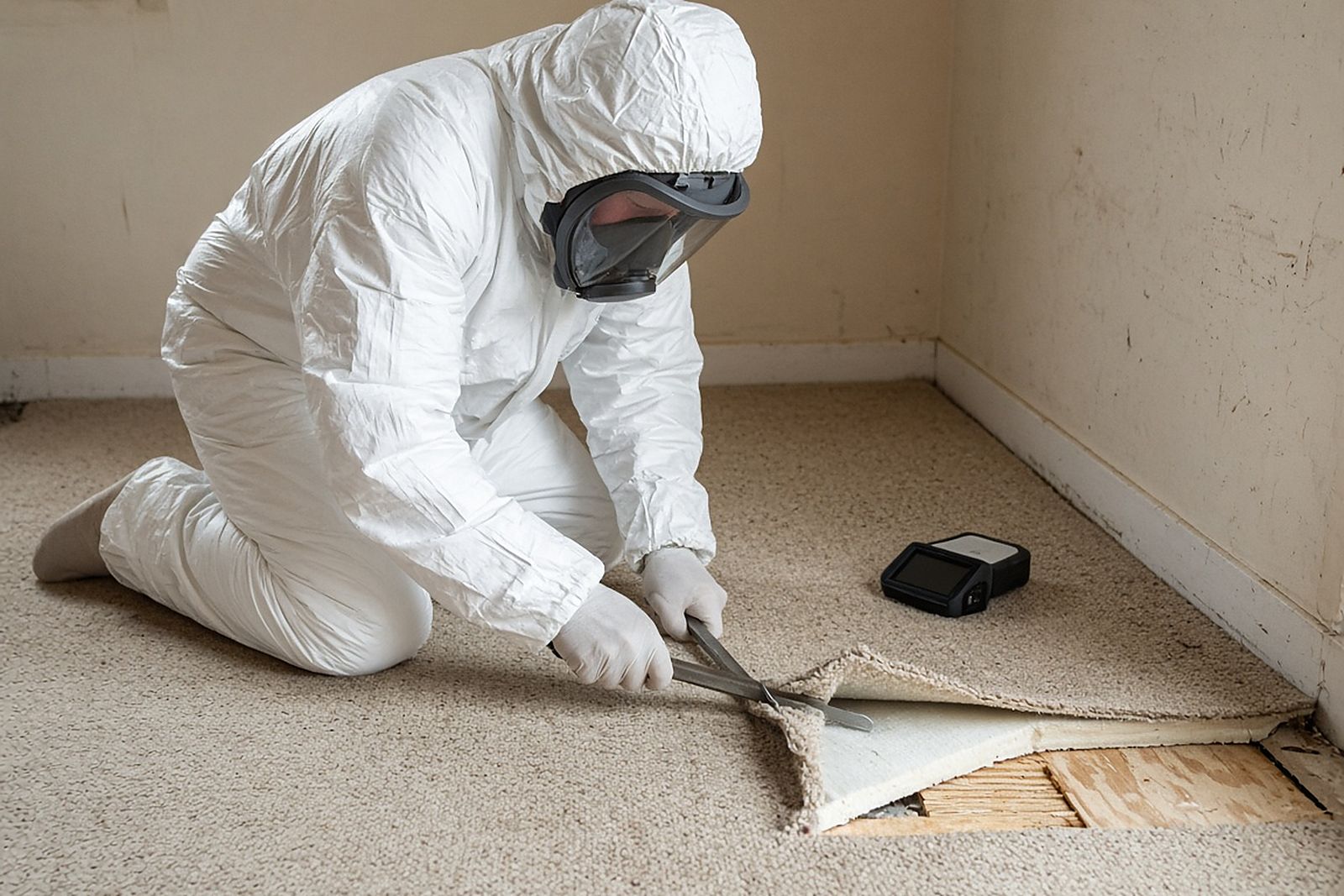
The provider's supervisor inspects both units in full protective equipment. In the upstairs bathroom, fluids had pooled on vinyl flooring and run toward the toilet flange and the tub apron. The downstairs ceiling stain suggests fluid passed through the subfloor, possibly along a joist, and reached the drywall below.
Odor has spread through the upper unit and, via a shared plumbing chase and a gap around the bathroom exhaust duct, into the lower unit. Flies are present in the bathroom and bedroom windows. Summer heat, with the air conditioning set high, has sped everything up.
Insects matter early in these jobs. According to teaching material from North Carolina State University's Department of Entomology, published in 2024, blow flies can locate a body and begin laying eggs within minutes of death. In a home left undiscovered for weeks, the crew should expect several generations and plan treatment accordingly.
- Upstairs bathroom: vinyl, underlayment, subfloor and toilet flange area affected
- Possible migration along a joist into the ceiling cavity of the lower unit
- Odor in both units via plumbing chase and exhaust duct penetration
- Active flies and pupae in the upstairs unit
- Bedroom and kitchen upstairs unaffected by fluids but carrying odor
- Belongings throughout the upper unit, including papers and electronics
Splitting responsibility between landlord and estate
Because two parties are involved, the supervisor writes the scope in two parts. The structural work, including flooring, subfloor, framing, the downstairs ceiling and building systems, goes to the landlord and the building's insurer. The contents work, meaning sorting, cleaning, packing or discarding belongings, goes to Tomás as executor.
This split avoids a common source of conflict. Neither party ends up paying for work that belongs to the other, and each can submit the relevant portion to the right insurer or the estate account.
The supervisor notes that lease termination, the security deposit and any abandoned property timelines are legal questions outside her scope. She suggests that both the landlord and Tomás check with a landlord-tenant or estate attorney before making assumptions.
The scope, line by line
Each line names the area, the material, the action and how completion will be shown. The supervisor also explains in plain language that the subfloor and joist work cannot be fully sized until the vinyl is lifted, so those items are described with a clear decision rule instead of a fixed quantity.
Exclusions are stated plainly: new flooring, drywall replacement, painting, plumbing reinstallation and any appliance replacement will be handled by contractors after remediation.
- Seal both units' shared penetrations; set up containment and air filtration upstairs
- Treat flies and pupae; follow-up check after 48 hours
- Remove bathroom vinyl and underlayment; package as waste
- Pull toilet for access; inspect flange area and subfloor
- Cut out subfloor sections with visible saturation; clean and seal sound adjacent areas
- Inspect joist; clean, treat and seal if stained, or flag for structural review
- Downstairs: remove stained ceiling drywall section; inspect cavity; clean and seal framing
- Odor treatment in both units once sources are removed; closed-unit odor check
- Replace HVAC filters; inspect and clean bathroom exhaust duct
- Contents: sort, clean or discard per executor's written direction; inventory and photos
- Waste disposal records and final walk-through with photographs
What changed once the floor was opened?
After the vinyl and underlayment come up, the crew finds that fluid reached about twice the subfloor area the surface stain suggested, following a seam toward the tub. The joist beneath has a stained band but is structurally sound after cleaning.
The supervisor stops work, photographs the exposed floor with a tape measure in frame and sends the pictures to the landlord with a short explanation and the added cost. The landlord approves the change order in writing within the hour. The joist is cleaned, treated and sealed, and a note is added recommending the contractor confirm it before new subfloor goes down.
Downstairs, the ceiling cavity shows only a small area of staining on the drywall itself and none on the framing. That part of the job actually shrinks, and the scope is revised to reflect it. A defensible scope moves in both directions.
Protecting the downstairs tenant
The downstairs tenant, Glen in our story, did nothing wrong and still ended up living beneath the problem. His bathroom ceiling was stained, the odor had reached his bedroom and he had spent several nights with a neighbor. A thoughtful scope treats him as someone affected, not an afterthought.
Before starting, the supervisor explains to Glen what the crew will do in his unit, how long it will take and which rooms he should avoid. The crew seals his bathroom door with plastic while they remove the ceiling section, runs a small air filtration unit in his hallway and cleans up at the end of each day so he can use his kitchen and bedroom. They schedule the odor treatment for days when he has arranged to stay elsewhere, since some methods require the space to be unoccupied.
The landlord keeps Glen informed with brief updates and does not share details about Marisol's death. Glen's own belongings in the bathroom, a few towels and a bath mat, are photographed and listed so his renters insurer can review them separately.
This small piece of the job is easy to overlook, yet it shapes how the neighbors, the landlord and the next tenant feel about the building afterward.
Handling Marisol's belongings for her brother
Tomás cannot travel for several weeks, so he and the supervisor agree on a sorting plan by phone. He asks the crew to look for a laptop, a folder of tax and bank papers, a set of family photographs and a ring that belonged to their mother. Everything else in the unaffected rooms is to be packed for a moving company. Items in the bathroom and anything carrying heavy odor are to be photographed and listed before disposal.
The crew finds the folder and photographs in a bedroom desk and the ring in a dish by the kitchen sink. They clean the hard items, bag the papers in sealed containers and ship everything to Tomás with tracking. The inventory lists each discarded item with a photograph.
Tomás later tells the supervisor that seeing the pictures of his sister's apartment, even cleaned up, was harder than he expected. She suggests he take his time with the rest and mentions that grief counselors and community organizations help people after a sudden death.
What the final report proved
At completion, the supervisor walks both units with the scope. She documents every removed material, every sealed surface and the odor check conducted after the units were closed for a day with the air conditioning running. The report includes the signed scope, both change orders, the contents inventory, insect follow-up notes, waste records and a list of repairs for the contractor.
What can I learn from it for my own scope?
When you receive a scope for your own situation, look for the same qualities. Are structure and contents separated when different people are responsible? Are uncertain items written with a decision rule instead of a guess? Does the provider commit to stopping and asking before expanding? Is there a clear plan for belongings that respects the estate? If the answer to any of these is no, ask for revisions before work starts.