Alexandria, VA

Unattended Death Cleanup Planning in Alexandria, Virginia

What to do, who to contact, and what to ask in Alexandria.

A death found late in an Old Town rowhouse or West End apartment? Learn who releases the home, why cellars get checked, and what papers to keep.

Get an email reply about unattended death cleanup

Send a short message to the follow-up inbox. A coordinator can reply by email. This form does not send emergency help; call 911 first if anyone is in danger.

Tell us what you need help with. Share a short description; please leave out medical details, access codes, and other sensitive information.

A request does not confirm a booking. For immediate danger, contact local emergency services.

Or email info@unattendeddeath.online

The short answer for Alexandria, VA

In Alexandria, cleanup after a death found late may happen within sight of King Street visitors or behind a West End loading dock. Either way, wait until the Virginia medical examiner and Alexandria police have released the home. The steps below then help you get written approval, have the cellar checked, protect your privacy, and keep papers for the estate.

What to do, step by step

  1. 1

    Wait for the state examiner and city police

    The subfloors stay closed until the state medical examiner and Alexandria police holds have ended. Then collect approval to throw out soft goods from the leasing office, the board or the estate. Tell the company whether loads will go out by the alley or by a freight elevator. Have your cellar and doorways photographed first. In an Old Town house, those cellar photos are often the ones your insurer asks about first.

  2. 2

    Ask for the check that suits a row or a tower

    A historic row and a West End tower are checked differently. In a row, ask for the soft wood to be tested past the visible edge and for foam under any remodeled vinyl to be tested too. The cellar and the under-stair bins come next. In a mid-rise, ask for your storage cage to be listed and the lobby stone protected. In both, what is removed should come from the meter and not from a guess. Ask to see the readings.

  3. 3

    Keep the work out of the promenade's view

    Ask the crew to use the alley where it can and to keep everything wrapped in opaque material. Inside your home, the air returns in the worst room should be sealed before filtered air machines run in the closed-off Old Town space. Please do not aim a fan at soaked carpet pad. Ozone and similar tools are saved until the soaked items have left your house. Done in this order, the work stays private and the smell does not follow you outside.

  4. 4

    Keep leasing and probate papers apart from remodel bids

    Ask for pictures of the bare heart pine and brick once removal is finished. The hazard removal should be on its own invoice, with repainting and new flooring billed elsewhere. When the drying readings hold, ask for a room-by-room list to give your finish contractor. If a leasing office is involved, it gets one packet and probate gets another. Keeping them apart means neither the landlord nor the court has to sort through the other's papers.

What cleanup is like in Alexandria

Near the waterfront, cobblestone blocks and alley courts mean tourists may be able to watch the work, which few suburbs ever face. Sealed bins carried down your parlor stairs could pass a café crowd within minutes. In a West End mid-rise, that worry gives way to freight calendars and padded elevators. A seasonal waterfront lease can sit quiet between tenants until a leasing agent notices unpaid utilities. How far the damage has gone into your soft wood floors still decides the size of the job. Tell the company early whether yours is a historic row with an old coal cellar, a walk-up or a West End tower.

Humidity off the Potomac and nonstop air conditioning work against you. If a door is propped open, odor from wet bedding moves into the shared hall. Blankets tend to end up in the storage bins under your stairs after first responders leave. In a remodeled row, your vinyl may sit on foam that is wet well past the bed. Ask the crew to use the alley and covered carts, and to keep to the schedule if visitors on the promenade ask questions. Have the moisture in your cellar charted before anyone calls the upstairs work done.

Virginia's Office of the Chief Medical Examiner clears these deaths in Alexandria. The District office across the river does not, and neither does Maryland's statewide agency in Baltimore. A city police hold may still delay your entry. Whether you deal with a leasing office, a condo board or a personal representative, get the right to throw things out put in writing. On a historic stoop, covered carts matter. A set of photos helps with your insurer and with probate. Store-bought fresheners can wait until everything soaked has gone.

What to expect for your type of home

  • Historic rows with a coal cellar or basement: after a discovery in the parlor suite, the level below needs to be checked for drips. Find the cellar key, and tell the company how to get down there.
  • Rowhouses with parlor stairs: sealed totes pass the other households on the way down. Protective runners and fewer, fuller trips keep the parlor stairs usable for them.
  • West End towers: the freight arrangement should be settled before any bag leaves your floor. Get the West End building's rules on paper before you book.
  • Waterfront units between leases: if the unit sat empty between seasonal tenants, write down how long. Your adjuster needs that, and the company will plan a wider check because of it.
  • Homes with bins under the stairs: blankets moved during the first visit are often tucked there. Open those bins with the crew and have what is inside listed.
  • Historic rows with softwood plank floors: old boards have open seams, and moisture can slip through them beyond the visible line. Expect readings to be taken well beyond it.
  • Front stoops on promenade blocks: with so many visitors about, an uncovered bag on the stoop does real harm to your privacy. Ask for opaque wrapping and the alley route.
  • Rentals and condos: a West End renter needs the leasing office's written approval, and an Old Town condo needs the board's. Ask for it before the crew is booked.

Papers and records to keep

  • Clearance letters from the Virginia medical examiner and Alexandria police
  • Approval from the leasing office, the board or the estate to throw out soft goods
  • A note of the building type, historic row, walk-up or West End tower
  • A photo set of the parlor, the cellar, the under-stair bins and the alley staging
  • A moisture chart for the soft wood, the foam, the cellar and any wall openings
  • Soft goods removed, written out room by room
  • A log of which returns were sealed while cooling ran in humid weather
  • Personal belongings marked keep or discard, on a sheet you have signed
  • Medical waste receipts if any, plus the Old Town or West End repair list

Local offices and official help

Common questions in Alexandria

Can the District's medical examiner release our Old Town home?

No. Virginia's Office of the Chief Medical Examiner handles these deaths inside the city of Alexandria, and the District office has no authority across the river. Alexandria police and the state examiner release the home first. After that, a letter from the leasing office or the estate still decides what is saved. Keep both papers where you can reach them quickly.
It happened in the parlor suite. Why does the old coal cellar matter?

Because in an older row, moisture and foot traffic tend to move downward. Drips and tracked residue can collect below ground even when the cellar looks unused. A few readings and pictures down there save you from a parlor repair that smells again by the next lease. If the cellar is clean, that finding still belongs in your file, in writing.

King Street is crowded with visitors. What changes?

Mostly the route and the wrapping. On a promenade block, carrying things out can become a public event if nobody plans for it. The alley route and opaque wrapping do most of the work. Quiet staging near King Street spares your family extra attention. The real work still happens inside, where the source is removed.

How does a West End tower differ from an Old Town stairway?

A West End tower wants a reserved loading time and a padded elevator. A historic row has no elevator, so sealed totes go down parlor stairs that people still use. Who sees the work depends on which building you are in. Ask the company to match its floor and stair protection to the actual path down, and to walk that path with you beforehand if you wish.

I run a leasing office. What goes in our letter after a tenant dies?

Confirm that the medical examiner or police have released the unit. Name who may approve throwing out carpet, furniture and other soft items under the lease. Say whether the estate keeps the right to recover belongings, and for how long. Attach the list of materials to be removed. For a West End mid-rise, note any stair or elevator protection. Tell other residents only the dates and which areas are closed.

Can the heart pine floors in our Old Town rowhouse be saved?

Sometimes. Old Town homes often have wide heart pine boards laid over joists, with gaps between them. Boards that are soaked through, or that still smell after cleaning, usually need to be replaced. Boards farther away may be cleaned and refinished. Matching old boards can be hard, so talk it through with your family and a carpenter. Photos and moisture readings will help you choose.

Our basement near the waterfront is always a bit damp. Does that matter?

Yes, it can slow things down. Homes near the Potomac often have damp basements or cellars even in normal weather. If the basement ceiling or floor was reached, drying may take longer than you expect. A good crew uses dehumidifiers and confirms drying with readings over several days. Ask for normal dampness to be recorded apart from the damage this loss caused. That helps your insurer.

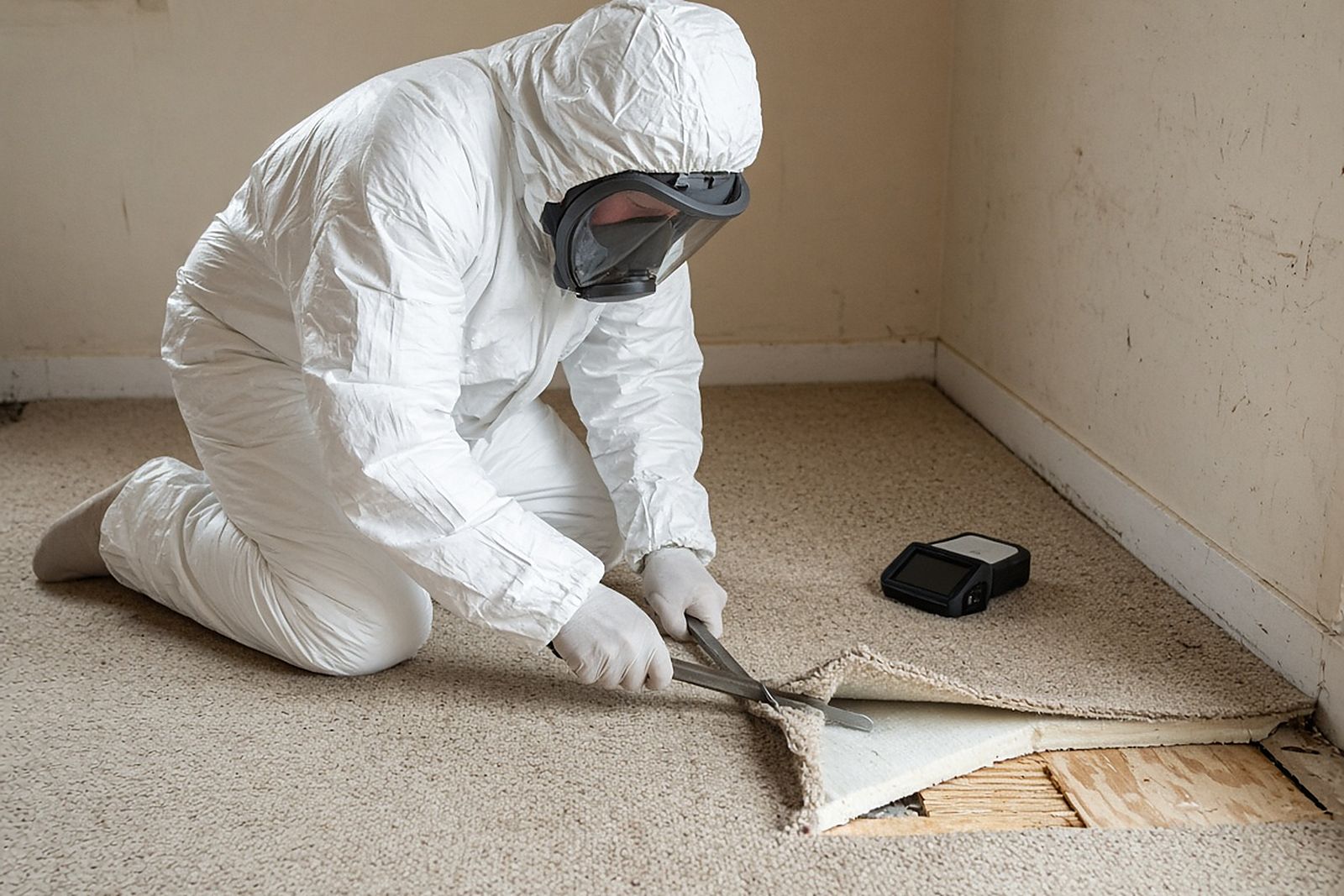
Technician in a full-face respirator cutting back carpet and pad to expose the subfloor
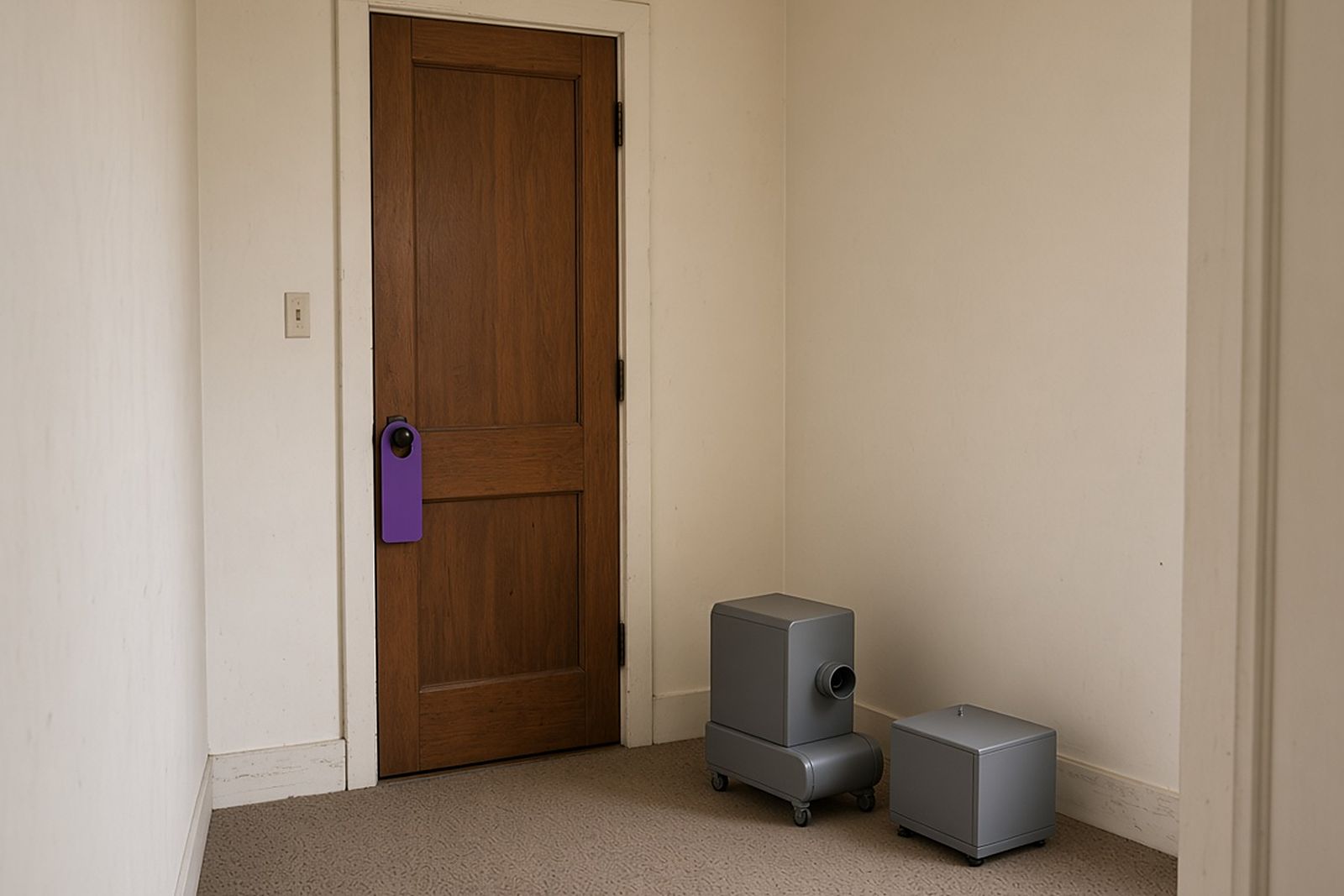
Air-filtration and odor-control units staged outside a closed door with a do-not-enter tag on the handle

Facts worth knowing

  • Blow flies can find a body and start laying eggs within minutes of death, and the eggs hatch in 1 to 3 days.

    Why it matters: Insects may be present even after a short delay, so you may want to stay out of the room and ask how they will be dealt with.

    Source: North Carolina State University, Department of Entomology, 2024

  • In a Swedish survey of parents bereaved by suicide, 430 of 446 who had viewed their child's body and answered the question said they did not regret it.

    Why it matters: If you want to see your loved one, this suggests regret is uncommon, though your own situation may differ.

    Source: Omerov et al., 2014

  • In a 2021 UK survey, 57% of people who claimed Funeral Expenses Payment had not known about that benefit beforehand.

    Why it matters: If you are in the UK and paying for a funeral, check current government rules to see whether you qualify.

    Source: UK Department for Work and Pensions et al., 2021

Tools that help right now

What would you do?

Poll results

Vote to see how other people answered. You can change your answer at any time.

Your experience

As a landlord, how long would you wait for the tenant's family before arranging cleanup yourself?

Be the first to vote
Process

Which part of an unattended death project would you find hardest to manage?

Be the first to vote

Need help in Alexandria?

Send a short message about the property to the follow-up inbox. A coordinator can reply by email with next steps.

Your request is sent to the follow-up inbox. A coordinator can reply by email.

If anyone is hurt or in danger, call 911 first.