South · US

Unattended Death Cleanup Planning in Washington, DC

Planning unattended death cleanup in Washington, DC

A DC guide for cleanup after an unattended death: District medical examiner clearance, English basements, alley bag-out, air returns, and estate paperwork. This is planning guidance, not a claim of a local office or crew in Washington.

Get an email reply about unattended death cleanup

Send a short message to the follow-up inbox. A coordinator can reply by email. This form does not send emergency help; call 911 first if anyone is in danger.

Tell us what you need help with. Share a short description; please leave out medical details, access codes, and other sensitive information.

A request does not confirm a booking. For immediate danger, contact local emergency services.

Or email info@prompartybuses.com

Direct answer

The short answer for Washington, DC

In the District, Capitol Hill rowhouses, Northwest walk-ups, and Southwest waterfront condos all see late-discovery losses that can cross shared walls and reach English basements. Summer humidity and AC that never stops trap the smell. Crews load out through alleys, not suburban driveways. This guide walks through clearance from the District's Chief Medical Examiner and Metropolitan Police. It also covers closing off air returns, landlord and probate paperwork, and staying low-key on the front stoop. Nothing here claims a DC storefront, a list of workers, or a set arrival time.

Editorial guide · Biohazard Remediation NetworkUpdated 2026-07-22Location focus: Washington, DC

Local planning context

Rowhouses on Capitol Hill and in Shaw share brick party walls. Many have an English basement, a half-underground unit that collects drips and tracked residue after a discovery upstairs. Northwest blocks near Dupont Circle still rely on walk-up stairs with no freight elevator, so sealed totes pass other households. Southwest and downtown towers flip the problem. There, dock bookings and lobby runners matter more than alley carts. A person living alone may go unnoticed until the utilities lapse or someone asks for a welfare check. Body fluid moves through carpet into softwood floors while the cooling keeps the house shut. Name the type of home before anyone budgets a cosmetic wipe.

In July and August, the AC cycles odor chemicals from wet bedding into shared halls when unit doors are left open. In winter, heat pumps create the same sealed-house problem with different equipment. Bike rooms and basement storage cages often get fabric moved there on the first visit, and then people forget it. Insect residue on sunny windows hints that an empty rental sat longer. Floating vinyl over foam hides a sideways soak that reaches past the mattress. Seal off the worst area, and map moisture in every room, including the basement. Pull the soaked rowhouse layers out first. A store-bought odor gadget comes last, if at all.

The District of Columbia Office of the Chief Medical Examiner covers only addresses inside the District. Maryland's statewide examiner in Baltimore and Virginia's medical examiner districts do not clear these addresses. Metropolitan Police holds may still block entry. Once cleared, landlords, condo boards, and personal representatives should write down what to save, such as papers and valuables found against soiled soft goods. Rear alleys suit covered carts. A scene on the front stoop feeds rumors on crowded blocks. Photograph the bare surfaces for probate and insurers. Treat fogging machines as optional, and use them only after the soaked materials are gone.
Property considerations

English basements under parlor floors need a drip map after a discovery upstairs.

Walk-up landings need protective runners when sealed totes pass occupied units.

Tower docks and service elevators need notes from the building worked out in advance.

Rooms along a party wall need moisture checks, even when the paint looks untouched.

Bike rooms often hide bedding moved during the first welfare visit.

Seams between softwood planks let fluid wick sideways past the stain you can see.

Alley load-out needs opaque wrapping, because neighbors use the same lane every day.

Get written approval from the board or the landlord before tearing out finishes.

Response-planning framework

Check District medical examiner and police clearance first

Leave the subfloors alone until the District medical examiner and Metropolitan Police holds end. A personal representative, landlord, or condo board must sign off in writing before any mattress or rug is tossed. Note whether loads will leave by alley, stairs, or dock. Take photos at the doorway before anything moves.

Trace the fluid down through each type of home

Open the flooring past the stain edges. Test the foam under remodeled vinyl, and check the English basement. List what is in the storage cages. Set the removal line from meter readings. Keep dirty routes off polished lobby stone and stoops that face the street.

Control the returns while materials leave

Seal the supply and return vents in the worst area and watch how doors swing. HEPA scrubbers run inside the sealed rooms after the wet pad is gone. Do not aim fans at soaked pad. Ozone waits until every wet layer is out of the rowhouse.

Build separate files for probate and boards

List the materials torn out, the keep-or-toss choices, and photos of the bare surfaces. Bill the health-related tear-out apart from later paint or flooring. Once the drying targets hold, give a room-by-room rebuild checklist.

Documentation checklist

  1. 1OCME and MPD letters clearing the DC address
  2. 2Letter from the estate, landlord, or board approving disposal of soft goods
  3. 3Notes on the type of home: rowhouse, walk-up, or tower
  4. 4Photos of the stains, the English basement, and the alley staging
  5. 5Moisture chart for floors, party walls, and opened walls
  6. 6Room-labeled list of the soft goods removed
  7. 7Log of the returns sealed during the cooling or heating season
  8. 8Signed keep-or-toss sheet for personal belongings
  9. 9Waste handling records when used, plus a rebuild checklist

Official resources

Questions for this location

Who clears a home in the District: the local medical examiner or a nearby state's?

The District of Columbia Office of the Chief Medical Examiner. Maryland's statewide office and Virginia's districts have no authority here. Confirm the District clearance and any Metropolitan Police hold before tear-out. The personal representative still controls what is saved afterward. File both letters with the claim.

Why check the English basement when the loss is upstairs?

Fluid and tracked residue often reach the rooms below, especially when responders leave that way. Meter readings and photos downstairs keep a parlor-only job from failing when the unit is rented again. Record clean findings too, so the file is complete.

How is an alley load-out different from a suburban driveway?

Shared lanes put neighbors, couriers, and building staff within arm's reach of the bins. Opaque wrapping and quiet talk about the schedule reduce further hurt. Still, being discreet never replaces sealing the area or removing the soaked materials inside.

Why does a shiny vinyl floor still fail the smell check?

The foam underneath can hold fluid far past the outline you can see. Wiping the top layer leaves that source in place. Lift the edges, measure outward, and cut to a checked clean line. Photos of the wet foam help the insurer accept the job.

How should boards and estates split the bills?

Removing soaked materials for health, disinfecting hard surfaces, proof of drying, and waste handling all go on one cleanup bill. Paint, new finishes, and upgrades go on a remodel bid. Pictures of the stripped floors settle later arguments between the board and the estate.

How does a humid District summer affect drying after cleanup?

Washington summers are hot and humid. Closed rowhouses often depend on the AC to control moisture. After soaked materials are removed, subfloors and walls may take longer to dry than you expect. Crews should use dehumidifiers and take moisture readings over several days before new flooring or paint goes in. Rushing the finishes can trap the smell and invite mold.

Does a rowhouse in a historic district need special approvals for cleanup?

Cleanup inside usually does not change the outside of the house. But if the work means replacing windows, doors, or other features people can see from outside, check with the District's historic preservation office first. Inside, original plaster, trim, and heart pine floors can sometimes be cleaned instead of removed. Ask the crew to photograph historic features and talk through options before any tear-out.

Contact

Get help by email

Send a short message for an email reply about unattended death cleanup planning questions for the Washington DC area.

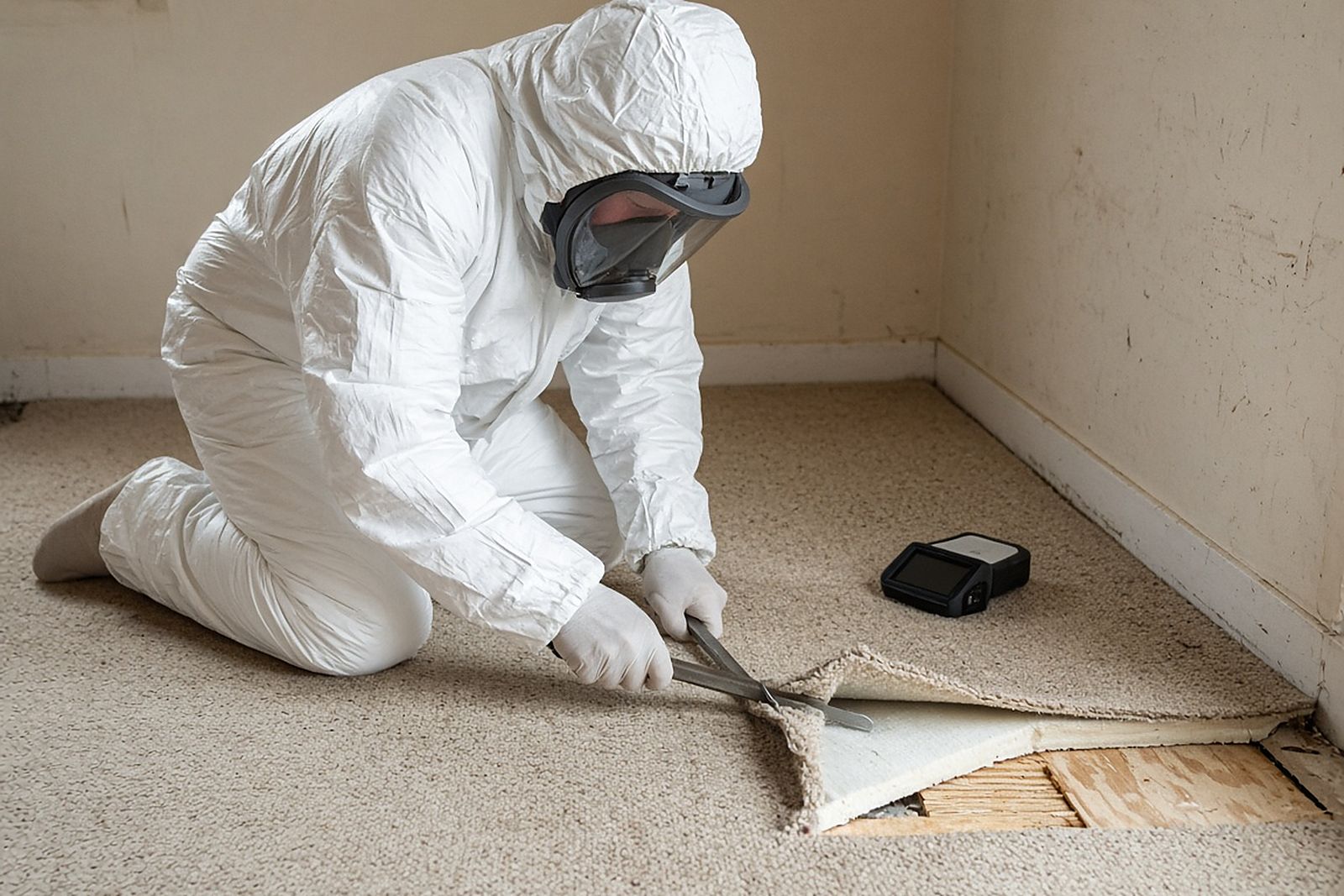
Technician in a full-face respirator cutting back carpet and pad to expose the subfloor
Illustrative photo, not a job record. Technician in a full-face respirator cutting back carpet and pad to expose the subfloor.
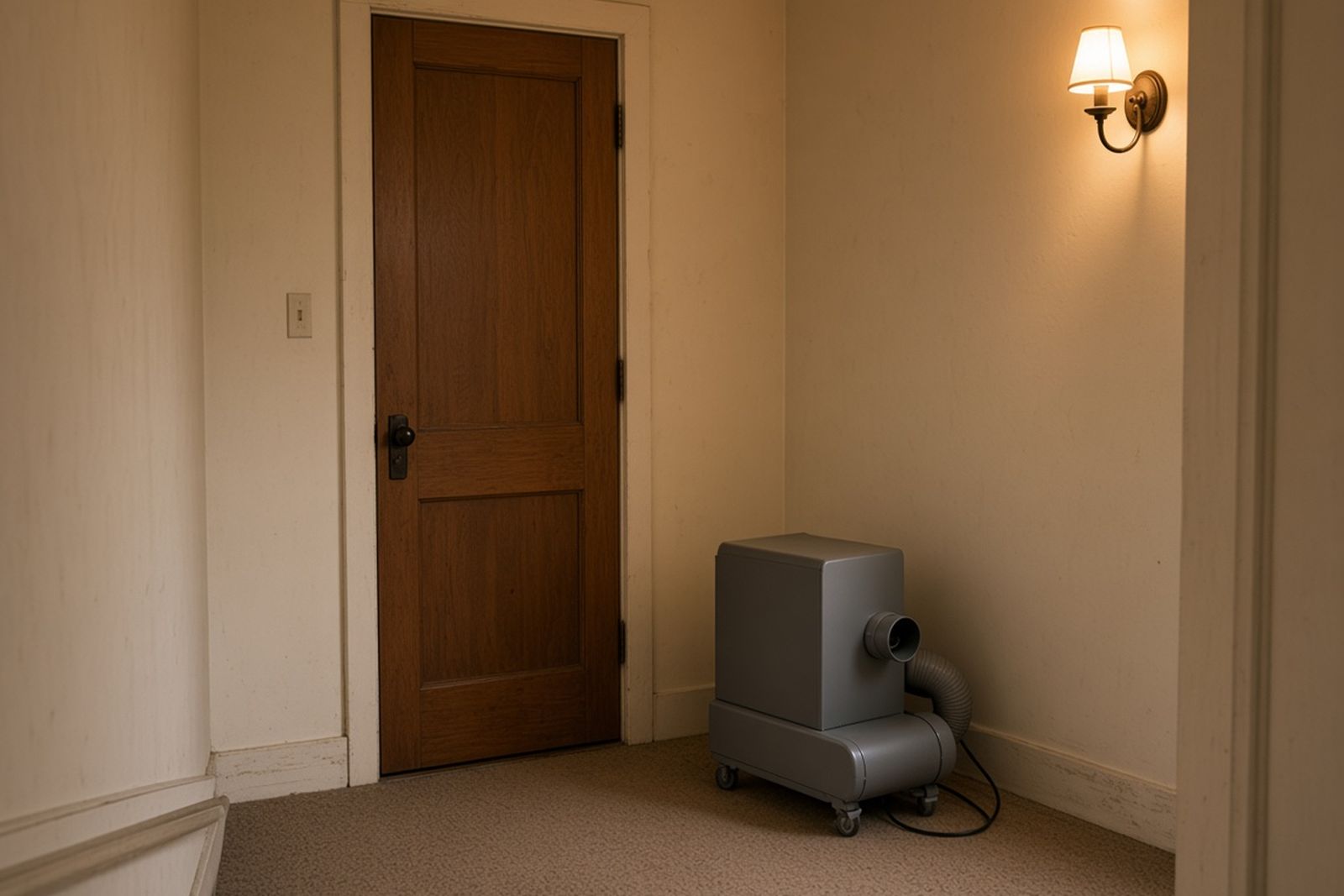
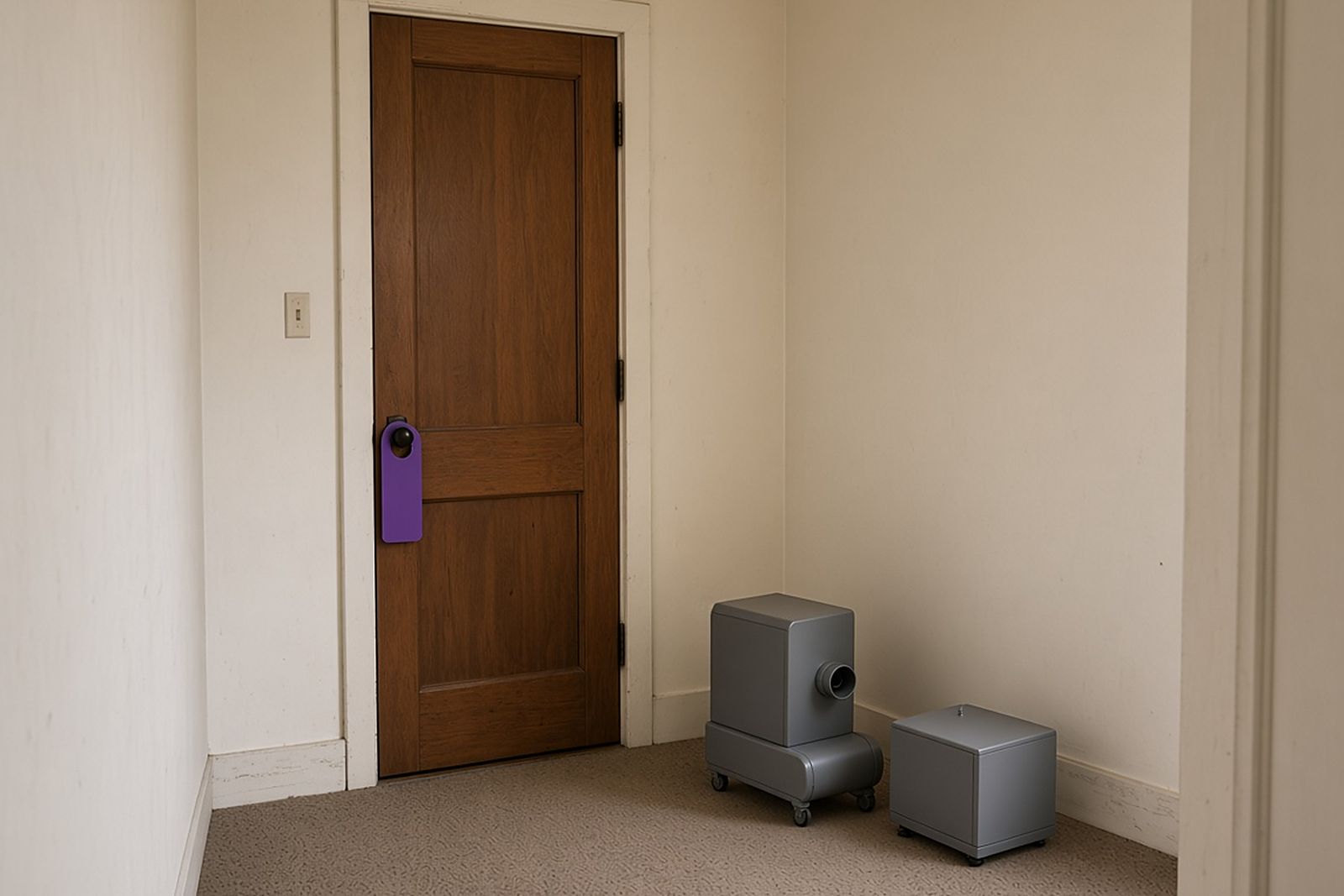
Air-filtration and odor-control units staged outside a closed door with a do-not-enter tag on the handle
Illustrative photo, not a job record. Air-filtration and odor-control units staged outside a closed door with a do-not-enter tag on the handle.

Unattended Death Cleanup figures to keep in mind

National and research figures, not Washington data. Local conditions, rules and providers vary; use these for scale and context only.

48%

In a Japanese forensic series of 56 bodies left unreported by housemates, 48% were decomposed when examined.

Read with care: Small single-institution series of unusual cases; not representative of all unattended deaths.

Source: Cureus (peer-reviewed forensic study) (2024)Japan, Tokai University forensic cases, January 2017 to July 2023

76,020

A total of 76,020 people died alone at home in Japan in 2024, and 76.4% of them were aged 65 or older.

Read with care: Japanese national police data; no equivalent U.S. national count of unattended deaths exists, so use only as an international illustration.

Source: Japan National Police Agency (reported by Xinhua) (2024)Japan, calendar year 2024, deaths at home of people living alone

21 days

In a Swedish study of 102 decomposed bodies found indoors, the post-mortem interval ranged from 3 to 217 days, with a median of 21 days.

Read with care: Only cases with visible decomposition were included, so the median overstates typical discovery delay.

Source: International Journal of Legal Medicine (peer-reviewed) (2023)Sweden, forensic autopsy cases from Uppsala and Gothenburg, 2010-2019, bodies found in apartments or houses

These figures are public research and agency data, not this network's own job records. Keep each number with its population, year and limits; none of them predicts cost, timing or outcome at a specific property.

Plan before you reach out

Use the first 24 hours planner for immediate steps and the provider vetting checklist to confirm any Washington provider's training, insurance and waste path in writing.

What research has found

Findings from published studies of people and properties in situations like this one. They describe what researchers observed in a specific group; they are not predictions for your case.

Insensitive organisational interactions worsened adjustment.
Who was studied: 21 community-dwelling Australian widows aged over 65; serial interviews.Limits: Small selected sample; themes do not quantify all widows.The business of death: a qualitative study of financial concerns of widowed older women (2015)
Some carers faced losing their home after the person they cared for died.
Who was studied: UK interviews: 14 bereaved people experiencing poverty and 15 supporting professionals.Limits: Small purposive sample; UK housing context; not current legal guidance.How does housing affect end-of-life care and bereavement in low-income communities? (2022)

Unattended Death Cleanup community polls

Poll results

Every count is a real visitor vote; nothing is seeded or padded. One vote per poll per device, and you can change your answer.

Your experience

As a landlord, how long would you wait for the tenant's family before arranging cleanup yourself?

No visitor votes yet
Process

Which part of an unattended death project would you find hardest to manage?

No visitor votes yet

Planning cleanup in Washington?

Send a short message about the property to the follow-up inbox. A coordinator can reply by email with next steps.

Your request is sent to the follow-up inbox. A coordinator can reply by email.

If anyone is hurt or in danger, call 911 first.