Boston, MA

Unattended Death Cleanup Planning in Boston, Massachusetts

What to do, who to contact, and what to ask in Boston.

A death found late in a Boston bowfront, triple-decker or tower? See who releases the unit, what to ask a cleanup company, and what records to keep.

Get an email reply about unattended death cleanup

Send a short message to the follow-up inbox. A coordinator can reply by email. This form does not send emergency help; call 911 first if anyone is in danger.

Tell us what you need help with. Share a short description; please leave out medical details, access codes, and other sensitive information.

A request does not confirm a booking. For immediate danger, contact local emergency services.

Or email info@unattendeddeath.online

The short answer for Boston, MA

If a relative or tenant was found late in a Boston apartment, hold off on any cleaning. The Massachusetts Office of the Chief Medical Examiner and Boston police need time to complete their work. After that, you can plan a cleanup that suits your bowfront, triple-decker or tower, protect the households around you, and keep papers for the landlord or estate.

What to do, step by step

  1. 1

    Wait for the state examiner and Boston police

    Please leave the floors alone until Boston police and the state medical examiner have finished. When they release the unit, get written approval to remove soft materials from the landlord, the association or the executor. Tell the company what your building allows. A bowfront stoop, triple-decker stairs and a tower freight car each come with limits. Before a single blanket is lifted, a careful crew takes pictures of the landings and door sills. Ask them to send you those.

  2. 2

    Ask for checks that fit a bowfront, triple-decker or tower

    A good company lifts flooring past the edge of the mark and tests the foam under any remodeled vinyl. It should also look at the garden or basement level and list what is in your storage cage. What comes out is set from the readings. Ask which way the bags will go. In most Boston walk-ups the back stairs are kinder to your neighbors than the shared front hall. If you rent, ask the landlord to confirm that route.

  3. 3

    Keep rising stairwell air from spreading the smell

    In winter, air climbs the stairwell and can carry odor with it. So ask that the landing doors stay shut and that air is filtered only inside the sealed unit. Please do not aim a fan at wet carpet pad. In a Seaport tower, the pressurized halls need protecting too. Ozone or hydroxyl machines should wait until the soaked mattress, pad and furniture are gone. Your neighbors upstairs will notice the difference this order makes.

  4. 4

    Finish with two separate bills

    Ask for a photo of each item removed, each item kept, and the bare floor or wall left behind. The cleanup should be billed on its own, apart from repairs. Do not rush the repair stage. A good company waits until the moisture readings hold through a heating cycle, then gives you the repair list. If you are a landlord, keep a copy for the next lease. If you are family, give one to the executor.

What cleanup is like in Boston

What your Boston building is decides how the work goes. Bowfronts on Beacon Hill and in the South End share party walls, and everything leaves over the front stoop. In a Dorchester or Jamaica Plain triple-decker, sealed bags go down narrow stairs past two other households. Seaport and downtown towers need a freight booking and lobby protection. Near the universities, a unit can sit empty between terms until a landlord walks through, which gives you a longer gap to deal with. Old pine floors soak things up, and storm windows stay shut all winter. Tell the company your building type before anyone offers a simple wipe-down.

In the cold months, warm air rises up Boston stairwells and pulls other air with it. That is why a parlor door propped open can fill the landings with odor from one room. Please keep your door closed. In July, a window unit just moves the smell around. Soft goods left in a basement storage cage can become a second source after first responders leave. If your unit was remodeled, the vinyl may float over a layer that hides a wider problem. If there is a garden-level unit below yours, ask the company to check it too, even when its ceiling shows nothing.

The Massachusetts Office of the Chief Medical Examiner looks into these deaths for the whole state, so you deal with one state office and not a city or county one. Boston police may also control who enters. After the release, the landlord, condo association or executor should agree in writing with you on what is saved. On a sidewalk stoop, ask for opaque carts. Keep a photo list for insurer and probate. Store-bought air fresheners are extras at best, and only once everything soaked has gone.

What to expect for your type of home

  • South End and Beacon Hill bowfronts: a parlor-level suite often sits over a garden unit. Ask the company to check that lower level for drips, and arrange a key for it beforehand.
  • Dorchester and Jamaica Plain triple-deckers: sealed totes have to pass the other two households on the stairs. Ask for stair runners and let your neighbors know which hours the stairway will be in use.
  • Seaport and downtown towers: your building will want freight and dock times booked in writing before a single bag leaves the floor. Ask management for the form as soon as the unit is released.
  • Units with steam radiators on brick walls: the nook around a radiator on an outer wall can collect residue at the room's edge. Ask whether those nooks were opened and checked.
  • Older buildings with basement cages: bedding is often carried down to a storage cage after the first visit. Tell the company which cage is yours, so it is not missed.
  • Units near hospitals and universities: these can sit empty for a long stretch. Write down the vacancy dates you know and give them to your adjuster with the claim.
  • Roxbury and Dorchester wood-frame homes: modern vinyl is often laid over old softwood. Ask the company to test both layers, since the top one alone can mislead you.
  • Narrow brick sidewalks with busy stoops: one uncovered bag becomes news for the whole block. Ask for opaque packing, and for the truck to pull up only when bags are ready.

Papers and records to keep

  • Proof that Boston police and the state office have let the unit go
  • Approval from the landlord, condo association or executor to remove soft materials
  • A note of the building type, bowfront, triple-decker or tower, and any access limits
  • Photos of the suite, the landings, the garden or basement level and the storage cages
  • Moisture readings for the floors, the shared walls and the unit below
  • A list of soft materials removed, labeled by floor of the building
  • A note on how air was closed off while the steam heat ran
  • Signed choices on which belongings to save, room by room
  • Waste paperwork if any was needed, and the list of repairs still to do

Local offices and official help

Common questions in Boston

Which office gives the go-ahead in Boston?

The Massachusetts Office of the Chief Medical Examiner does, often along with a Boston Police hold. It is a statewide office, not a city or county one. No pine board should be cut before that clearance arrives. After it does, the landlord or the family decides what is kept. Put the release and the written approval together in your claim file, since an insurer may ask for both.
How is clearing out a Seaport tower different from a Jamaica Plain triple-decker?

A tower needs a dock booking, a padded elevator and lobby floor protection. A Jamaica Plain triple-decker has no elevator, so sealed totes are carried by hand past the other two families. In one, your neighbors see the lobby. In the other, they see the landing. The safety steps are the same in both. Before the day, ask the company to match its notices and floor protection to the real path down.

What does steam-heat season change?

It keeps the odor in. Closed storm windows and radiators running all the time can trap it for months, and opening a window for a moment does not remove wet carpet pad. Ask for the air to be closed off early and for soaked materials to go first. Moisture is then checked, and only after that is extra air treatment considered. Write down how long the radiators ran. A condo association can use that note.

The unit looks empty. Why list what is in the basement cage?

Because bedding is often carried downstairs on the first visit to air out. In the cage, those quilts can go on smelling long after the apartment upstairs is stripped. Ask for pictures of what is there. Then you, the estate or the Boston landlord can sort what to keep from what to throw away. Soft goods forgotten in a cage are a common reason the smell returns at the next rental.

I am a landlord. What should my approval letter say after a tenant's death?

It should say that the medical examiner or police release is complete. Name who may approve removing soft materials under the lease, and note whether the estate keeps the right to save personal belongings. Attach the company's written plan and its list of materials. Ask for pictures of the common staircase before runners are laid. Keep your notices to other residents to timing and closed-off areas.

How do we protect the other households in our Boston triple-decker?

Keep the affected unit's doors closed and ask for the shared stairs to be covered during removal. A triple-decker stacks three homes that often share front and back stairs, a basement, and gaps around pipes and chimneys. Tell the other households when the work will happen and which stairway to use. If they notice a smell in their own units, pass that on, so the crew can check the shared chases or the floor below.

Does a snowy Boston winter change the plan?

It can slow things down. Snowbanks and storm parking bans may leave little room for a crew vehicle near your door, and icy stoops make carrying sealed bins riskier. If you can, have the work set between storms. Clear and salt the path to the street, and ask that bins wait outside for as short a time as possible. A longer schedule is better than a rushed job on slippery steps.

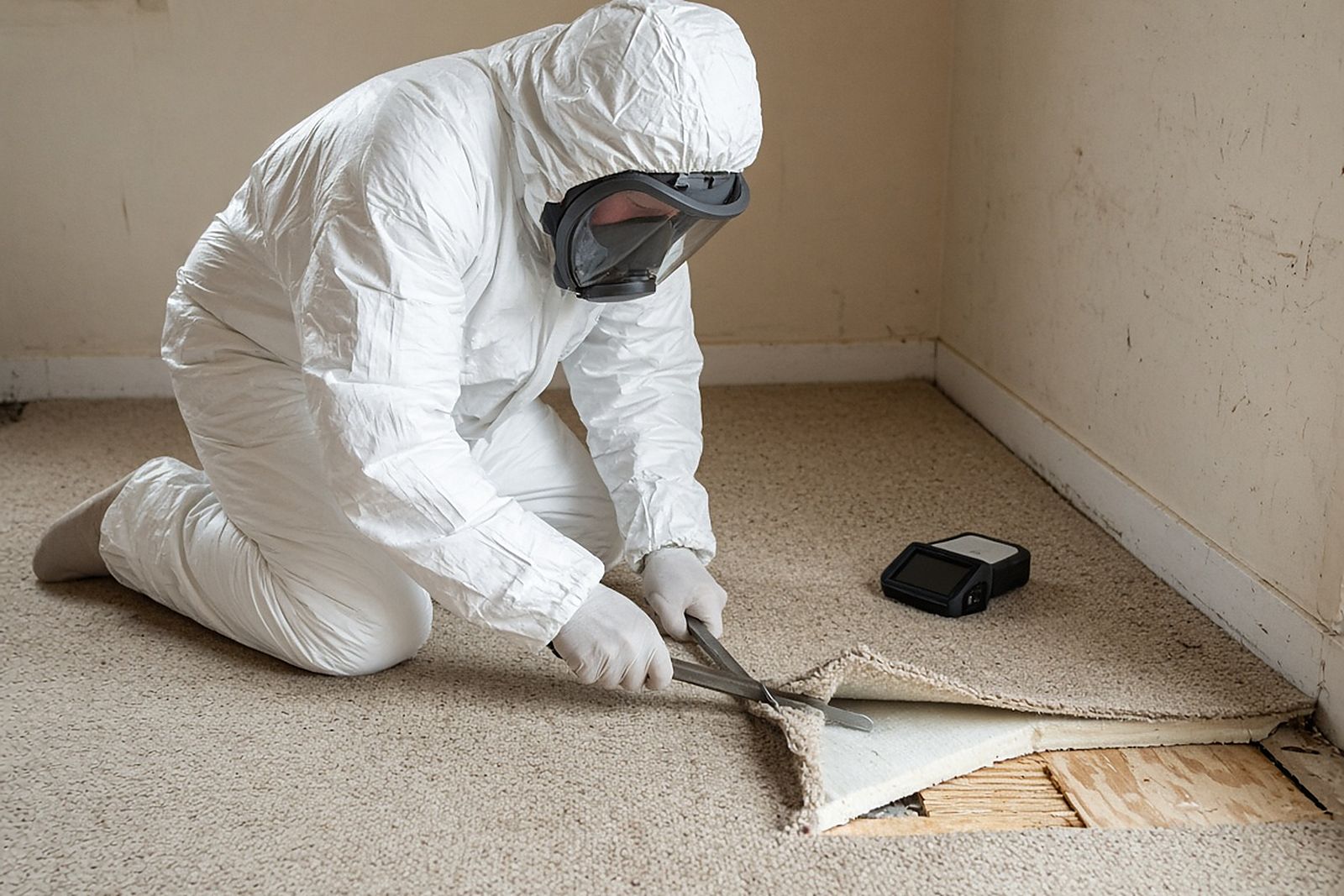
Technician in a full-face respirator cutting back carpet and pad to expose the subfloor
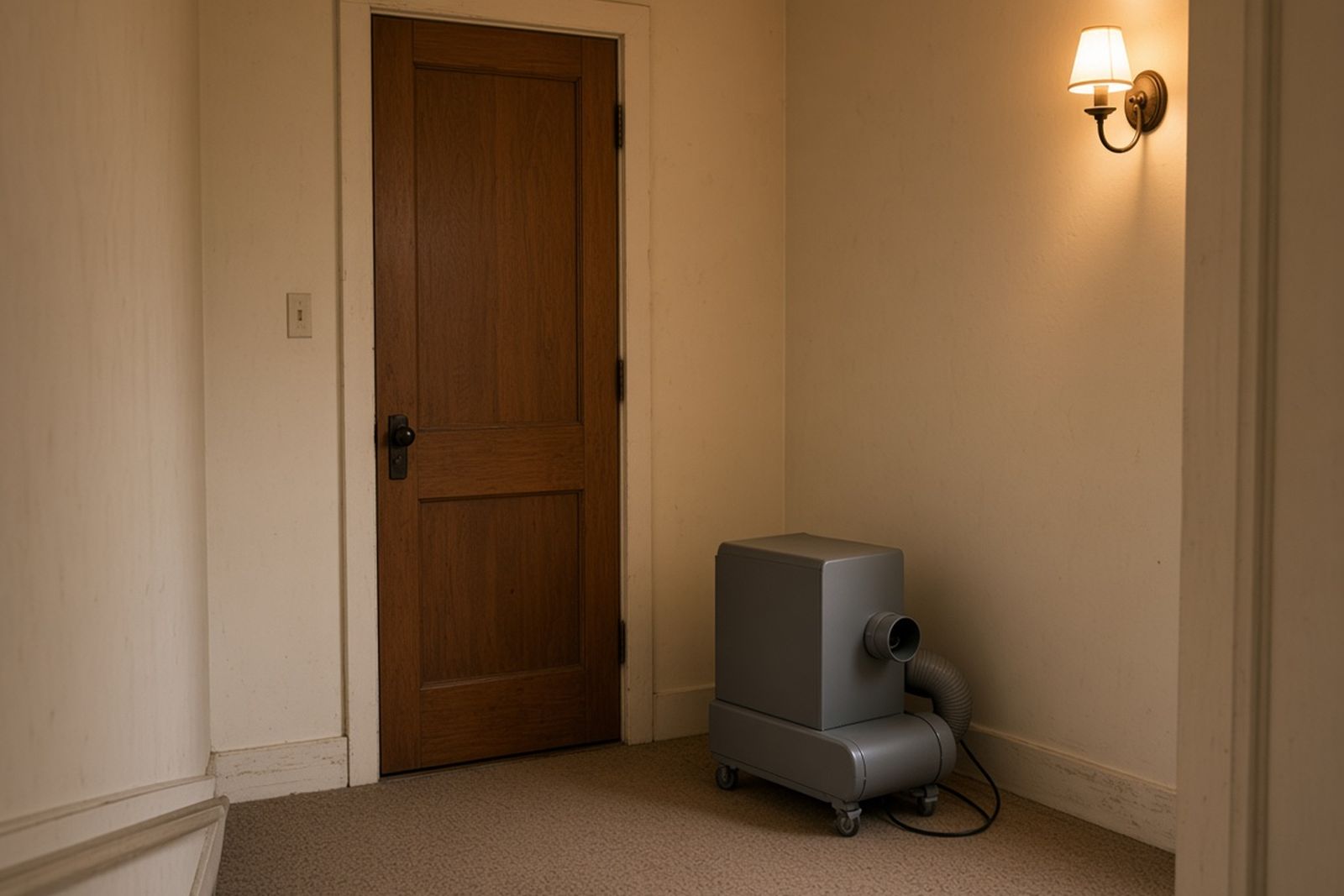
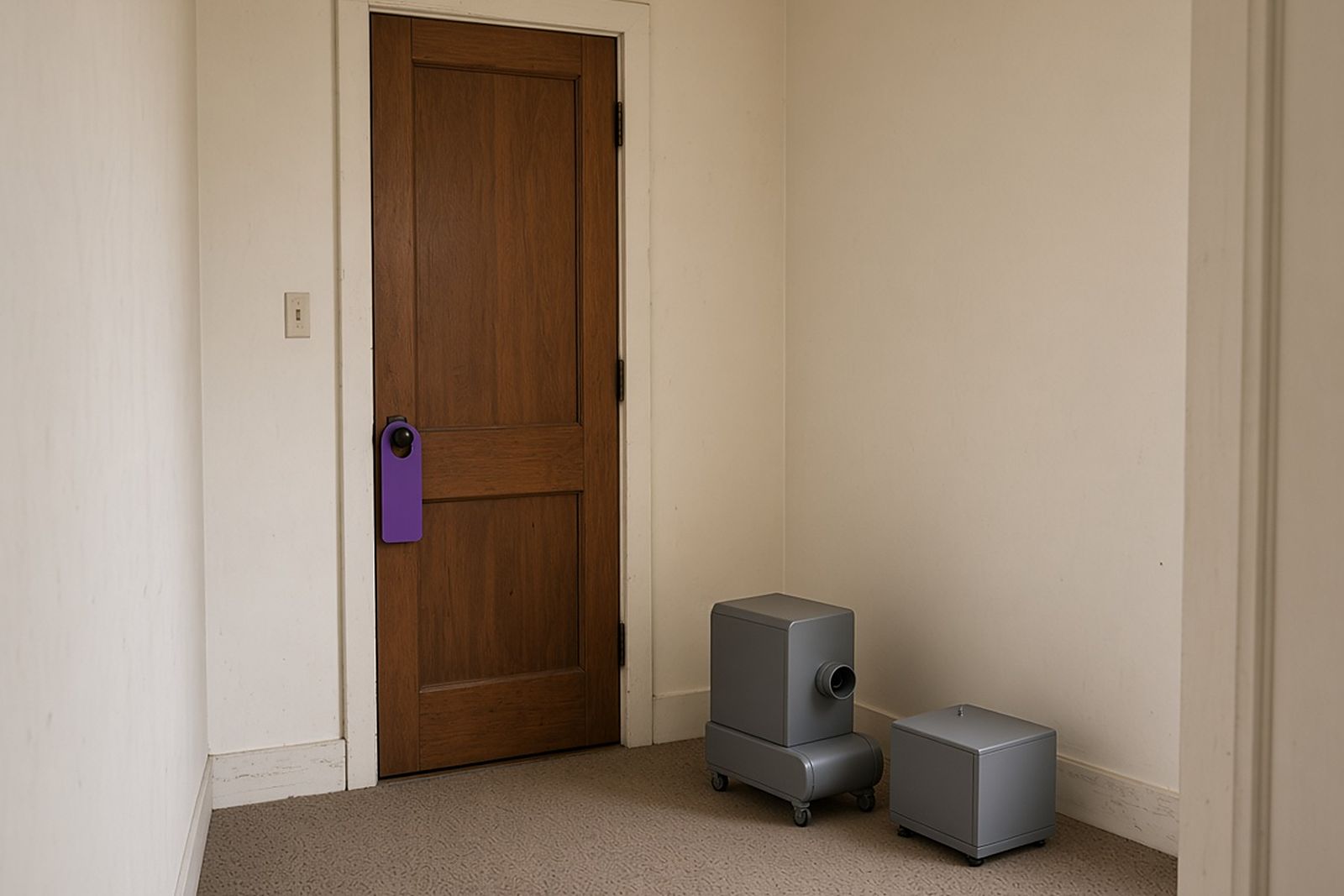
Air-filtration and odor-control units staged outside a closed door with a do-not-enter tag on the handle

Facts worth knowing

  • In a UK interview study, 35 of the 49 bereaved people who chose to view or identify the body said it was the right decision; nine had mixed feelings.

    Why it matters: If you are unsure about viewing, it may help to know most people in this small study felt they chose right.

    Source: Chapple et al., 2010

  • In a Swedish survey of 666 suicide-bereaved parents, those who viewed their child's body reported nightmares about the death more often than those who did not; cause is unproven.

    Why it matters: Viewing can leave hard images for some people, so you may want support in place before and after you go.

    Source: Omerov et al., 2014

  • In interviews with 34 Brazilian relatives after a death, keeping children away from the scene was one of the first things some did.

    Why it matters: Keep children out of the affected rooms until cleanup is finished, and you may want to ask a counselor how to talk with them.

    Source: Marchionatti et al., 2026

Tools that help right now

What would you do?

Poll results

Vote to see how other people answered. You can change your answer at any time.

Your experience

As a landlord, how long would you wait for the tenant's family before arranging cleanup yourself?

Be the first to vote
Process

Which part of an unattended death project would you find hardest to manage?

Be the first to vote

Need help in Boston?

Send a short message about the property to the follow-up inbox. A coordinator can reply by email with next steps.

Your request is sent to the follow-up inbox. A coordinator can reply by email.

If anyone is hurt or in danger, call 911 first.