Los Angeles, CA

Unattended Death Cleanup Planning in Los Angeles, California

What to do, who to contact, and what to ask in Los Angeles.

Los Angeles help after an unattended death: county release, towers, Valley garden apartments, hillside homes, heat waves, and estate paperwork.

Get an email reply about unattended death cleanup

Send a short message to the follow-up inbox. A coordinator can reply by email. This form does not send emergency help; call 911 first if anyone is in danger.

Tell us what you need help with. Share a short description; please leave out medical details, access codes, and other sensitive information.

A request does not confirm a booking. For immediate danger, contact local emergency services.

Or email info@unattendeddeath.online

The short answer for Los Angeles, CA

Los Angeles is large enough that a neighbor's hallway complaint or a missed lease payment is often how a death comes to light. If you are the family, the owner, or the manager, the first step is the County of Los Angeles Medical Examiner's release. After it, a trained crew handles the unit. See how towers, Valley complexes, and hillside homes differ for you.

What to do, step by step

  1. 1

    Wait for the county, then gather two signatures

    No floor should be opened until the County of Los Angeles Medical Examiner and any police hold have cleared the unit. Both the tenant's family and the building owner should sign before work starts. Write down the loading-zone rules, the gate codes, and any limits on a hillside driveway. Once it is safe to stand at the door, have someone photograph the room from there. You will be glad to have that record later.

  2. 2

    Make sure the check fits your building

    For a Downtown or Koreatown tower, hallway protection and closed returns come first. In a hillside bungalow, they check the room or crawl space below. In a Valley garden apartment, they look at the shared walkways and laundry area. In every case they should lift flooring past the stain and check the tile grout if fluid reached a bathroom. Ask that the cut line come from moisture readings.

  3. 3

    Keep air from traveling during heat and wind

    The returns that serve your unit should be closed, and the entry door kept shut between trips. HEPA filters run inside the sealed area. Portable fans stay away from anything damp. The ducts get a look only if the smell still points there after the pad, carpet, and furniture are out. You are more likely to need that after a long Valley heat wave, when the system barely rested.

  4. 4

    Keep item lists and repair bids on separate pages

    Ask for a list of the fabrics and furniture thrown out, and a note of belongings held for the family. If the estate's lawyer asks, have serial numbers photographed. You should get photos of the bare subfloor and a separate list of flooring, baseboard, and paint work. When hazard-removal bills and remodel quotes are not mixed, your insurance and probate files are far easier to follow.

What cleanup is like in Los Angeles

Your kind of building matters, since each one across the basin behaves in its own way. In a Koreatown or Downtown tower, shared air carries the smell out of a closed unit, and a neighbor often reports it first. If you live in a Valley garden apartment, you share breezeways and laundry rooms. Hillside homes in Echo Park, Silver Lake, and the Hollywood Hills sit on slopes, so an upstairs suite may drip into a dressing area or garage below. During heat and wind, cooling runs nonstop and homes stay sealed for days. A simple wipe-down plan means little until the company knows which of these you live in.

Temperature inversions and Santa Ana winds keep your windows shut and the air handler running. The smell from the pad and upholstery then circulates inside. If you prop the door open for fresh air, it moves into the hall and stairwell. Soft goods stacked in an underground parking cage become a second source. Insects on a sunny windowsill point to a longer gap, common in a rental after a missed lease payment. In a remodeled flat, floating floors over foam can hide fluid that spread sideways with little to see on top.

For city addresses, the County of Los Angeles Medical Examiner and any police investigation set when cleanup can begin. After that, your right to choose may be shared with an executor, a building manager, an HOA board, or a lawyer listing belongings. In older Eastside and South LA homes, a tile bath can look clean while the grout holds a smell. If you own an older rent-controlled building, get the family's sign-off before you empty the unit. It protects you and respects them.
What to expect for your type of home

  • Downtown lofts and Koreatown high-rises: the service elevator has to be reserved days ahead. Ask your building office now, so the crew's date is not lost.
  • Silver Lake and Echo Park stilt houses: there is a level beneath the bedroom. Ask the crew to check it, even when nothing shows from above.
  • Valley garden apartments: shared breezeway returns should be closed off and the path to the laundry room protected. Let your manager know before work begins.
  • Eastside bungalows with vintage 1920s tile baths: old grout holds odor. Ask for the grout to be tested, and ask which of the tile can stay.
  • Valley apartments with wall-to-wall carpet: the carpet hides how far the pad is wet. Ask to see the readings before you agree to a small patch.
  • Koreatown and Downtown buildings: noisy work and freight elevator use are often limited to set hours. Book both with the building before you schedule a crew.
  • Units cooled through a Valley heat wave: the AC may have run for days. Tell the crew which returns serve the unit before anyone changes a filter.
  • Buildings with underground parking cages or storage lockers: fabric may have been moved there early on. Have those spaces checked along with the unit itself.

Papers and records to keep

  • Release confirmation from the County of Los Angeles Medical Examiner or police for the city address
  • Signed access from the family and from the apartment owner or manager
  • Parking, loading, and noise-hour notes for your specific building
  • Doorway photos of the unit, taken before anything was moved
  • Meter readings for the unit's floors and any room or garage below
  • A tally, by room, of each item carried out of the apartment
  • Which returns were closed, and how the filters looked after long cooling runs
  • Written choices by the family or executor on which belongings are kept
  • Waste receipts if regulated material left the site, plus a repair list with subfloor photos

Local offices and official help

Common questions in Los Angeles

Why does cleanup differ in a tower, a Valley complex, and a hillside house?

The smell and fluid travel differently in each. In a Downtown or Koreatown tower, it spreads through shared returns and halls. In a Valley garden apartment, it moves along open breezeways, stairs, and laundry rooms. In a hillside house, fluid can drip into a room or crawl space below. All three can hide a soak under carpet or foam. Name your building type first, and the right protections follow.

Why do long heat waves make the smell worse?

During Santa Ana winds or a Valley heat wave, windows stay shut and the AC runs for days. The smell from soaked carpet and furniture circulates through the unit and sometimes into the apartments next door. Opening the door for a few minutes does not remove the source. The returns should be closed early and the soaked materials taken out. Tell your insurer how long the AC ran. It explains a smell that came back.

Can the old tile bathroom be cleaned and kept?

Not always. Tile, grout, and natural stone can soak up fluid, above all in the older bathrooms common in Eastside and South Los Angeles homes. A shiny surface can still hide a smell in the grout lines or under a threshold. Ask for moisture checks and a close look at the grout. Some tile can stay, and some sections come out to a clean edge. Have the choice written down for the tile contractor.

How does waste leave a Downtown or Koreatown tower?

By the freight elevator and loading dock, reserved in writing. Ask the building to pad the elevator cab. Lobby and hallway floors are protected, and carts are sealed so nothing drips in shared areas. Work follows the building's noise hours. Notices to residents should mention work times and access changes only. If your family needs to recover belongings, set a short window before disposal. Careful planning keeps management on your side.

Why keep the cleanup bill apart from a unit upgrade?

So everyone can see which costs came from the death itself. Ask for a cleanup description that lists each soft item removed, the cleaning of hard surfaces that stay, drying checks, and waste handling. New paint, flooring, and fixtures belong on a separate estimate. Have the bare subfloor or slab photographed. In older or rent-controlled Los Angeles buildings, an owner may want to upgrade the unit, which is a separate matter.

What about belongings in the parking storage?

Have them checked along with the unit. Many Los Angeles apartment buildings have storage cages or cabinets in the garage, and relatives sometimes move bedding or clothes there on the first visit. Those items can hold smell and moisture. Ask for photos, and choose with the estate what to keep. Soiled items should leave quickly, so they do not affect a neighbor's storage or the garage air.

We live far away. How do we manage this?

Start by confirming the release with the County of Los Angeles Medical Examiner. Then name one relative or lawyer to approve the work. Ask the building manager to share the contractor's contact details. Request photos and a written description before any removal. Choose ahead of time which items to save and ship. With clear long-distance communication, the unit can be cleaned without anyone traveling right away.

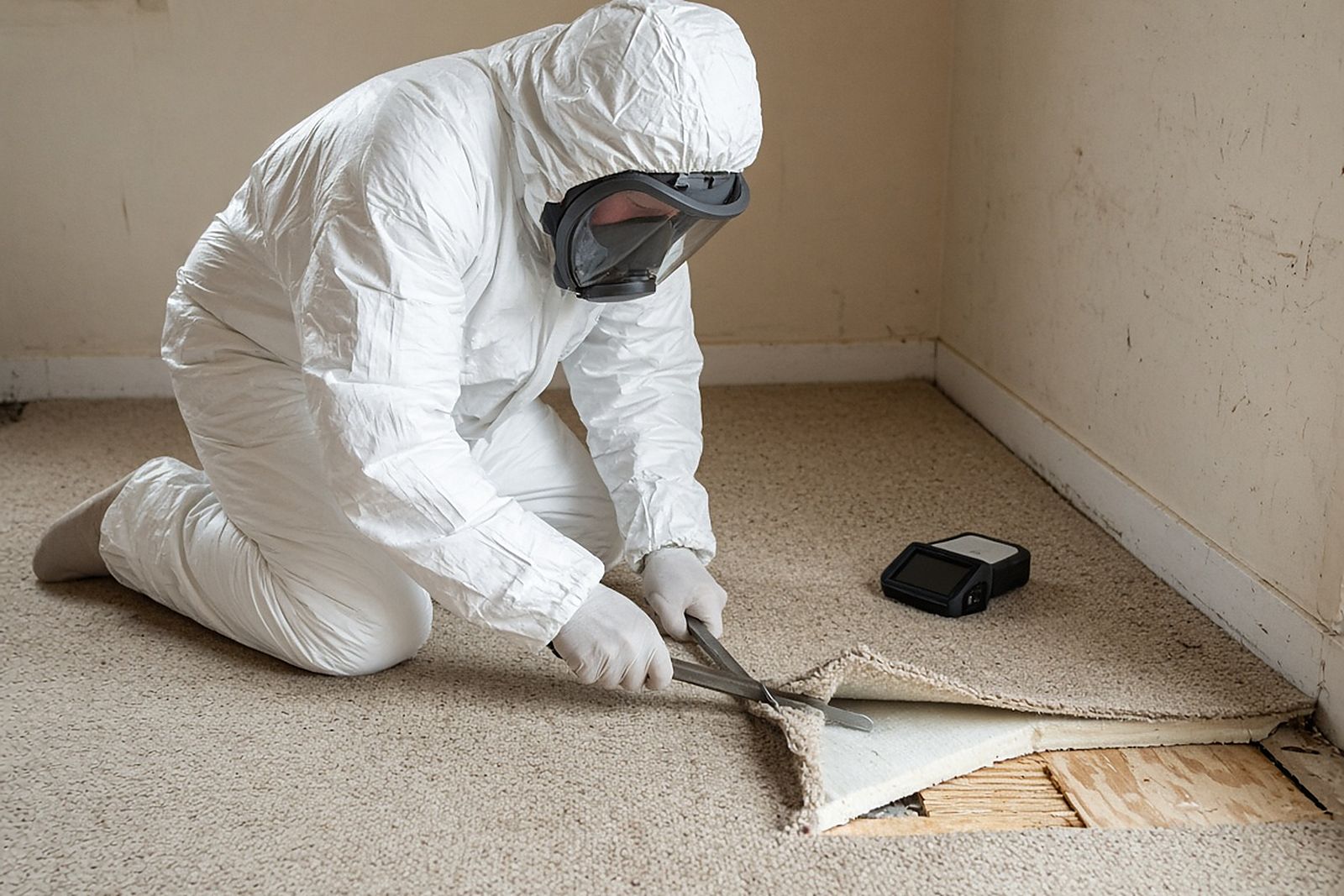
Technician in a full-face respirator cutting back carpet and pad to expose the subfloor
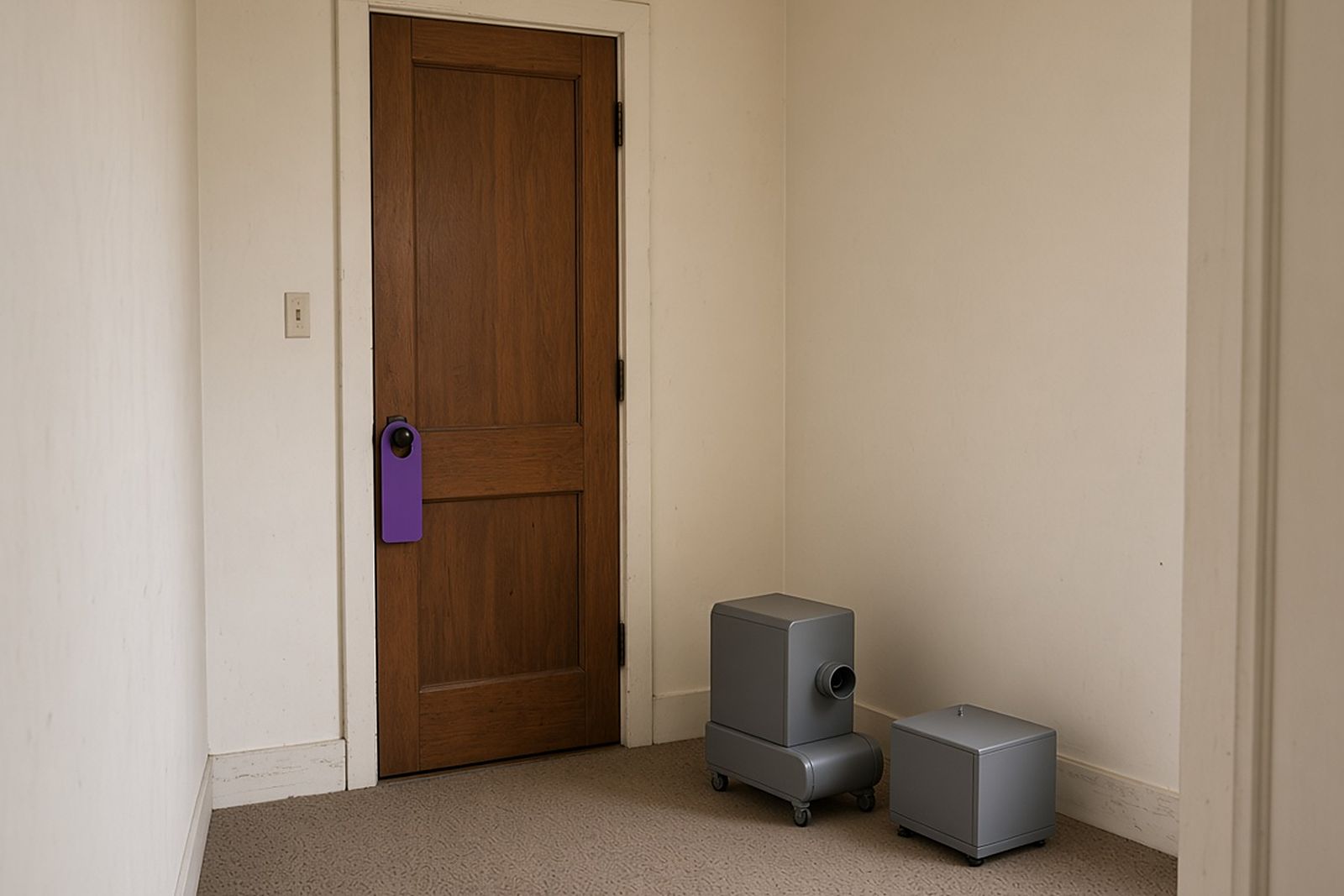
Air-filtration and odor-control units staged outside a closed door with a do-not-enter tag on the handle

Facts worth knowing

  • Fixr's 2025 guide lists unattended death cleanup at $200 to $300 per hour, and hoarding cleanup at $25 to $150 per hour or about $1,000 per day.

    Why it matters: These are rough estimates and local prices vary, so get a written quote that shows your hourly rate and expected hours.

    Source: Fixr, 2025

  • In a 2021 UK survey, 85% of people who claimed Bereavement Support Payment had not known about it before they used bereavement services.

    Why it matters: If you are in the UK, check the current government rules to see whether you can claim; many people did not know it existed.

    Source: UK Department for Work and Pensions et al., 2021

  • In a small UK interview study published in 2022, some bereaved families said they were given less than one week to clear the home.

    Why it matters: Ask the landlord or housing office early what the clearance deadline is, and whether you can have more time.

    Source: Hansford et al., 2022

Tools that help right now

What would you do?

Poll results

Vote to see how other people answered. You can change your answer at any time.

Your experience

As a landlord, how long would you wait for the tenant's family before arranging cleanup yourself?

Be the first to vote
Process

Which part of an unattended death project would you find hardest to manage?

Be the first to vote

Need help in Los Angeles?

Send a short message about the property to the follow-up inbox. A coordinator can reply by email with next steps.

Your request is sent to the follow-up inbox. A coordinator can reply by email.

If anyone is hurt or in danger, call 911 first.