Free unattended death cleanup tool
Unattended Death Cleanup Waste & Disposal Classifier
Five questions about the material point to the likely waste category and which authority to confirm the rules with.
After a late discovery, the amount of material leaving the property can be surprising. It may include carpet and pad, pieces of subfloor, drywall, a mattress, padded furniture, and sometimes cabinets. Landlords and executors often want to know why so much is labeled regulated waste and hauled away separately at a cost. They also wonder why other items are set aside for the estate. This tool asks a few short questions about one item or material. Did it touch fluids from the body? Does it soak things up? Does it have sharp parts? Does it have any chemical residue on it? Then it shows the likely waste type. It also names the kind of agency you can check with.
The tool also helps with choices about belongings. That is often the most argued-over part of this kind of job. Items that fluids or insects never touched are not waste at all. They are estate property. They should be listed and held for the family, no matter their condition or smell. Items that soaked up fluids cannot be saved and belong in the regulated waste. Building debris cut out for access but not soiled may go out as normal construction waste. Knowing which pile an item belongs in helps you read a provider's bill and waste shipping record with confidence. The tool does not make legal rulings, because rules vary by state and county. It tells you who to ask.
How to use it
- 1Pick one item or material. It might be the mattress, a piece of subfloor, a chair, or a box of papers from a closet across the room.
- 2Answer whether it touched body fluids or insects, whether it soaks things up, whether it has sharp parts, and whether anyone reported chemical residue.
- 3Read the likely waste type and the reason for it. Note the kind of agency the tool suggests you check with in your state and county.
- 4Compare the result with how the provider sorted that item. Ask about any difference, and file the waste shipping record with the property papers.
Prefer to ask a person?
Your request is sent to the follow-up inbox. A coordinator can reply by email. Not for emergencies; call 911 first if anyone is in danger.
Work out the likely waste path
Unattended Death Cleanup waste and disposal classifier
Points you to the likely waste category and who confirms the rule. State and local definitions control; verify before anything leaves the property.
Likely regulated medical waste (biohazard)
- Materials saturated with blood or other potentially infectious material, or that would release liquid if compressed, are treated as regulated medical waste in most states.
- Packaging usually means red bags inside rigid containers, labeled with the biohazard symbol, and a licensed transporter with a manifest.
Who confirms the rule
- State health or environmental agency (regulated medical waste program)
- The remediation provider, who should name the transporter and treatment facility in writing
This is an educational sorting aid, not a regulatory determination. Waste rules vary by state and county.
A worked example
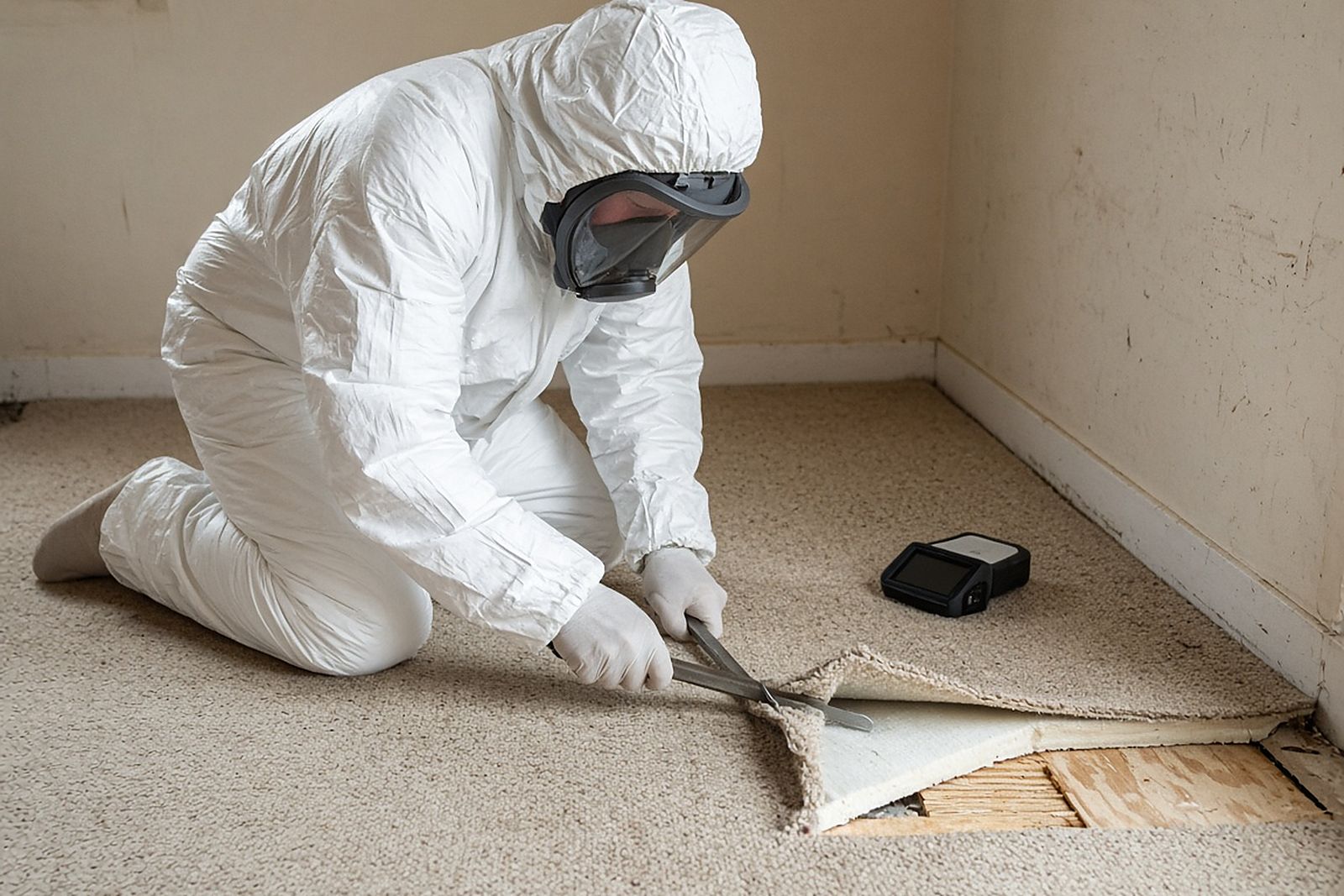
Here is a made-up case. An executor is reading a cleanup bill for a house where his aunt died and was found after several weeks. The bill lists a large amount of regulated medical waste, a smaller amount of construction debris, and a storage fee for boxed belongings. The heirs have asked him to explain it. He opens the tool and goes through the items. First, the bedroom carpet, pad, and a piece of plywood subfloor. They touched fluids, they soak things up, and they have no sharp parts or chemicals. The tool says regulated medical waste. It suggests he check with the state health or environmental agency that oversees medical waste haulers. Next is the drywall the crew cut from the closet wall to look inside. It turned out to be dry. It did not touch fluids, it soaks things up, and it has no sharp parts or chemicals. The tool says normal construction debris. That explains the separate, cheaper line. Then a kitchen table across the house. It had no contact and does not soak things up. The tool notes it is estate property to be listed, not waste. Last, a box of insulin pens found in the fridge. These are sharp objects that may hold medicine. The tool flags them for a sharps container and maybe for medicine waste rules. It suggests he ask the state pharmacy board or environmental agency. He writes a short note for the heirs with the waste shipping record attached. Then he calls the state agency to confirm the hauler's permit number.
Numbers behind waste classifier decisions
- 34,696
Federal OSHA conducted 34,696 inspections in fiscal year 2024 and has roughly one compliance officer for every 70,000 workers.
Read with care: Excludes inspections by state-plan agencies.
Source: OSHA (2024)United States, federal OSHA, FY2024
- 10 square feet
EPA says moldy areas smaller than about 10 square feet can usually be handled by the homeowner, while larger areas warrant professional guidance.
Read with care: Applies to mold; contaminated sewage or biohazard materials are treated differently.
Source: US EPA (2026)Residential guidance, United States
- $357.5 million
IBISWorld counted nearly 600 U.S. crime-scene cleanup firms with revenues of $357.5 million and profits over $99 million in 2015.
Read with care: Decade-old figure reported secondhand; IBISWorld no longer publishes this niche report publicly.
Source: IBISWorld (reported by The Philadelphia Inquirer) (2015)United States, crime scene cleanup industry, 2015
- $27.2 billion
IBISWorld sizes the broader U.S. remediation and environmental cleanup services industry at $27.2 billion in 2026, growing 1.5% that year.
Read with care: Includes soil, groundwater and hazardous-material remediation; biohazard cleanup is a small slice.
Source: IBISWorld (2026)United States, NAICS remediation services industry, 2026 estimate
These figures are public research and agency data, not this network's own job records. Keep each number with its population, year and limits; none of them predicts cost, timing or outcome at a specific property.
Waste & Disposal Classifier questions for unattended death cleanup
Why is so much material treated as regulated waste after an unattended death?
Because fluids from a body soak deep and wide over several days. Any soft material they reached cannot be disinfected in place. Carpet, pad, subfloor, mattresses, and padded furniture all soak things up, so they leave as regulated waste. The amount shows how far fluid soaked in, not what the provider prefers. Ask for the waste shipping record. If the amount seems too big compared with the photos, ask the provider to walk you through what was removed and why.
Can clean belongings that smell be kept or given away?
Smell alone does not make an item waste. Hard items can be cleaned and disinfected. Some soft items, like clothing, can be washed or treated by a professional. Fabric that is soaked with odor may not come back, though. Belongings are the estate's property. So the choice belongs to the executor or family, not the crew or the landlord. Ask the provider to list and box the items, so the family can decide without pressure.
What happens to medicines, needles, or oxygen equipment found in the home?
Medicines may need to go through a drug take-back program or another special disposal path. Needles go in sharps containers. Oxygen tanks go back to the supplier instead of in the trash. These items often turn up in the homes of people who lived alone. Point them out to the provider so they are handled the right way. Rules for each vary by state and county. Check with the pharmacy board or the environmental agency.
Is the removed subfloor hazardous waste or medical waste?
Soiled subfloor is usually handled as regulated medical waste, not hazardous waste. That is because the concern is germs, not chemicals. The hazardous waste label applies when chemicals are involved. That is rare in this kind of job, unless the home had stored chemicals or the death involved certain substances. The tool includes a chemical residue question to catch that case. If the situation is unusual, check with the state environmental agency.
How do I confirm a hauler is actually permitted?
Ask the provider for the hauler's name and permit or registration number. Then look it up in the public records of the state agency that controls medical waste hauling. That is usually the health or environmental department. The waste shipping record should show the hauler and the treatment site. If a provider cannot name the hauler or show a waste shipping record, that is a serious gap. Rules vary by state and county, so check with the local authority.
Can a mattress or recliner that fluids reached be cleaned instead of discarded?
Almost never after a late discovery. Mattresses and padded furniture have foam, padding, and fabric layers. These soak up fluids deep inside, where cleaning and disinfecting cannot reach. Even if the surface looks fine, odor and residue stay. These items usually go out as regulated waste. If a piece means a lot to the family, ask the provider whether a hard frame or a small detail could be saved and cleaned instead.
What if the family wants to see the list of discarded items before disposal?
Ask the provider to hold soiled items for a short time in sealed bags or containers. Ask them to send photos and a written list for review before hauling. Then the family can confirm that nothing that cannot be replaced is being thrown away. There are practical limits on holding regulated waste, so agree on a short review window. Items that cannot be saved may still be photographed, so the family has a record.
Related community polls
Every count is a real visitor vote; nothing is seeded or padded. One vote per poll per device, and you can change your answer.
As a landlord, how long would you wait for the tenant's family before arranging cleanup yourself?
Which part of an unattended death project would you find hardest to manage?
Other unattended death cleanup tools
Cost Range Estimator
Set the affected area, surface types, severity and extras to see an educational cost range and the factors that move it.
OpenProvider Vetting Checklist
Fifteen questions to ask any remediation provider, a readiness score, and a copyable list of what is still unanswered.
OpenInsurance Claim Organizer
A guided checklist from finding the policy to tracking the carrier decision, with a printable summary of where the claim stands.
OpenFirst 24 Hours Planner
Tell the planner a few facts about the situation and get an ordered list of who to call, what not to touch, and what to photograph.
OpenDIY or Call a Pro? Risk Check
Eight yes-or-no questions that produce a risk level and explain when professional help is the safer choice.
OpenMore on unattended death cleanup
Unattended Death Cleanup services
Learn what cleanup after a late discovery involves. It covers tracing how far fluid soaked into the subfloor, odor treatment, listing belongings, and move-back-in records.
Costs explained
What drives the price, published cost ranges, and how to read a written quote line by line.

Insurance and payment
Which policies may respond, how to document a claim, and what to do if coverage is denied.
Community polls
See how other landlords, executors, and relatives handled belongings, talking with tenants, telling buyers, and subfloor choices. Share your own view without giving your name.
Knowledge quiz
Test what you know about odor signs, who is in charge, closing off rooms in shared buildings, taking out soaked materials, waste records, and final sign-off papers.
Articles and resources
Longer reads on handling an estate from far away, working with tenants after a death in the building, and what honest cleanup after a death looks like.
Field guides
Guides for landlords and executors. They cover access, who is in charge, telling the insurer, how long to hold belongings, and when people can safely move back in.
City guides
Find cleanup providers by city and state. Then check their licenses, waste handling, and how they inspect the subfloor yourself before you approve any work.