Field guide
Unattended Death Cleanup: Emergency Response Versus Remediation
Learn how welfare checks, official scene control, short-term fixes, death cleanup, pest and utility work, rebuilding, and moving back in each stay separate.
For: Families, estate representatives, owners, landlords, facility teams, and insurers dealing with a property after an unattended death.
Organizational editorial byline · Updated 2026-08-01 · Verify case-specific requirements with the responsible authority.
Ask about your situation
Your request is sent to the follow-up inbox. A coordinator can reply by email. Not for emergencies; call 911 first if anyone is in danger.
Direct answer
What is the practical approach?
After an unattended death, different people are in charge at different stages. Call 911 if you are worried about someone's safety, or if there is danger, fire, violence, or a medical emergency. Don't go in just to confirm that someone has died. While police, the coroner or medical examiner, fire, health, utility, or building officials are in control, follow their directions. Private cleanup starts only after officials release the needed area and property, and an approved person allows access. The cleanup company then checks the conditions left by the delayed discovery. It protects its workers, deals with affected materials, and plans for belongings and waste. It also writes down the agreed finish line for the job. Security, pest control, utilities, mental-health support, rebuilding, insurance, and moving back in are each separate decisions.
Send a suspected death or urgent danger to emergency services
If a person may not be responding, may be in danger, or needs a welfare check, call the right emergency service. Follow their directions. Don't go into a property that may be unsafe just to see what happened. Don't move a person, open windows, turn on equipment, or start cleaning. Fire, violence, chemicals, building damage, electrical hazards, a gas smell, or a medical need may call for trained responders. Private cleanup companies do not replace paramedics, police, firefighters, crisis services, or other public officials.
Tell the dispatcher what you noticed, not what you think happened. For example, say you can't reach the person. Mention any odor you noticed from a place you were allowed to be. Report visible damage, alarms, pets, how to get in, or known hazards. Don't share details with neighbors or on social media. Building staff should save door logs and camera records as their policy and officials require. They should not run their own investigation. The first goal is a safe check by officials. It is not keeping a move-out schedule or lowering the expected cleanup bill.
Write down who controls the scene, the body, property, and information
Several officials may be involved at once. Police may control evidence and entry. A coroner or medical examiner may control the body and related items. Firefighters may handle a hazard. A utility may shut off service. A building official may limit who can live there. Write down the agency, the contact, the decision, the time, and the exact area it covers. When one responder leaves, that does not mean every room, item, vehicle, or system is released. Ask questions if you are unsure, but don't push officials to hurry.
Who controls the property is a separate question. An owner, estate representative, landlord, tenant, trustee, insurer, or lender may each control different approvals. Find out who can approve entry and opening up walls or floors. Also find out who decides what happens to personal things, who approves bills, and who gives final sign-off. A family contact can get kind, non-graphic updates without being the legal signer. The cleanup company should say no to entry when access is disputed. It should never claim to decide next of kin, ownership, cause of death, or what counts as evidence.
Keep short-term fixes small after the release
After release, some limited work may be needed before the full check. Examples are securing a door or window, limiting access, or protecting a shared hallway. Others are having a qualified person shut off a utility, getting an approved essential item, or keeping weather out. Write down the purpose, the area, the most work allowed, how it will be priced, who signs, photos, and when to stop. This short-term work should keep information and options open. It should not turn into open-ended tear-out. It should not cover up affected finishes, disturb items that are still off-limits, or suggest the cleanup is done.
When someone says the work is urgent, ask what is changing. Heat, humidity, spreading fluid, pests, weather, and break-ins can affect a property. But there is no set countdown that makes every wall or floor unsaveable. Ask what was seen, which step slows the change right now, and which choice can wait for the full check. If door security, plumbing, electricity, gas, fire protection, or the structure is involved, bring in the right qualified person. Don't expect a cleanup crew to own every system.
Begin cleanup with a map of the property after a delayed discovery
Emergency responders focus on saving lives, official investigation, removing the body, and controlling hazards. Their records do not create a cleanup plan on their own. After release, map visible matter and where fluid may have run. Map the routes responders and residents took. Note soft materials and layers, lower floors, belongings, and insects. Note links to heating and cooling (HVAC) or plumbing, the utilities, and areas that can't be checked. Write down actions that changed conditions, like running water, moved furniture, open windows, fans, or removed doors. Don't treat needed emergency work as a contractor mistake.
The cleanup plan should then set out access and how any opening of walls or floors will be controlled. It should say what will be cleaned and what will be removed, and which products will be used. It should cover worker safety, waste types, who holds belongings, testing, privacy, and the final report. OSHA rules apply to covered work by employers. EPA pesticide labels set the product directions. Neither one releases a scene, picks a private company, or clears the whole property. State, local, transport, building, or disposal-site rules may need to be checked for the actual place and material.
Handle insects, odor, air, and utilities without mixing up roles
A delayed discovery can bring insects, and odor can spread beyond the main area. Pest control may need to identify the pests, use labeled products, reach nearby spaces, and come back to follow up. Biohazard cleanup still has to deal with the affected materials. Killing the insects you can see does not remove the source they feed on. Tearing things out without controlling active pests can spread them. Assign the order of work and the records to the right people. That means the cleanup company, a licensed pest professional where required, and the building manager. Don't assume one treatment solves every problem.
HVAC, windows, fans, drains, water, electricity, and temperature can all affect the check and the work. Keep a log for each system. Show whether it is on, off, locked, damaged, or unknown. Show who is responsible and what would need to happen before it changes. Normal airing out or a new filter does not prove a shared system is fixed. You may need a qualified HVAC, electrical, plumbing, or building professional. The cleanup plan should explain what depends on these systems. It should stop when a system problem is beyond the company's role or skills.
Keep family support, privacy, insurance, and property choices separate
Families and residents may be dealing with shock, grief, travel, housing, estate questions, and property decisions all at once. Where you can, use one family contact and one person who makes the technical decisions. Keep graphic details to a minimum. Share photos only when needed, and keep building notices neutral. A cleanup company can speak with care. But it is not a crisis counselor, investigator, lawyer, insurer, or estate adviser. If someone is in emotional danger right now, point them to emergency or crisis help, not the project contact.
Insurance review can happen during the check. But coverage does not control the scene release or the agreed finish line for the job. Document the loss. Take reasonable steps within your authority to stop further change. Keep estimates and evidence, and understand who owes payment under the contract. A company should not promise coverage. It should not claim that insurer approval makes a method correct. Temporary housing, lease notices, estate access, privacy, and employee notices each need the right owner or professional.
End every stage by naming who is responsible next
Build one timeline. Include official control, release, short-term fixes, the check, approved cleanup, and changes. Add decisions on belongings, waste transfers, testing, the final report, rebuilding, and moving back in. Each handoff should name what was done, the area still limited, any rules, the records handed over, and who accepts responsibility. For cleanup, record what the open walls and floors looked like before rebuilding covers them. For utilities or pests, keep the specialist's own findings. Don't fold everything into one generic cleanup certificate.
The final cleanup statement should describe what was checked, what was done, and what was recorded. It should list what was left out and what work remains. It should not promise the space is germ-free, that odor will never return, or that every hidden or future problem is handled. The person approved to make property decisions then uses that record with building, utility, rebuilding, insurance, and official information to decide the next use. Following a careful order protects people and privacy. It also makes the recovery easy to understand months later.
Decision table
Send each problem to the role that controls it.
| Problem | Main role | Handoff needed |
|---|---|---|
| Welfare worry or urgent danger | 911 or the right emergency service | Follow directions and keep lawful access ready |
| Scene, body, evidence, off-limits items | Police, coroner, medical examiner, or named official | Exact release area and any limits |
| Broken door or window, utility, fire, or structure concern | Security, utility, licensed trade, fire or building official | System status and short-term fix record |
| Released property after a delayed discovery | Cleanup company that has checked the site | Record of materials, belongings, waste, and completion |
| Insects or building-system concerns | The right pest, HVAC, plumbing, electrical, or building professional | Specialist findings and limits, in order |
| Rebuilding and moving back in | Builder and the person approved to decide on the property | Accepted cleanup report and remaining limits |
Action checklist
- 1Call emergency services for welfare worries and urgent dangers.
- 2Don't enter or change a possible scene without directions.
- 3Log every official, decision, area, and limit.
- 4Confirm who controls the property apart from family contact.
- 5Limit short-term fixes by purpose, area, price, and stop point.
- 6Check conditions again after the official release.
- 7Map fluids, traffic, insects, belongings, systems, and hidden areas.
- 8Assign utilities, pests, structure, and security to qualified people.
- 9Keep crisis support, insurance, and estate choices separate.
- 10Approve a cleanup plan for this site and a way to handle changes.
- 11Finish cleanup before rebuilding covers what was found.
- 12Record each handoff, limit, and next responsible person.
Questions and answers
Should I go into the property during a welfare check?
Follow the directions of emergency services. Going in can expose you to violence, fire, or medical hazards. There may also be structural, chemical, germ, or electrical dangers, and you could disturb evidence. From a safe, lawful spot, share how to get in and what you know about the person. Having a key does not make going in yourself the right choice. Private cleanup starts only after officials release the needed area. A person approved to make property decisions must also allow access.
When can an unattended death cleanup company start?
It can start once the official in charge of the area and items has released them. Any other hazards must be under control or handed to the right people. A person with authority over the property must also allow access. The release may cover only part of the property. The company should record the limits and do its own check of the property. Officials leaving does not create a detailed cleanup plan. If limits on evidence, the body, utilities, structure, or living there remain, those decisions stay with the right official or professional.
What is emergency stabilization?
It is small, recorded work after release that stops a specific problem from getting worse while a full plan is made. Examples include limiting access, keeping weather out, having a qualified person shut off a source, or protecting a shared hallway. Write down the task, the area, the most work allowed, how it is priced, photos, who approved it, and when to stop. This work should not turn into unapproved tear-out or disturb evidence. It is not a claim that the whole property has been cleaned.
Does opening windows fix the odor?
Fresh air can change how strong the odor is. It does not show that affected material has been found or cleaned. It can also push air into other spaces or change what the check finds. After release, look at the source, soft materials and layers, and links to the HVAC. Think about weather, security, and people nearby before you change the air flow. No odor does not prove the work is done. A cleanup company should explain the difference between cleaning the source and short-term air or odor control.
Who decides when a unit can be lived in again?
The approved owner or manager decides how the property is used. They must follow the lease, workplace rules, officials, building codes, and the law. A cleanup company records what it did and its limits. It does not control every utility, structure, fire-safety, pest, code, or future problem. Combine the cleanup report with records from specialists and officials. List rooms that are still limited and work still pending. Write down the decision instead of relying on a promise that everything is completely safe.
Who should I contact first after the authorities leave?
First, confirm what was released and whether any area or item is still restricted. Then identify the person with authority over the property, such as the owner, landlord, or estate representative, because that person approves access and hires the provider. Secure the doors and utilities if needed. After that, contact a qualified remediation provider for an assessment, and notify your insurer or property manager separately.
Can a family member stay at the property during stabilization?
Staying inside or next to the affected area isn't a good idea while work is underway. Stabilization may involve containment, removal, or equipment that makes the space unsafe or distressing to be near. If family members need to be there, agree on a separate, unaffected area, an escort, and a clear time for any visit. Let them retrieve essential items through the provider's documented process instead of walking through the work zone.
Primary sources and scope
These sources support specific safety or process statements. They do not certify a provider, establish a universal property-clearance standard, or replace local requirements.
Use this guide with the planning tools
Open the first 24 hours planner to get an ordered list of who to call, what not to touch and what to photograph. When you are ready to compare providers, the vetting checklist turns the questions in this guide into a list you can send.
Related articles
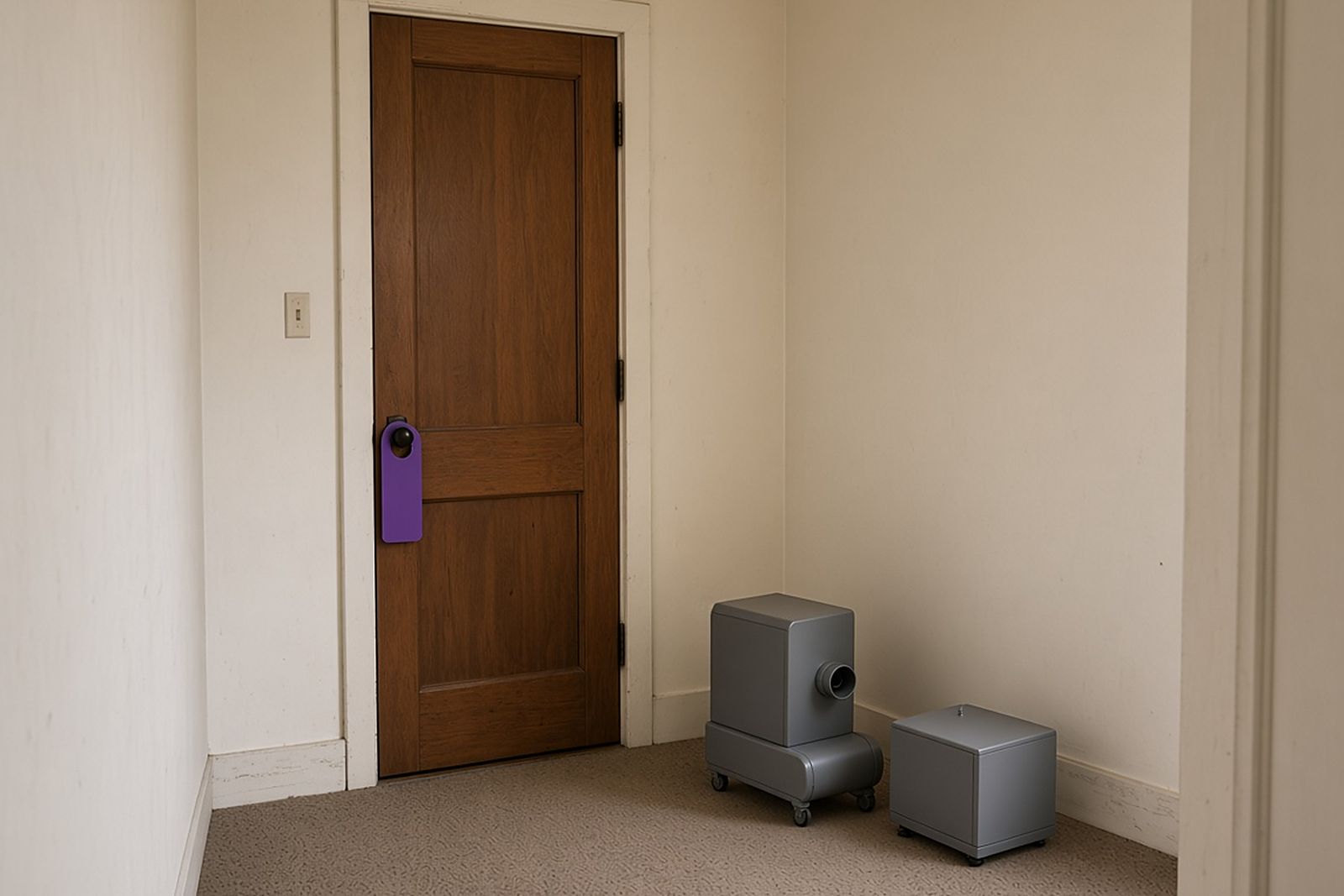 What to Expect During Professional Unattended Death CleanupAfter the medical examiner or coroner releases the home, an unattended death cleanup team assesses how far fluids, odor and insects have spread, then writes a scope. Expect containment, staged removal of flooring and wall materials, odor control that may run several days, pest treatment, careful sorting for documents and keepsakes, regulated waste disposal and a final verification before any repairs begin.
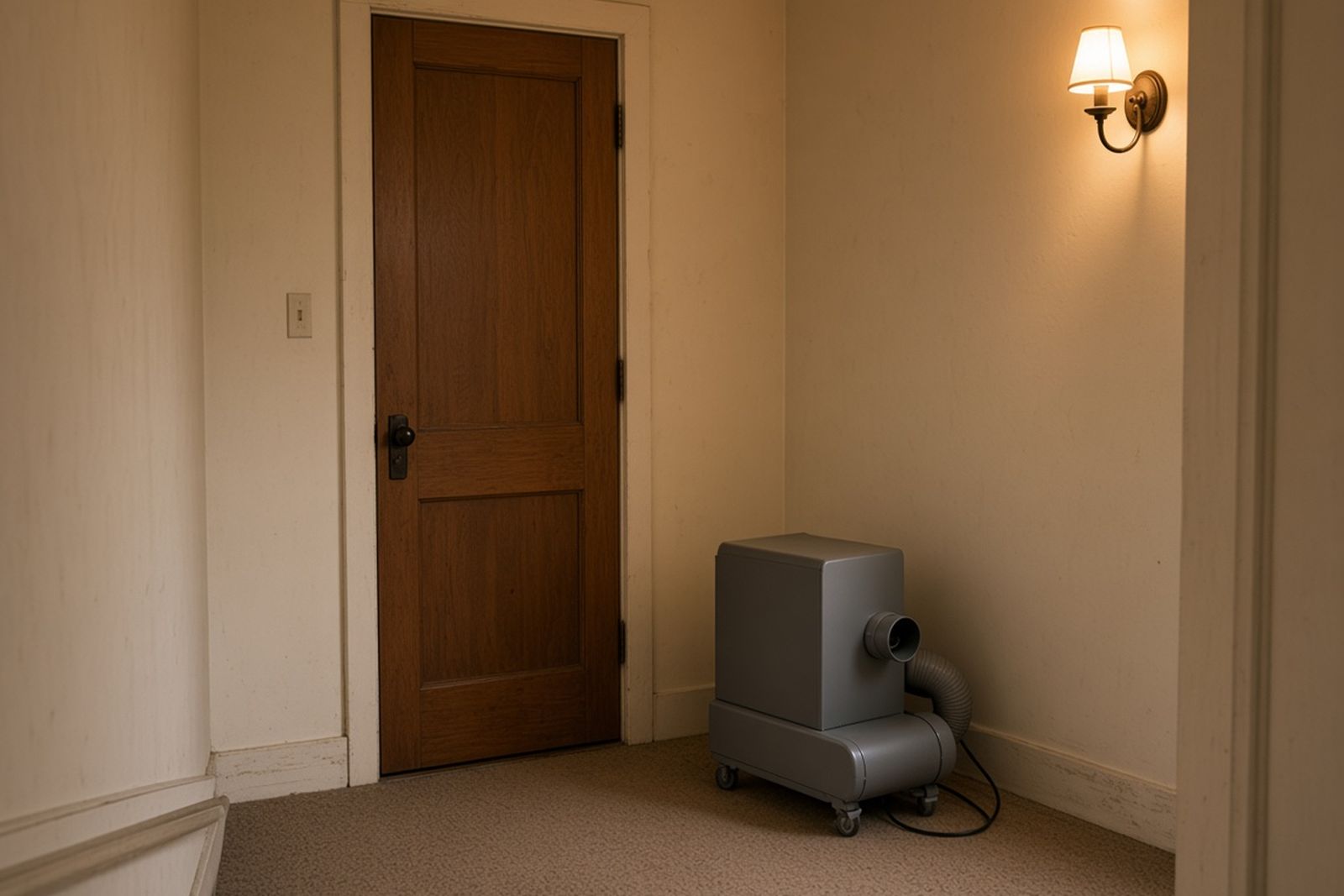 How to Evaluate Equipment Proposed for Unattended Death CleanupEvaluate equipment proposed for unattended death cleanup by matching it to the home's condition: how long the person went undiscovered, how far fluids traveled, whether insects spread and how strong odor has become. Expect respirators for odor and dust, tools for removing flooring and subfloor, insect and odor control after source removal, encapsulating sealers, HVAC attention and verification records. Question anything generic, unexplained or used in place of removal.10 Unattended Death Cleanup Safety Risks to Assess Before Work BeginsBefore unattended death cleanup begins, someone trained should assess ten risks: pathogens and bacteria, strong odor vapors, subfloor weakened by saturation, insects and pests, mold and moisture, medical sharps, clutter and heavy contents, utilities and appliances left running, contamination reaching neighboring units, and the emotional weight on family members. Each should be identified in the walkthrough and matched to a clear control.
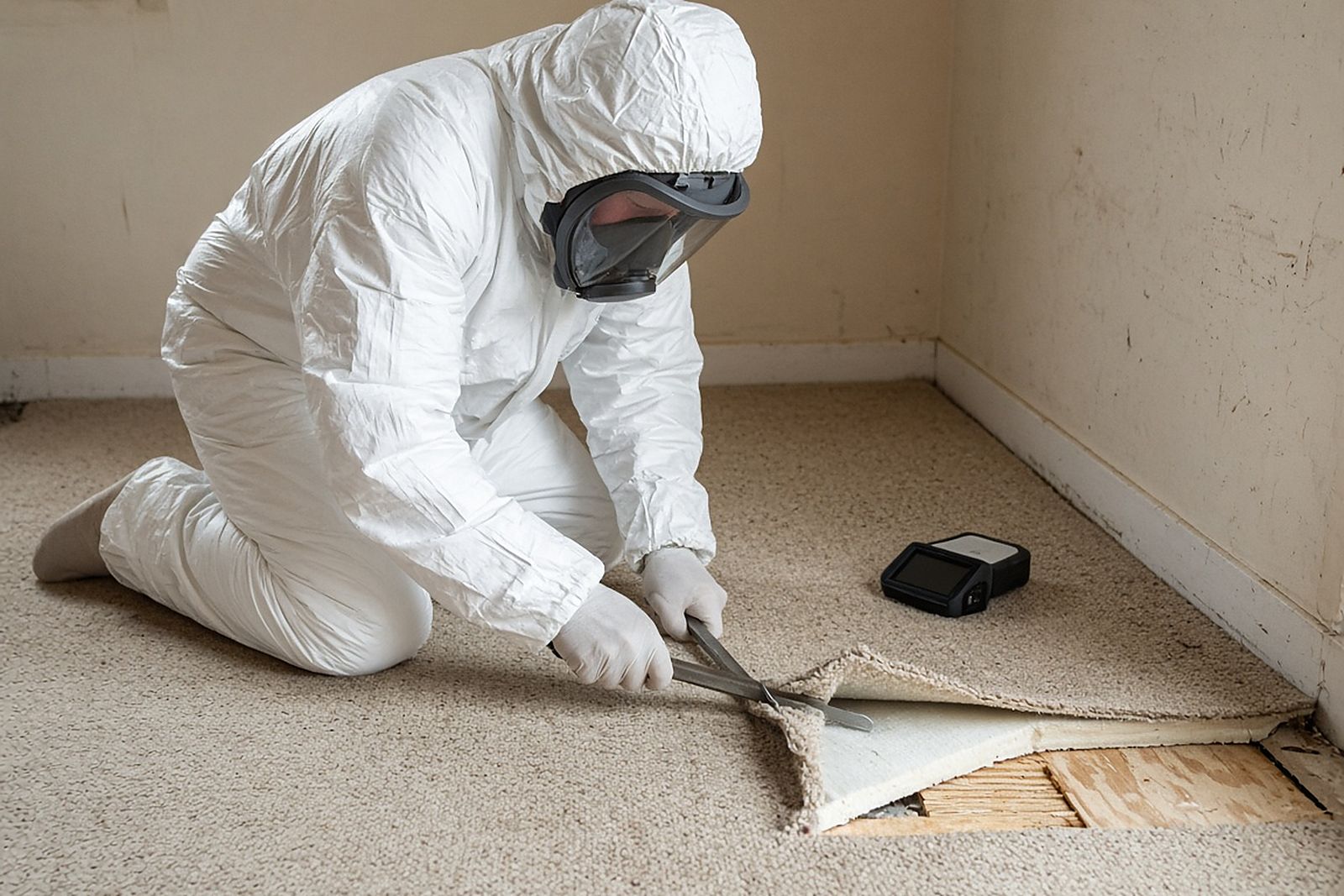 OSHA Regulations and Unattended Death CleanupOSHA rules bind the cleanup company, not the family or estate. After an unattended death, the most relevant standards cover bloodborne pathogens, respiratory protection, general protective equipment and chemical hazards. Decomposition adds odor, insects and fluid that has spread into building materials, so respirator programs and hazard assessments matter more than usual. Families can ask providers to confirm training, fit testing and records.Red Flags When Hiring Unattended Death Cleanup ServicesRed flags when hiring unattended death cleanup include odor-free guarantees without a plan to remove the source, proposals to seal or paint over contaminated flooring, quotes given without checking subfloor or the unit below, no plan for insects, careless handling of estate documents and valuables, poor communication with relatives who live far away, and missing waste records or insurance proof.When ATP Testing Helps—and When It Does Not—in Unattended Death CleanupIn unattended death cleanup, ATP testing is a spot check that hard, cleanable surfaces are free of organic residue after decomposition fluids are removed. It cannot measure odor, look beneath flooring, judge sealed subfloor, confirm insects are gone or identify pathogens. Ask for ATP as one piece of a written verification plan that also covers material removal, odor evaluation, photographs and disposal records.