West · US

Unattended Death Cleanup Planning in Portland, Oregon

Planning unattended death cleanup in Portland, OR

Portland cleanup help for craftsman basements and ADUs where more than one person has a say. Rainy-season drying also raises the risk of mold later on. This is planning guidance, not a claim of a local office or crew in Portland.

Get an email reply about unattended death cleanup

Send a short message to the follow-up inbox. A coordinator can reply by email. This form does not send emergency help; call 911 first if anyone is in danger.

Tell us what you need help with. Share a short description; please leave out medical details, access codes, and other sensitive information.

A request does not confirm a booking. For immediate danger, contact local emergency services.

Or email info@prompartybuses.com

Direct answer

The short answer for Portland, OR

In Portland, long rainy seasons, craftsman and mid-century homes with basements or crawl spaces, backyard ADUs, and close-in apartment buildings all shape cleanup after an unattended death. A death may be found late. Fluid soaks into soft materials, insects appear, and the air system spreads the smell. When moisture lingers, the risk of mold goes up.

Editorial guide · Biohazard Remediation NetworkUpdated 2026-07-22Location focus: Portland, OR

Local planning context

Close-in Portland neighborhoods have craftsman porches, basement rooms, and converted ADUs. A resident there may live fairly privately until a smell or missed calls lead to a welfare check. Outer areas add mid-century ranches and garden apartments with shared carports. Rain and cool weather keep windows closed for long stretches. When a death is found late, that traps odor chemicals inside. Crawl spaces and basements catch fluid that drips through from bedrooms above. The damp climate then slows drying after the tear-out. Treat moisture control and removing the biohazard source as one job.

Apartment buildings along transit lines bring hallway odor paths, tight street parking for load-out, and neighbors who notice the barriers quickly. On rainy days, soft goods moved to covered porches often end up in plastic totes. Those totes can turn into sealed pockets of strong smell. In a vacant Portland unit, flies gathered at the windows still point to a death found late. Older plaster-and-lath walls may show less staining than modern drywall. They can still hold odor where the wall meets the floor. Check the walls and floors with tools and by tracing the smell, not by how the plaster looks.

Nothing in a Portland house or plex should be pulled up until Multnomah County's examiner and the police say the case is closed out. Then, if an ADU and the main house have different occupants, write down who has authority over each. On streets where porches face each other, privacy means covered carts and careful timing of noisy work. Keep records that show the soaked materials left and that drying was confirmed. In this climate, new flooring laid over damp surfaces fails often.

Property considerations

Craftsman crawl spaces and basements need a drip-through check after a discovery upstairs.

An ADU may split authority between the main-house owner and a separate occupant.

Covered porches often hold soft goods moved in totes on rainy days.

When the truck parks on the street, bags must be sealed to protect sidewalks and bike lanes.

Mold risk goes up when Pacific Northwest dampness meets drying that was never finished.

Carports at garden apartments put waste bins in plain view. Use covers and screens.

Response-planning framework

Release and who controls the ADU or main house

Confirm the official release. Then map who controls the space where the person died and who controls the nearby ADU or main house. Written approvals prevent disputes on the lot when noise or waste paths affect another household on the same property.

Check upstairs and downstairs

Look at the main room, the crawl space or basement beneath it, porch storage, and any air returns. Map moisture past the stains and photograph any totes of fabric. Set the cut lines before anyone cuts into the floor.

Seal the work area near porches and shared halls

Close off the work area, protect shared halls or sidewalks, and keep all waste covered. Do not use fans that push air onto porches where neighbors gather. Once the area is closed off, run HEPA scrubbers inside it.

Remove the source, confirm drying, and hand off

Pull the wet carpet, pad, and furniture, then scrub whatever hard surfaces are staying. Dry to recorded readings before any rebuild. Give estates and landlords photo lists and a rebuild list that points out wall spaces prone to mold.

Documentation checklist

  1. 1Multnomah County release note plus signed permission from the owner or estate
  2. 2Notes on who controls the ADU, the main house, and the rental
  3. 3Photos of rooms, crawl spaces, porches, and stored totes
  4. 4Moisture readings through the drying period
  5. 5List of soft materials and furniture removed
  6. 6Steps taken to protect sidewalks and halls
  7. 7Regulated waste records when they apply
  8. 8Rebuild list and mold-watch notes for everyone involved

Official resources

Questions for this location

How do Portland ADUs make it harder to know who approves cleanup?

A death in an ADU may involve a tenant, the owner of the main house, and an estate. Each may care about different things, like speed, cost, and what to save. Noise, waste paths, and shared yards affect the other household even when the mess itself stays sealed off. Confirm in writing who may approve entry and tear-out before any floor is opened. Check whether the main house's air system or laundry connects to the ADU. Record the decisions for both parties. Clear ADU authority keeps a job from stalling when one household objects to where the dumpster goes or what gets thrown out. Make a simple shared calendar for noisy work and waste pickup that both households agree to. It eases tension when an ADU loss disrupts the main-house family's sleep and use of the yard.

Why do porch totes keep causing smell after a late discovery in Portland?

Rainy weather pushes people to move clothes and blankets onto a covered porch fast. If that fabric touched fluid or heavy vapor, a sealed plastic tote traps the odor chemicals and moisture. When someone opens it later, the smell is strong. Insects may be sealed inside too. A good check lists every porch tote and decides, with the estate's input, what to save and what to toss. Do not run porch fabric through a shared laundry. Finding these totes keeps a home from smelling clean inside while a bin outside keeps the problem going. Label each tote as either review for saving or discard before it comes back into the cleaned rooms. Clear labels stop grieving family members from carrying untreated fabric back into a room that was just cleaned.

What drying standards matter most in Portland's climate after soft materials come out?

Because it is so damp outside, open walls and floors can soak up moisture again if no one controls the drying. Use moisture meters on the framing and subfloor that remain. Keep filtered, dry air moving, and wait on new finishes until readings reach normal dry levels. New vinyl over damp plywood is a common failure that brings back both smell and mold. Share the readings with landlords who are eager to re-rent. EPA moisture pages back up the idea that drying is part of the cleanup, not a cosmetic extra. Drying that respects the climate protects the rebuild from failing fast. Rely on recorded meter readings, not a busy landlord's sense that it smells dry enough. Meter-based sign-off is how jobs in wet places avoid floors that fail once the rain returns.

How should a load-out be planned along sidewalks and bike lanes in close-in Portland?

Street parking and busy bike lanes leave little room for messy staging. Soaked materials must be sealed before they leave the unit so nothing drips on the sidewalk. Use covered carts, stage for a short time, and keep walking paths clear for safety and dignity. Time the work to avoid crowds on streets where porches face each other. Photograph the protected routes in case insurers ask later about any outside damage. Careful planning on public walkways keeps a private loss from becoming a public health issue and a spectacle. If a short sidewalk closure is needed for safety, use only the city's lawful process. Keep the closure as brief as a sealed load-out allows. That protects people walking by without turning a private cleanup into a long street scene.

When should crawl-space insulation come out after an unattended death upstairs in a Portland home?

Remove insulation when it is stained, wet, soiled, full of insects, or still smelly after the upstairs sources are gone. Clean, dry insulation far from the spot may not need to come out. But guessing without a look is risky. Record the condition with photos and moisture notes before pulling it, so the estate understands the change. After removal, deal with any damp framing and smell in the soil as the evidence shows. Letting the evidence decide balances health and cost in craftsman homes, where crawl spaces are common and dampness is constant. After the insulation is out, smell again at the hatch before closing the crawl space. That way no missed pockets are sealed in. A quick recheck at the hatch is cheap protection against a return visit caused by one forgotten batt.

Who gives the go-ahead to start cleanup at a Portland address?

The Multnomah County Medical Examiner covers the city of Portland. The office works with Portland Police when they are involved. Wait until the scene is released before cleanup starts. Nearby suburbs may be in Washington or Clackamas County, so confirm the county first. Next, the owner, landlord, or estate representative should approve entry and disposal in writing. This matters when an ADU or shared house involves more than one household.

What should happen with a shared basement laundry in a Portland fourplex?

In older Portland plexes, several units may share a basement laundry, storage area, or boiler room. If fluid or odor reached the floor of the unit above, check the basement ceiling right below it. Keep other tenants' belongings away from the work area. Close the laundry for a while if needed. Tell tenants only about access times and closures. Clean or remove any shared items that were exposed before the space opens again.
Contact

Get help by email

Send a short message for an email reply about unattended death cleanup planning questions for the Portland area.

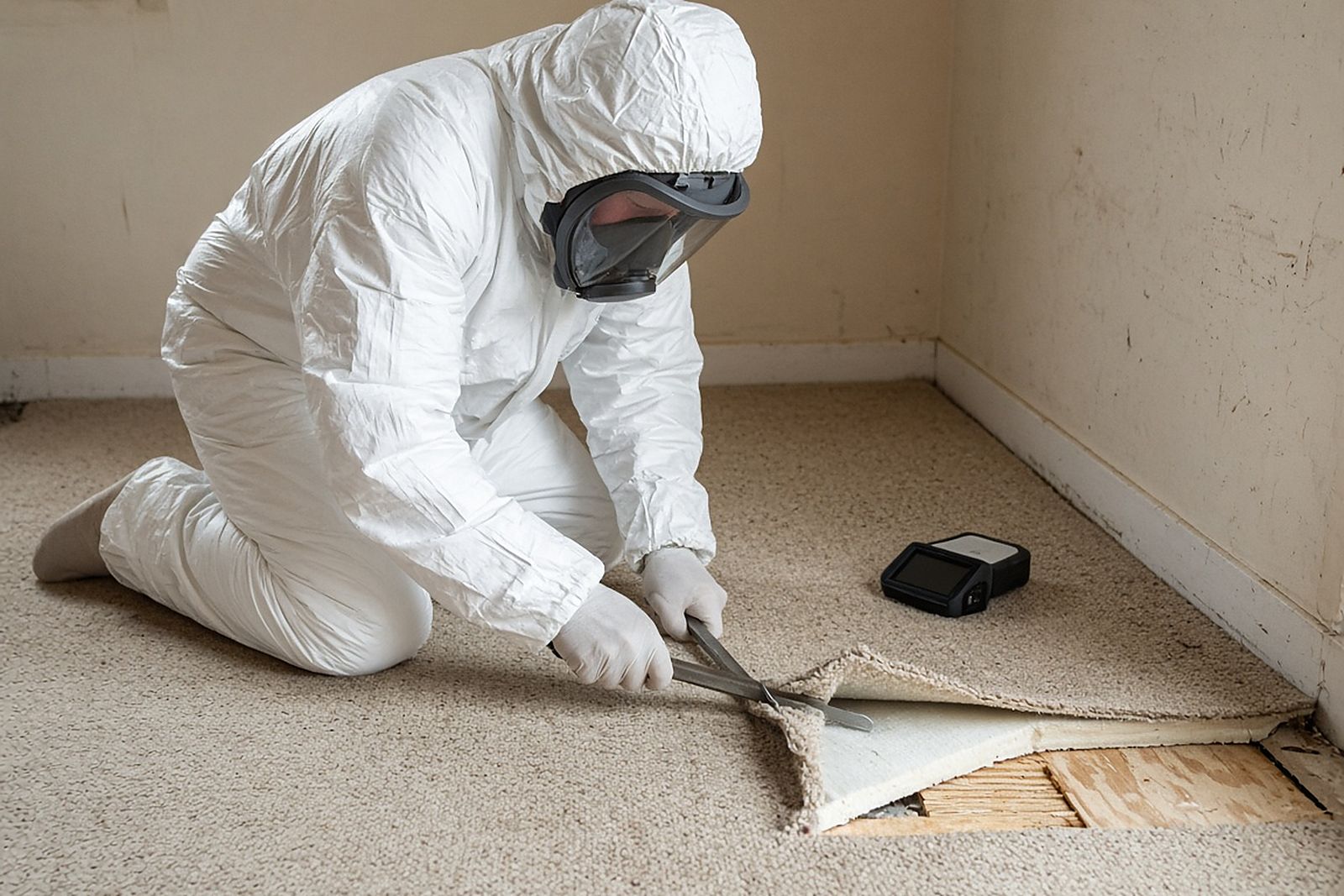
Technician in a full-face respirator cutting back carpet and pad to expose the subfloor
Illustrative photo, not a job record. Technician in a full-face respirator cutting back carpet and pad to expose the subfloor.
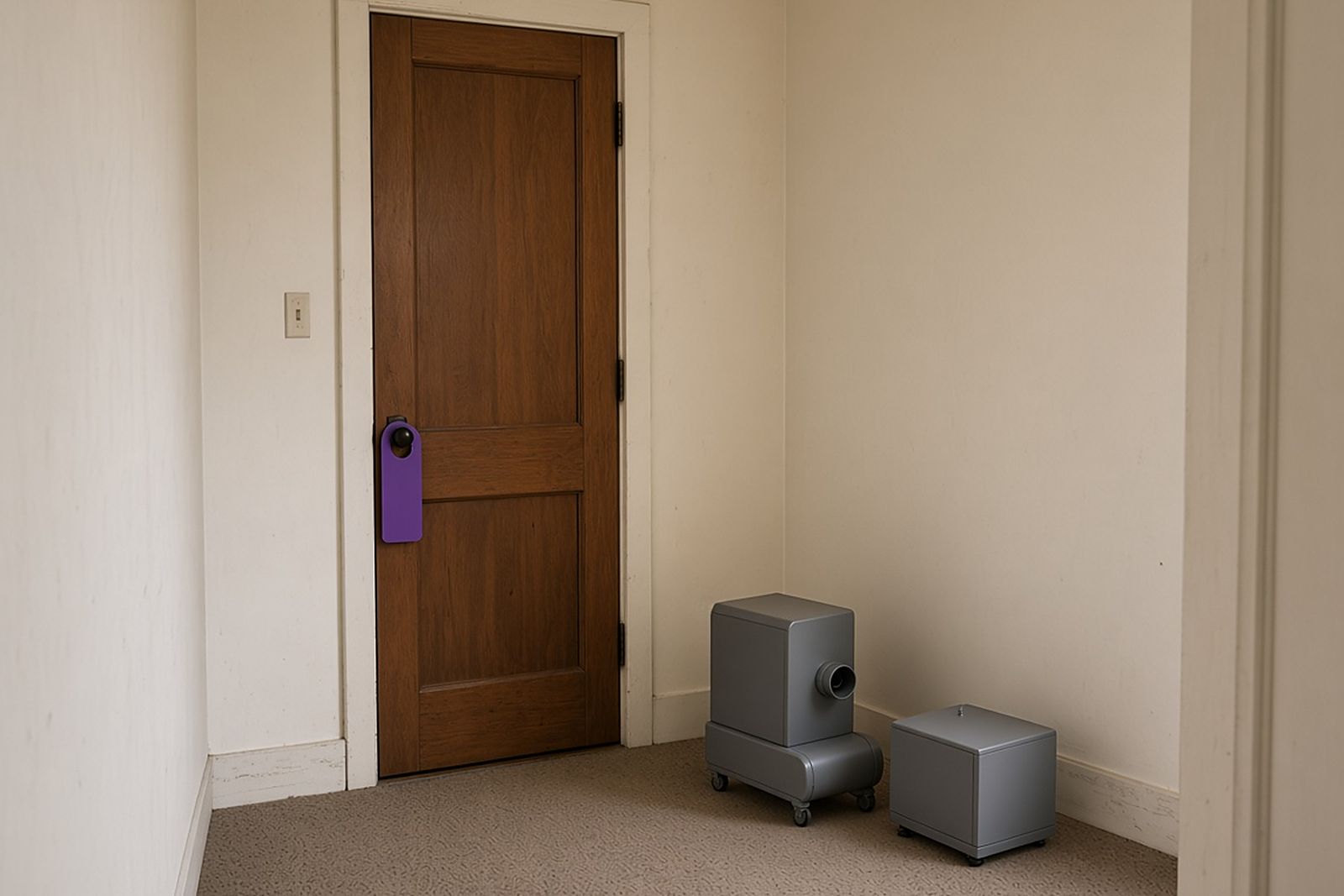
Air-filtration and odor-control units staged outside a closed door with a do-not-enter tag on the handle
Illustrative photo, not a job record. Air-filtration and odor-control units staged outside a closed door with a do-not-enter tag on the handle.

Unattended Death Cleanup figures to keep in mind

National and research figures, not Portland data. Local conditions, rules and providers vary; use these for scale and context only.

3,072,666

The United States recorded 3,072,666 deaths in 2024, a rate of 903.4 per 100,000 population.

Read with care: Total deaths; the share occurring at home unattended is not published nationally.

Source: CDC National Center for Health Statistics (2024)United States, 2024, all causes

79,384

U.S. drug overdose deaths fell to 79,384 in 2024 from 105,007 in 2023, a 26.2% decline; adults 35-44 had the highest rate.

Read with care: Overdose deaths are often discovered at home but the report does not give place of death.

Source: CDC National Center for Health Statistics (2024)United States, 2024 final mortality data

1.3 million

More than 1.3 million deaths were referred to U.S. medical examiner and coroner offices in 2018, and offices accepted 605,000 for investigation.

Read with care: Most recent BJS census; referrals include hospital deaths, not only home deaths.

Source: Bureau of Justice Statistics (2018)United States, nearly 2,040 ME/C offices, 2018 census

These figures are public research and agency data, not this network's own job records. Keep each number with its population, year and limits; none of them predicts cost, timing or outcome at a specific property.

Plan before you reach out

Use the first 24 hours planner for immediate steps and the provider vetting checklist to confirm any Portland provider's training, insurance and waste path in writing.

What research has found

Findings from published studies of people and properties in situations like this one. They describe what researchers observed in a specific group; they are not predictions for your case.

Encountering the body at the site was not significantly associated with more nightmares or intrusive memories.
Who was studied: Same 666-parent Swedish cohort as S004; 147 encountered the body and 512 did not.Limits: Not independent of S004; site discovery differs from later formal viewing; no proof of harmlessness.Encountering the Body at the Site of the Suicide: A Population-Based Survey in Sweden (2017)
Family or friends were the most common initial information source for both claimant groups.
Who was studied: 765 UK Bereavement Support Payment (BSP) and 764 Funeral Expenses Payment (FEP) claimants; January 2021 interviews.Limits: Historical benefit-service experience, not current entitlement; entirely proxy-completed applications excluded.Bereavement services customer experience survey report (2021)

Unattended Death Cleanup community polls

Poll results

Every count is a real visitor vote; nothing is seeded or padded. One vote per poll per device, and you can change your answer.

Your experience

As a landlord, how long would you wait for the tenant's family before arranging cleanup yourself?

No visitor votes yet
Process

Which part of an unattended death project would you find hardest to manage?

No visitor votes yet

Planning cleanup in Portland?

Send a short message about the property to the follow-up inbox. A coordinator can reply by email with next steps.

Your request is sent to the follow-up inbox. A coordinator can reply by email.

If anyone is hurt or in danger, call 911 first.