West · US

Unattended Death Cleanup Planning in Las Vegas, Nevada

Planning unattended death cleanup in Las Vegas, NV

Las Vegas cleanup help for towers with freight elevators and pressurized halls, and for HOA homes where a dumpster in view of the street may not be allowed. This is planning guidance, not a claim of a local office or crew in Las Vegas.

Get an email reply about unattended death cleanup

Send a short message to the follow-up inbox. A coordinator can reply by email. This form does not send emergency help; call 911 first if anyone is in danger.

Tell us what you need help with. Share a short description; please leave out medical details, access codes, and other sensitive information.

A request does not confirm a booking. For immediate danger, contact local emergency services.

Or email info@unattendeddeath.online

Direct answer

The short answer for Las Vegas, NV

Las Vegas mixes high-rise and mid-rise apartment towers, HOA-run suburban tracts, and desert homes kept sealed against the heat. When a death is found late here, the body breaks down fast. Fluid soaks deep into soft materials, insects arrive, and odor spreads through shared hallways and the air system. Here you will find help with tower and HOA access, getting rid of the smell at its source, estate and landlord teamwork, privacy, and record keeping. It does not invent Nevada shortcuts or claim a local response team.

Editorial guide · Biohazard Remediation NetworkUpdated 2026-07-22Location focus: Las Vegas, NV

Local planning context

Las Vegas homes range from towers near the casino corridor and downtown to wide HOA neighborhoods of slab houses with tile roofs. In a high-rise, booking the freight elevator, pressurized hallways, and trash-room rules can drive the whole schedule, even when the soiled area looks small. Suburban HOAs may not allow bins that can be seen from golf courses or common areas. In both places, the AC stays sealed in during extreme heat, and that speeds up the breakdown of the body when a resident is not found quickly. Your plan has to cover building logistics and soaked materials together.

In apartment towers, a smell in the shared hallway often reveals an unattended death long before anyone sees anything. If fans run, returns and the gaps under doors can move odor chemicals into the corridor. Managers may also spot insects near a unit door, another sign that time has passed. Inside the unit, carpet pad, mattresses, and the foam under laminate act like sponges. Dry desert air outside does not cancel them out. Buildings near the tourist areas raise the privacy stakes, because foot traffic in the halls never stops and gossip spreads fast.

Nobody should start work until the Clark County coroner and medical examiner, and any police hold, allow it. Once cleared, the landlord, the HOA, and the estate need a shared plan for the belongings and for where rebuilding starts. Covered bag-out through lobbies protects dignity and keeps residue from spreading. Keep records that show the source was removed, not just that odor machines were run. Then owners deciding whether to rent the unit again understand what was truly cleaned.
Property considerations

High-rise freight elevators and trash rooms call for booked, sealed movement of every load.

Pressurized hallways can pull unit odor into the corridor if doors stay open with no barrier.

Suburban HOA lots may ban dumpsters in view. Plan a screened or step-by-step load-out.

The spot where bedroom carpet meets hallway tile often hides a soaked layer underneath.

Short-term rental units may involve both a platform host and a property manager. Be clear on who decides.

Desert heat in a sealed home adds to the fluid and odor load before anyone finds the person.

Response-planning framework

Building access and official release

Confirm the coroner or police release. Then work with building engineering on freight elevators, loading docks, and after-hours rules. Collect written permission from the owner or estate. Map the route from the unit to the truck before any floor is opened.

Seal the hallway and the air system

Close off the unit, protect the hallway floor, and bag or close any returns that could feed the shared air. Do not set up air pressure that pulls soiled air into the corridor. Keep the HEPA scrubbers inside the sealed unit, not out in the hall.

Tear out soft materials to a clean edge

Remove soaked pad, underlayment, and soft furniture based on moisture and smell readings past the stain lines. Check cabinets and closets for fluid that spread. Keep waste sealed for the ride down through a building where people still live.

Estate choices and the handoff for re-renting

Record decisions about belongings, give a rebuild list, and keep cleanup records apart from cosmetic bids. Note any HOA design rules that apply only after the unit is cleared. Save photos for insurers and probate.

Documentation checklist

  1. 1Proof of official release and permission to enter
  2. 2Engineering notes on elevator and loading dock access
  3. 3Steps taken to protect the hallway and shut off the air system
  4. 4Before and after photos of the floor layers and closets
  5. 5Moisture map reaching past the visible stains
  6. 6Room-by-room list of mattresses, carpet, and upholstery hauled from the condo or tract home
  7. 7Biohazard disposal receipts, if any regulated waste left the Las Vegas property
  8. 8Rebuild list for the owner's or HOA's files

Official resources

Questions for this location

Why do Las Vegas high-rises need a special plan for bagging and removing materials?

Soiled materials have to pass through elevators and lobbies used by many residents and visitors. Loads that are not sealed can drip and smell, causing needless exposure and alarm. So freight scheduling, sealed bags, covered carts, and floor protection are part of the cleanup plan. They are not just a courtesy. Pressurized hallways can also spread odor if the unit door stays open during messy work. Engineering staff need to know the timing, but not private medical details. Careful planning for the trip down keeps one unit's loss from becoming a whole-building event. Ask building staff whether a freight car can be reserved just for the load-out. Then sealed loads do not share a ride with residents. A reserved window lowers the chance of accidents and keeps the tower calmer on a hard day.

How should short-term rental hosts respond to a late discovery in Las Vegas?

Hosts and managers must put official steps and the scene release ahead of any quick turnover cleaning. Do not send housekeepers with store-bought products into a scene like this. After release, be clear on whether the platform host, the local manager, or the owner approves tear-out and waste disposal. Cancel upcoming stays until the source is removed and the unit is dry. Covering the smell does not make it ready. Record the conditions for insurance and for any estate claims on guest or owner property. Clear lines of approval stop a rushed turnover that would expose new guests to unfinished biohazard work. Save the platform messages that show cancellations and reason codes, with no graphic details. Those records help hosts explain the downtime to insurers and partners. They also show the unit was not flipped with residue still inside.

Can hallway air fresheners fix neighbor smell complaints in a Las Vegas condo?

Hallway fresheners only add scent on top of the odor chemicals leaking from an untreated unit. They do not remove the soaked pad, furniture, or residue in the walls that cause the smell. What works is closing off the source apartment, stopping untreated air from reaching the hall, and removing the soaked materials inside. After the source is gone, check the hallway air again. Many complaints clear up without replacing ducts across the building. Condo neighbors only need to hear about hall closures and work hours, nothing graphic. Removing the source follows EPA indoor air advice and saves condo associations from repeat complaints. If the hall still smells after the unit's source is out, check door seals and the trash-room path first. Do that before approving any work inside the building's vertical shafts. Going in that order saves associations from large projects they may not need.

What HOA paperwork helps suburban Las Vegas homes after cleanup?

HOAs often want to know that outside rules were followed and that the smell will not return to common areas. Give them the work dates, proof that waste was covered, photos of the outside after any staging, and a statement that the soaked sources were removed, not just fogged. Keep design approval forms for the rebuild apart from the biohazard records. Share only the practical facts boards need. Clear files cut down on disputes when neighbors ask why trucks were there. They also help owners in desert-suburb tracts show the cleanup was done responsibly after a late discovery. If landscaping or gates were used for staging, attach a simple checklist showing they were restored. Suburban boards respond better when the file shows the common area was put back the way it was.

How does extreme heat change how fast damage spreads in a sealed Las Vegas home?

High indoor heat speeds up the breakdown of the body and adds more fluid to soak into carpet pad and particle board. A delay of a few days can spread fluid as far as a longer delay would in a cooler place. There is no fixed hour-by-hour chart that fits every house. But the heat should change the thinking from "small stain, small job." Check past the outline, expect to lose furniture, and plan drying after the tear-out. Heat also makes a partial cover-up of the smell fail fast once the AC cycles on. An honest plan ties the desert climate to what really happens to materials, not to a hoped-for turnaround date.

Who releases a Las Vegas property after an unattended death?

Southern Nevada deaths go through the Clark County Office of the Coroner/Medical Examiner. A police case can keep the door sealed a while longer. Do not start cleanup until the release is confirmed. After that, the owner, property manager, HOA, or estate representative approves entry and decides what gets thrown out. Getting those approvals in writing matters. That is especially true when owners live out of state or a company manages the unit.

What if the death happened in a casita or guest suite on a Las Vegas lot?

Many Las Vegas homes have a casita, attached or detached, with its own door. Check whether it shares an AC system, water heater, or wall with the main house, since odor may travel there. If a relative or tenant lives in the main house, plan a separate path in and keep the casita door shut. Agree in writing who approves work in each space. This matters most if the casita was rented out on its own.

Contact

Get help by email

Send a short message for an email reply about unattended death cleanup planning questions for the Las Vegas area.

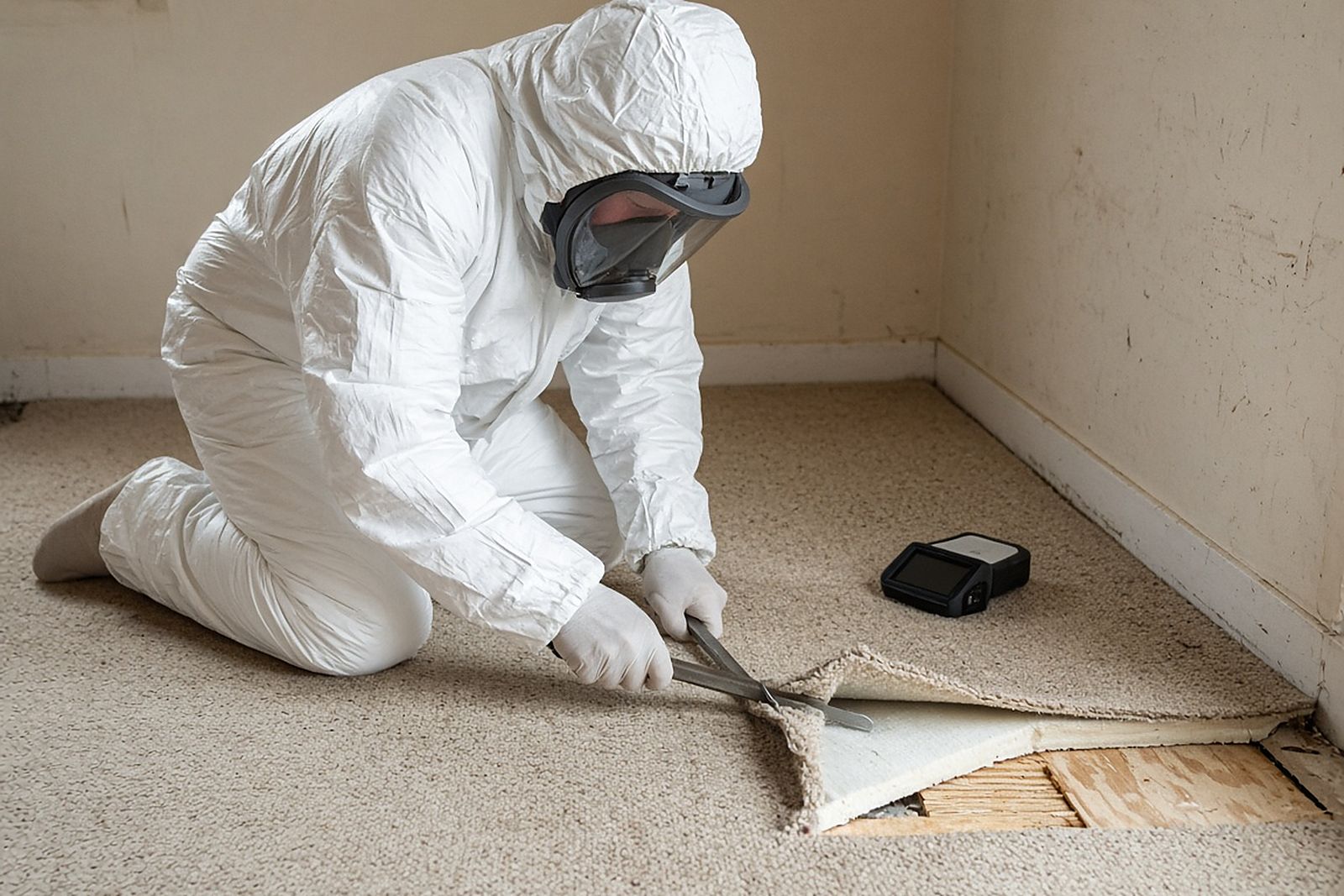
Technician in a full-face respirator cutting back carpet and pad to expose the subfloor
Illustrative photo, not a job record. Technician in a full-face respirator cutting back carpet and pad to expose the subfloor.
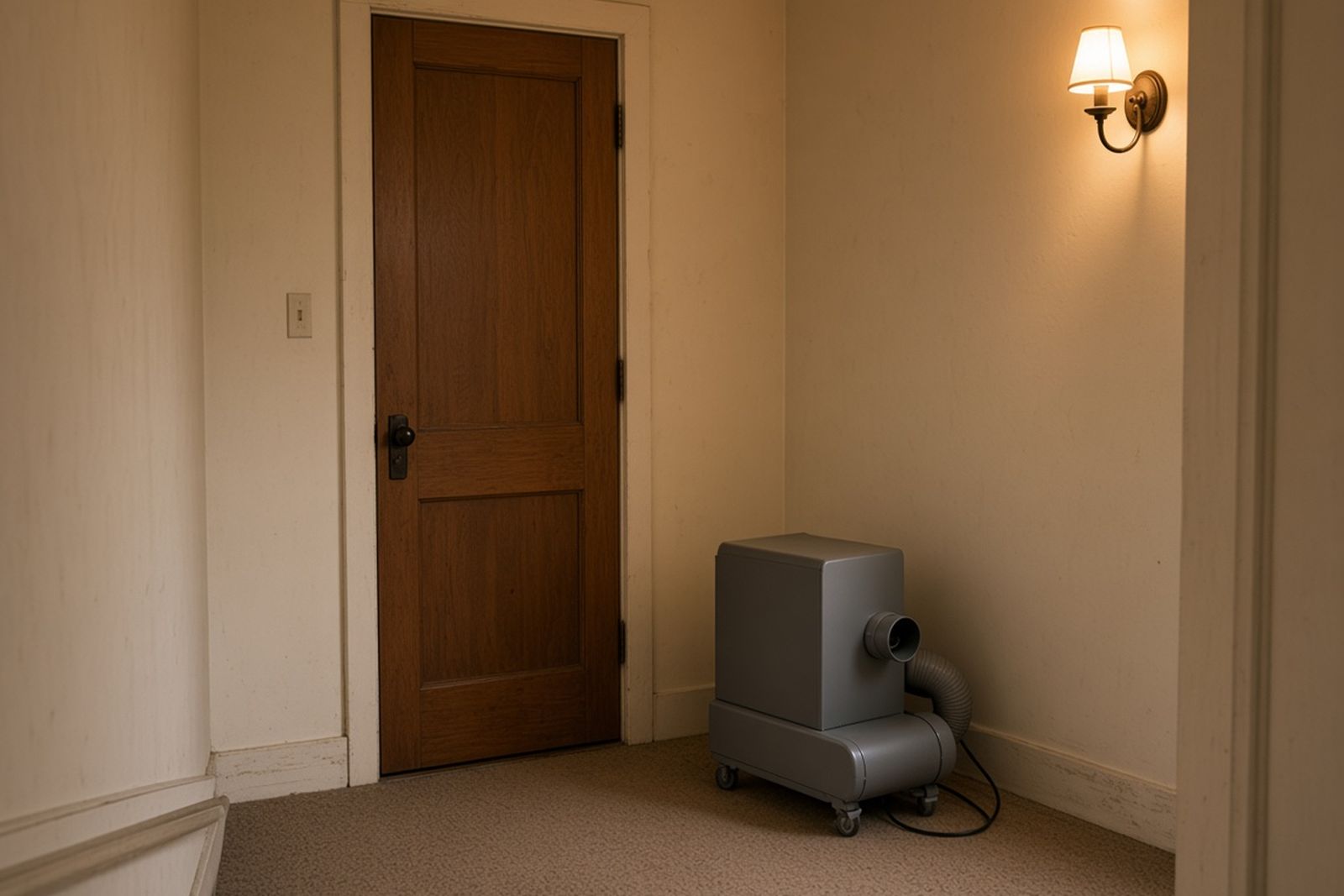
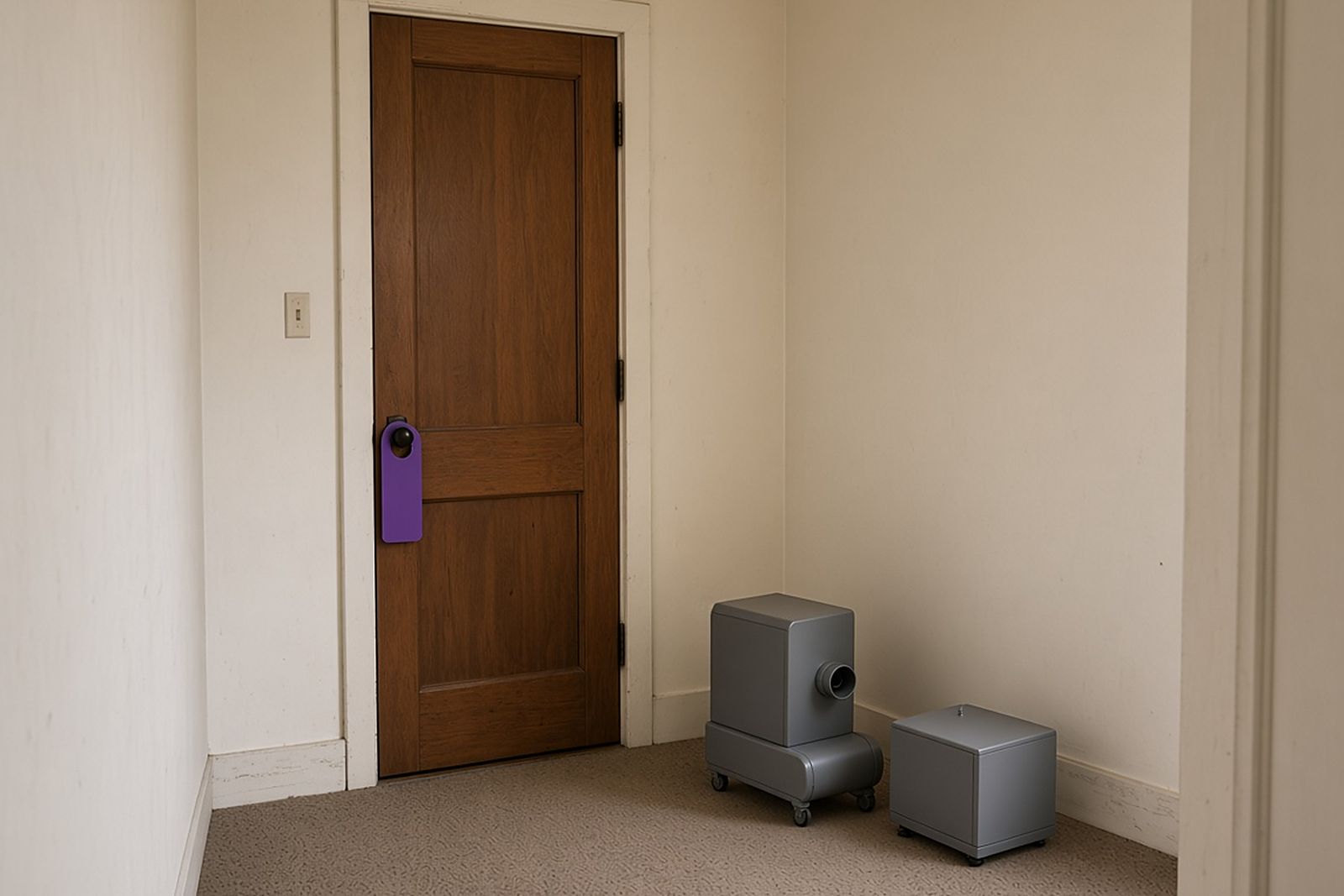
Air-filtration and odor-control units staged outside a closed door with a do-not-enter tag on the handle
Illustrative photo, not a job record. Air-filtration and odor-control units staged outside a closed door with a do-not-enter tag on the handle.

Unattended Death Cleanup figures to keep in mind

National and research figures, not Las Vegas data. Local conditions, rules and providers vary; use these for scale and context only.

78.4 per 100,000

The age-adjusted fall death rate among U.S. adults 65 and older rose 21% from 64.7 per 100,000 in 2018 to 78.4 in 2024.

Read with care: Rates, not counts; place of fall is not specified.

Source: CDC Injury Center (2024)United States, adults 65+, 2018-2024

3,072,666

The United States recorded 3,072,666 deaths in 2024, a rate of 903.4 per 100,000 population.

Read with care: Total deaths; the share occurring at home unattended is not published nationally.

Source: CDC National Center for Health Statistics (2024)United States, 2024, all causes

79,384

U.S. drug overdose deaths fell to 79,384 in 2024 from 105,007 in 2023, a 26.2% decline; adults 35-44 had the highest rate.

Read with care: Overdose deaths are often discovered at home but the report does not give place of death.

Source: CDC National Center for Health Statistics (2024)United States, 2024 final mortality data

These figures are public research and agency data, not this network's own job records. Keep each number with its population, year and limits; none of them predicts cost, timing or outcome at a specific property.

Plan before you reach out

Use the first 24 hours planner for immediate steps and the provider vetting checklist to confirm any Las Vegas provider's training, insurance and waste path in writing.

What research has found

Findings from published studies of people and properties in situations like this one. They describe what researchers observed in a specific group; they are not predictions for your case.

Administrative work compounded vulnerability during early bereavement.
Who was studied: 21 community-dwelling Australian widows aged over 65; serial interviews.Limits: Small selected sample; themes do not quantify all widows.The business of death: a qualitative study of financial concerns of widowed older women (2015)
Immediate reactions included shock and denial.
Who was studied: 34 Brazilian relatives interviewed during 2013–2019.Limits: Experiences of selected relatives; no population frequency estimates.Exploring the experiences and impact of discovering the body at the site of suicide (2026)

Unattended Death Cleanup community polls

Poll results

Every count is a real visitor vote; nothing is seeded or padded. One vote per poll per device, and you can change your answer.

Your experience

As a landlord, how long would you wait for the tenant's family before arranging cleanup yourself?

No visitor votes yet
Process

Which part of an unattended death project would you find hardest to manage?

No visitor votes yet

Planning cleanup in Las Vegas?

Send a short message about the property to the follow-up inbox. A coordinator can reply by email with next steps.

Your request is sent to the follow-up inbox. A coordinator can reply by email.

If anyone is hurt or in danger, call 911 first.