Free unattended death cleanup tool
Unattended Death Cleanup Insurance Claim Organizer
A guided checklist from finding the policy to tracking the carrier decision, with a printable summary of where the claim stands.
Insurance after an unattended death has an extra question that rarely comes up with other property damage. Whose policy applies? In a rental, the landlord's property policy, the tenant's renter policy, or both may matter. In a home the person owned, their homeowner policy is the likely source. But the person filing is an executor, who may not have legal authority yet. This organizer walks you through the steps in order. Find the policy. Describe the cause of loss in the words insurers use. Give notice. Record the property's condition. Get a written scope from the provider. Then track the insurer's decisions. Each step has a checklist and a place for dates, names, and claim numbers.
The organizer does not predict coverage, and no one should promise it. Some policies treat biohazard cleanup as covered property damage. Others leave out loss from decay or cap it at a low limit. What the tool does is keep you from losing a claim over process. Common problems are late notice, no photos of the subfloor before rebuild, or an unclear account of the loss. The tool also makes a printable summary. An executor can hand it to the estate's lawyer, or a landlord can share it with the owner. Keep the provider's photos, moisture readings, scope, and waste shipping record together. Those are what adjusters ask for. They are much harder to get after the floor has been replaced.
How to use it
- 1Figure out which policy or policies may apply. Note the person named on each one, and note whether you have the right to speak for that person or estate.
- 2Tell each insurer quickly. Write down the claim number, the adjuster's name, and the date in the tracking step.
- 3Put the provider's photos, written scope, moisture findings, and waste shipping record into your own folder, as the records step lists them.
- 4Log every message and decision from the insurer. Then print or copy the summary for the estate, the owner, or a lawyer.
Prefer to ask a person?
Your request is sent to the follow-up inbox. A coordinator can reply by email. Not for emergencies; call 911 first if anyone is in danger.
Organize an insurance claim
Unattended Death Cleanup insurance claim organizer
A checklist to keep the claim orderly. It stores nothing on our servers; copy the summary to your own notes.
0 of 18 steps recorded (0%)
Print or paste the summary into your own records. Coverage is the carrier's decision under the policy; keep every answer in writing.
A worked example
Here is a made-up case. A landlord owns a duplex. The tenant on one side was found dead after a neighbor called about a smell and police did a welfare check. The landlord opens the organizer. In the first step, she lists her own landlord policy. She notes that the tenant had a renter policy, though she does not know the insurer. The tool prompts her to gently ask the tenant's next of kin for that information. For cause of loss, she writes down the date of discovery, the release case number, and a plain, factual note. It says there is biohazard damage to the flooring and subfloor in the affected unit. She tells her insurer that same day and records the claim number. The records step reminds her to ask the cleanup provider for photos of the carpet, pad, and subfloor at each stage, plus moisture readings. The adjuster will want to see how far fluid soaked in before any rebuild. She asks for the written scope and the waste shipping record and files both. In the tracking step, she logs that the adjuster asked whether the other side of the duplex was affected. She notes that the provider's report answered that. When the insurer finally makes its decision, every date and paper is in the summary.
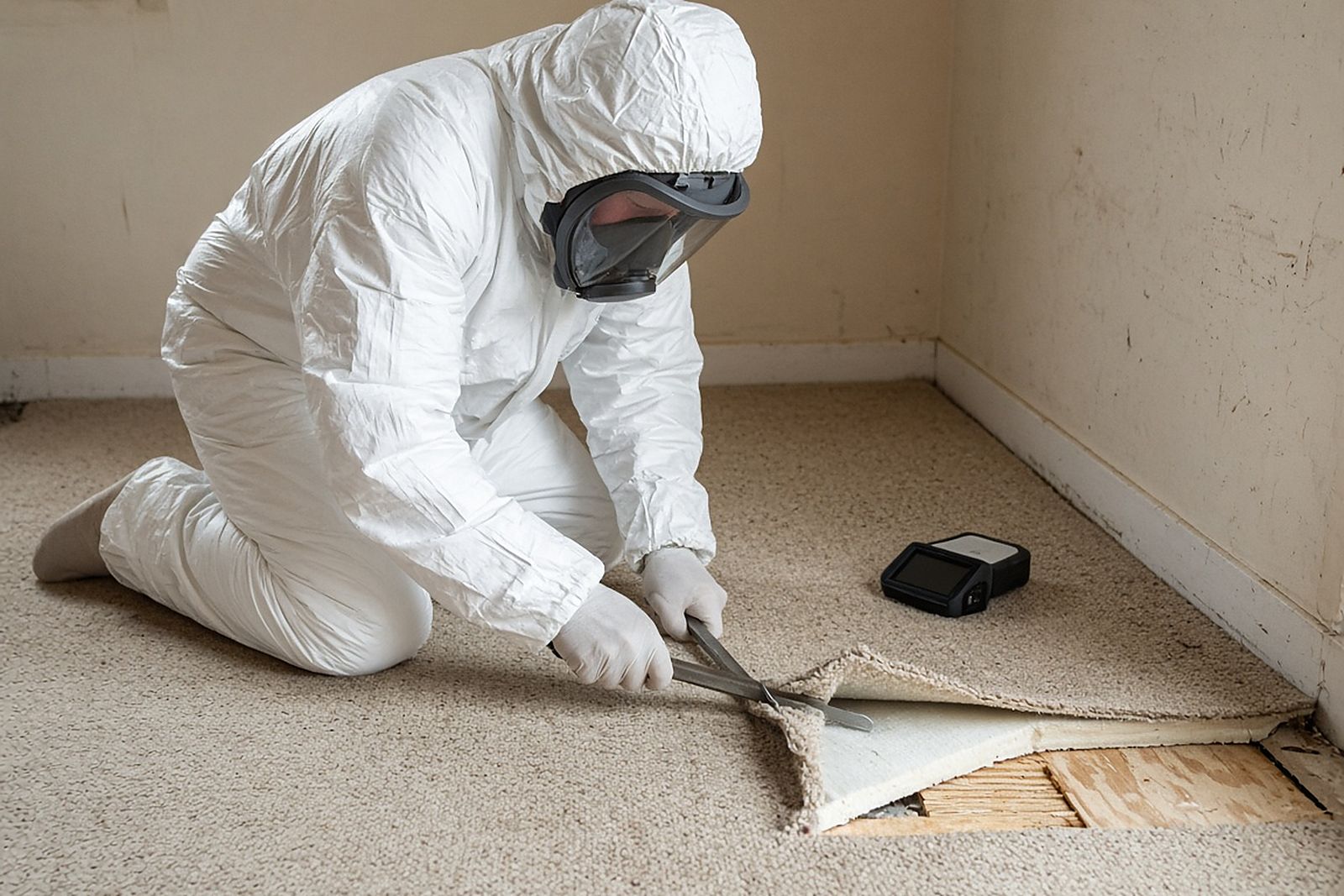
Numbers behind claim organizer decisions
- $200-$300 per hour
Fixr's 2025 guide lists unattended death cleanup at $200 to $300 per hour and hoarding cleanup at $25 to $150 per hour or about $1,000 per day.
Read with care: Fixr figures are editorial cost estimates compiled from contractor and industry data, not a statistical survey of completed jobs; local prices vary widely.
Source: Fixr (2025)United States, residential biohazard cleanup estimates, January 2025
- every 3 years
Hazmat employees must receive recurrent DOT training at least once every three years.
Read with care: Records must be kept for the prior three years plus 90 days after employment ends.
Source: DOT PHMSA (49 CFR via Cornell LII) (2024)United States, all hazmat employees
- 29
OSHA approves 29 State Plans, 22 covering private and public workers and 7 covering only state and local government employees.
Read with care: State plans must be at least as effective as federal OSHA but may differ in detail.
Source: OSHA (2024)United States states and territories
- 180 days
Facilities generating more than 100 kg but less than 1,000 kg of hazardous waste per month are Small Quantity Generators and may store it up to 180 days.
Read with care: Limit extends to 270 days when the disposal facility is over 200 miles away.
Source: EPA (2024)United States, RCRA generators
These figures are public research and agency data, not this network's own job records. Keep each number with its population, year and limits; none of them predicts cost, timing or outcome at a specific property.
Insurance Claim Organizer questions for unattended death cleanup
Whose policy pays for unattended death cleanup in a rental?
It depends on the policies and the lease. A landlord's property policy may cover damage to the building. A tenant's renter policy may cover belongings or liability. Some policies leave out this kind of loss entirely. Tell every insurer that might apply, and let each one decide based on a complete file. No one can promise an outcome, and the answer should always come in writing.
Can an executor file a claim before the court issues letters testamentary?
Insurers differ. Many will open a claim and accept notice from a family member or a future executor. But they may require proof of authority before they pay. Give notice quickly so the claim is not late. Explain that the court has not yet named the executor, and send the letters once they are issued. Ask the estate's lawyer how to handle the time in between. Rules vary by state and county, so check with the local authority or a lawyer.
What papers do adjusters most often ask for in these claims?
They often ask for photos that show the damage at each layer, including the subfloor and any wall spaces that were opened. They also want the provider's written scope, any moisture readings, the waste shipping record, and receipts. Adjusters may also ask for the release case number and a list of the estate's belongings. The organizer lists each item, so nothing is missed before rebuild covers up the proof.
Should remediation wait until the carrier approves?
Usually not. Damage spreads and odor gets stronger while a claim is reviewed. Most policies also require you to prevent more damage. Give notice, make sure the provider records everything, get the written scope, and go ahead. Ask the adjuster to confirm in writing that going ahead will not hurt the claim. Keep every bill and waste shipping record, so that getting paid back, if approved, is simple.
The insurer says damage from decay is excluded by the policy. What now?
Ask for the denial in writing, with the exact policy wording the insurer is relying on. Go over it with the estate's lawyer or the landlord's agent. Sometimes a denial depends on how the loss was described. For example, it may have been called slow wear instead of a sudden event. A clearer account can change the result. Your state insurance regulator may have a complaint or review process. The organizer's summary gives you a full, dated file for any appeal.
Should belongings that were discarded be listed on the claim?
Yes, if the policy may cover belongings. List each item that was thrown away. Include a description, its rough age, and the provider's photo or list entry that shows why it could not be saved. The organizer keeps these entries apart from damage to the building. Adjusters often review the two in different ways. Ask the provider for their disposal list before items leave the property, since rebuilding that list later is much harder.
How do I keep the claim organized when several people are paying bills?
Pick one person to keep the main file. Ask everyone else to send that person copies of bills, receipts, and proof of payment as they come up. Write down who paid each bill, so the estate can sort out paybacks later. The organizer's summary shows each cost next to the person who paid it. That helps both the adjuster and the executor's final accounting.
Related community polls
Every count is a real visitor vote; nothing is seeded or padded. One vote per poll per device, and you can change your answer.
As a landlord, how long would you wait for the tenant's family before arranging cleanup yourself?
Which part of an unattended death project would you find hardest to manage?
Other unattended death cleanup tools
Cost Range Estimator
Set the affected area, surface types, severity and extras to see an educational cost range and the factors that move it.
OpenProvider Vetting Checklist
Fifteen questions to ask any remediation provider, a readiness score, and a copyable list of what is still unanswered.
OpenFirst 24 Hours Planner
Tell the planner a few facts about the situation and get an ordered list of who to call, what not to touch, and what to photograph.
OpenWaste & Disposal Classifier
Five questions about the material point to the likely waste category and which authority to confirm the rules with.
OpenDIY or Call a Pro? Risk Check
Eight yes-or-no questions that produce a risk level and explain when professional help is the safer choice.
OpenMore on unattended death cleanup
Unattended Death Cleanup services
Learn what cleanup after a late discovery involves. It covers tracing how far fluid soaked into the subfloor, odor treatment, listing belongings, and move-back-in records.
Costs explained
What drives the price, published cost ranges, and how to read a written quote line by line.
Insurance and payment
Which policies may respond, how to document a claim, and what to do if coverage is denied.
Community polls
See how other landlords, executors, and relatives handled belongings, talking with tenants, telling buyers, and subfloor choices. Share your own view without giving your name.
Knowledge quiz
Test what you know about odor signs, who is in charge, closing off rooms in shared buildings, taking out soaked materials, waste records, and final sign-off papers.
Articles and resources
Longer reads on handling an estate from far away, working with tenants after a death in the building, and what honest cleanup after a death looks like.
Field guides
Guides for landlords and executors. They cover access, who is in charge, telling the insurer, how long to hold belongings, and when people can safely move back in.
City guides
Find cleanup providers by city and state. Then check their licenses, waste handling, and how they inspect the subfloor yourself before you approve any work.