Short answer
In unattended death cleanup, cleaning removes decomposition fluids, residue and debris; disinfection applies a registered product for its full contact time to inactivate remaining pathogens; and deodorization addresses odor after the source is gone. Because fluids spread into porous and hidden materials over time, those materials are usually removed first. Sealers and fragrances are finishing tools, not substitutes for cleaning or disinfection.
Why these terms blur after an unattended death
When a person dies alone and is not found for days or weeks, the most noticeable problem is often the odor. Understandably, families and property owners focus on getting rid of it. That focus can lead to confusion, because a room that smells better is not necessarily clean, and a room that is clean is not necessarily disinfected.
In delayed-discovery scenes, three separate tasks are involved: cleaning, disinfection and deodorization. Each solves a different problem, and each depends on the one before it. When a provider mixes them up, or skips one, the result can be a home that seems fine for a few days and then shows signs of trouble again.
Understanding the difference helps you read a scope of work, compare providers and ask sensible questions when you cannot be at the property yourself.
Step 1: cleaning
Cleaning is the physical removal of material. After an unattended death, that material includes decomposition fluids, which contain fats and proteins that bond tightly to surfaces, along with insect residue, dust and debris. Cleaning also means removing items and building materials that have absorbed fluids.
Because decomposition residue is so stubborn, cleaning often takes several passes. Technicians may use enzyme-based cleaners that break down proteins and fats, detergents suited to each surface and tools that reach into seams, corners and textured finishes. Hard surfaces are cleaned until no visible residue remains and inspection confirms it.
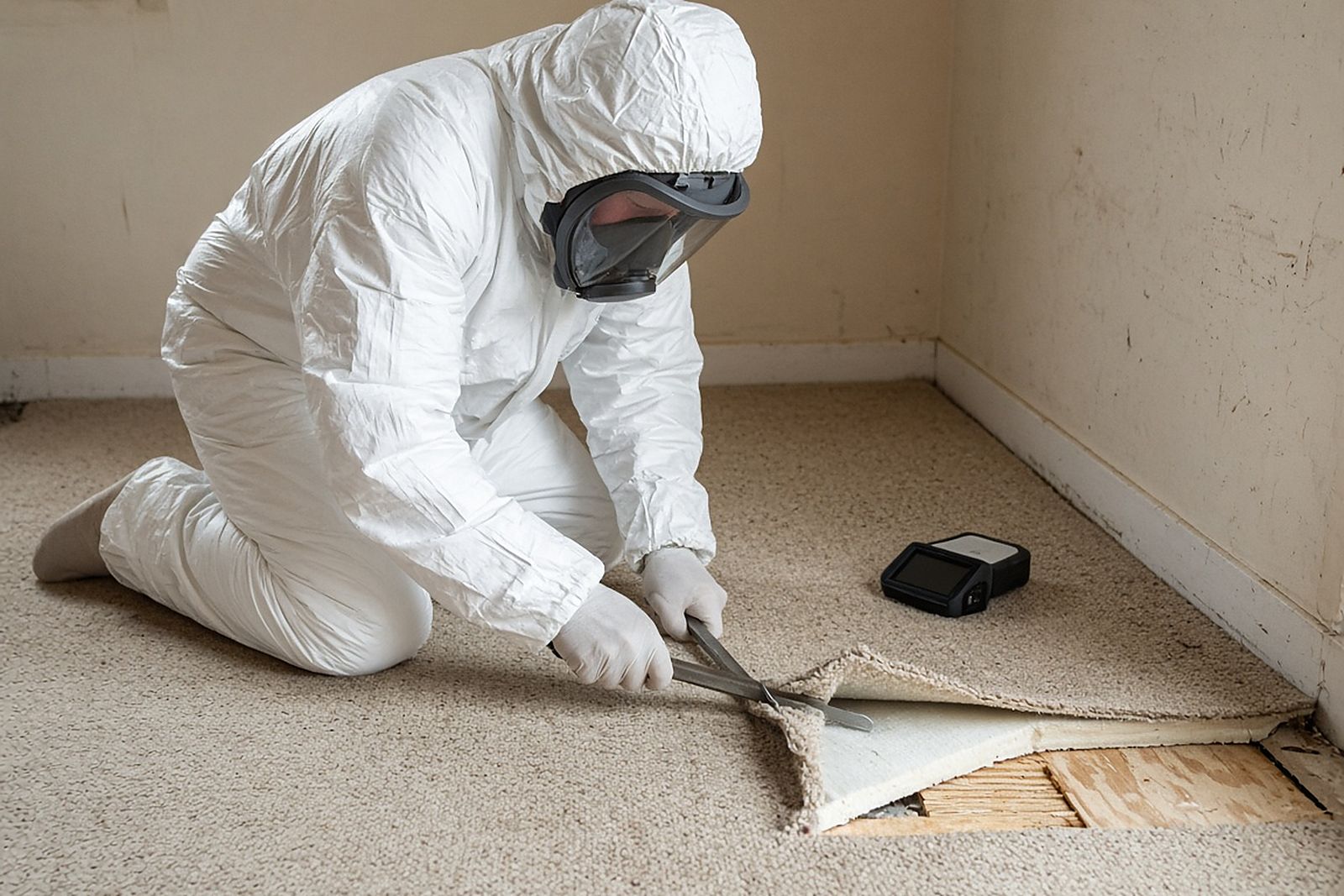
Cleaning also extends beyond the obvious room. Fluids may have traveled under baseboards, into subfloor and, in apartments, into the unit below. A thorough crew traces the spread and cleans everything it reaches, which is why staged removal of flooring is common in these jobs.
Personal belongings follow the same logic. Hard items such as jewelry, dishes, metal tools and many keepsakes can usually be cleaned and then disinfected. Papers, photos and textiles are assessed individually, because absorbed residue and odor are hard to remove from them. A careful crew sets these aside for the family or executor to review.
Step 2: disinfection
After cleaning, the surfaces that had contact with bodily fluids still need treatment to inactivate bacteria and viruses that may remain. That is the job of disinfection. Technicians apply a registered disinfectant to cleaned surfaces and keep them wet for the contact time printed on the label.
Product choice matters. Among the more than 4,000 antimicrobial products that EPA says are registered for sale, only some are appropriate here. Professional crews look for labels that address bloodborne pathogens; EPA's List S gathers registered disinfectants that carry label claims against HIV, hepatitis B and hepatitis C.
Disinfection works only if cleaning was thorough. Decomposition residue can shield microorganisms and consume the product's active ingredient, so a disinfectant sprayed over residue may not perform as its label describes. The order is not a preference; it is how the chemistry works.
Step 3: deodorization
Deodorization is the third step, and it only succeeds after the first two are complete. Odor after an unattended death comes from compounds released during decomposition that settle into materials throughout the home. If contaminated materials remain, they keep releasing those compounds, and no machine can keep up.
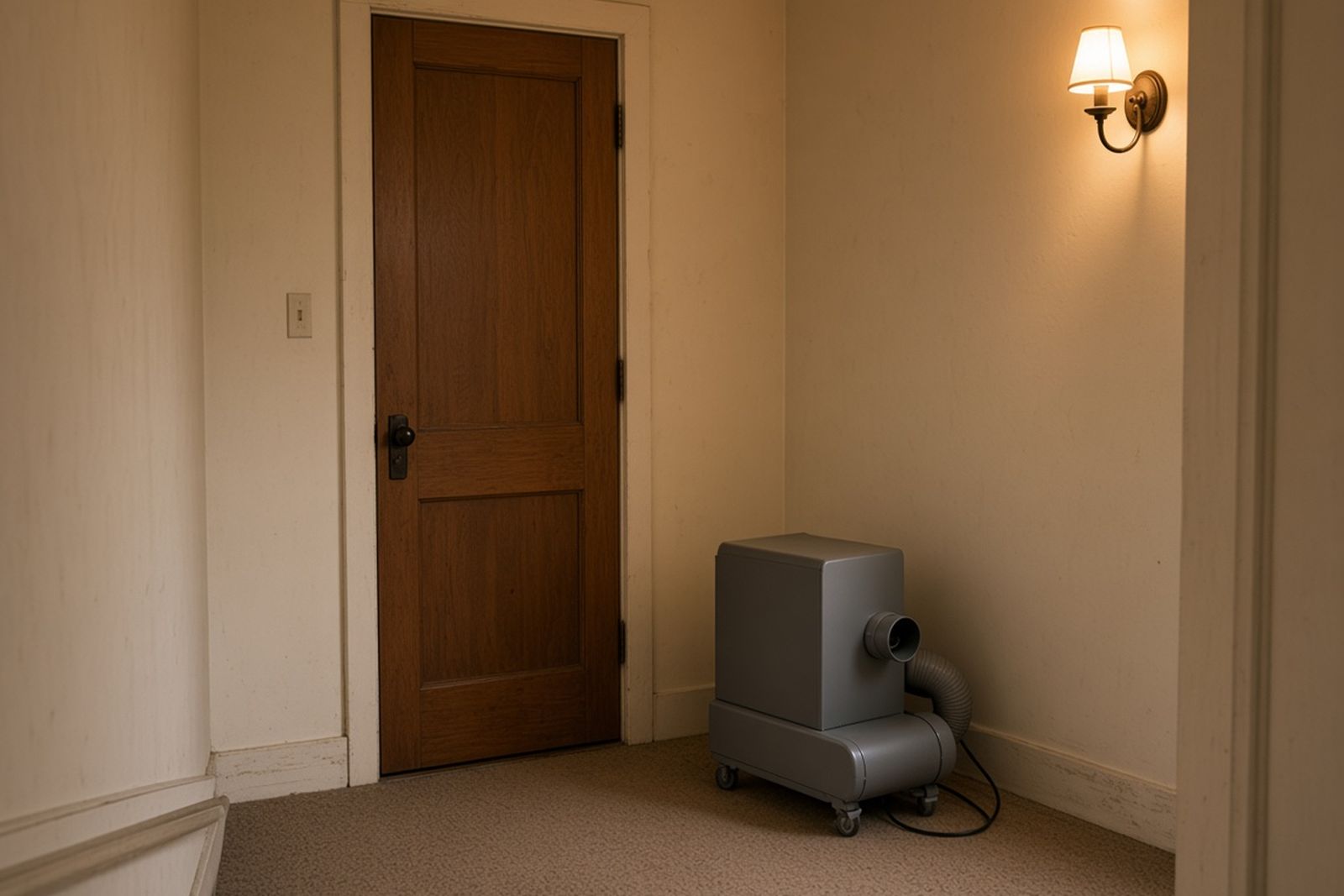
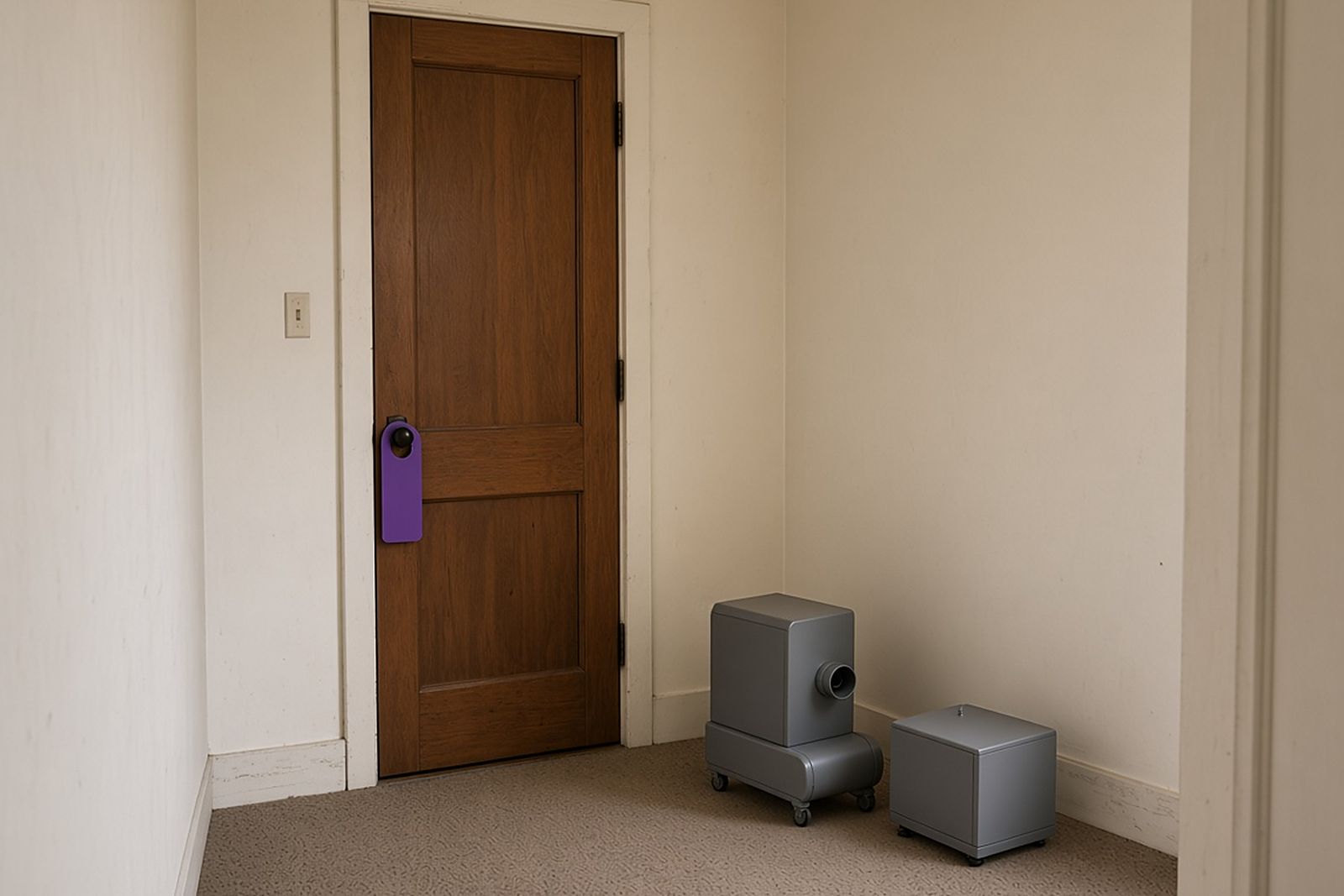
Once the source is removed and surfaces are cleaned and disinfected, crews may use air scrubbers with HEPA and carbon filters, hydroxyl generators, thermal fogging or ozone to address residual odor in the air and in remaining materials. Each method has strengths and safety considerations, and the right choice depends on the property.
Fragrances and air fresheners do not deodorize. They mask. Using them before the source is removed can hide the fact that contamination remains, which is why they have no place in a proper process.
Heating and cooling systems deserve particular attention. Odor compounds can travel through return vents into ductwork and then spread through the home each time the system runs. Crews may clean registers, replace filters and, in some cases, recommend professional duct cleaning as part of deodorization.
- Cleaning: removes residue and contaminated materials
- Disinfection: inactivates remaining pathogens on cleaned surfaces
- Deodorization: addresses lingering odor after the source is gone
- Masking: covers odor temporarily and is not a substitute for any step
Sealing vs disinfecting
Sealing primers are coatings applied to surfaces such as subfloor, framing or concrete to lock in faint residual odor after cleaning and disinfection. They are a useful finishing step when structural materials cannot be removed. They do not clean anything, and they do not replace disinfection.
Problems arise when sealing is used as a shortcut. Painting over stained subfloor, or coating a wall that absorbed fluids without removing or treating it, can trap contamination inside the structure. Odor may return over time, and future owners or tenants may not know what lies beneath.
Ask any provider when and why it plans to use a sealer. A good answer places sealing after removal, cleaning and disinfection, and only on materials that could not reasonably be removed.
Are insects a cleaning problem or a disinfection problem?
Neither, exactly. Insects are common in delayed-discovery scenes, and they require their own step, usually handled by a licensed pest control operator working alongside the cleanup crew. Disinfectants are not designed to control insects, and cleaning alone may leave eggs or pupae hidden in cracks, furniture or neighboring rooms.
Insect residue does fall under cleaning, though. Casings, droppings and dead insects are removed with HEPA vacuums and wiped from surfaces before disinfection, because they are part of the organic load that can interfere with the disinfectant. In some homes, that residue extends well beyond the room where the person was found.
Timing between steps matters. If insects are not addressed early, they may move into rooms the crew has already cleaned. A well-planned job coordinates pest treatment so that it happens before or during cleanup and includes a check of adjacent spaces afterward.
When you read a scope, look for a line that explains who handles insects and when. If it is missing, ask. Leaving it out is one of the most common reasons families face a second round of problems after a job was declared finished.
Materials that usually have to go
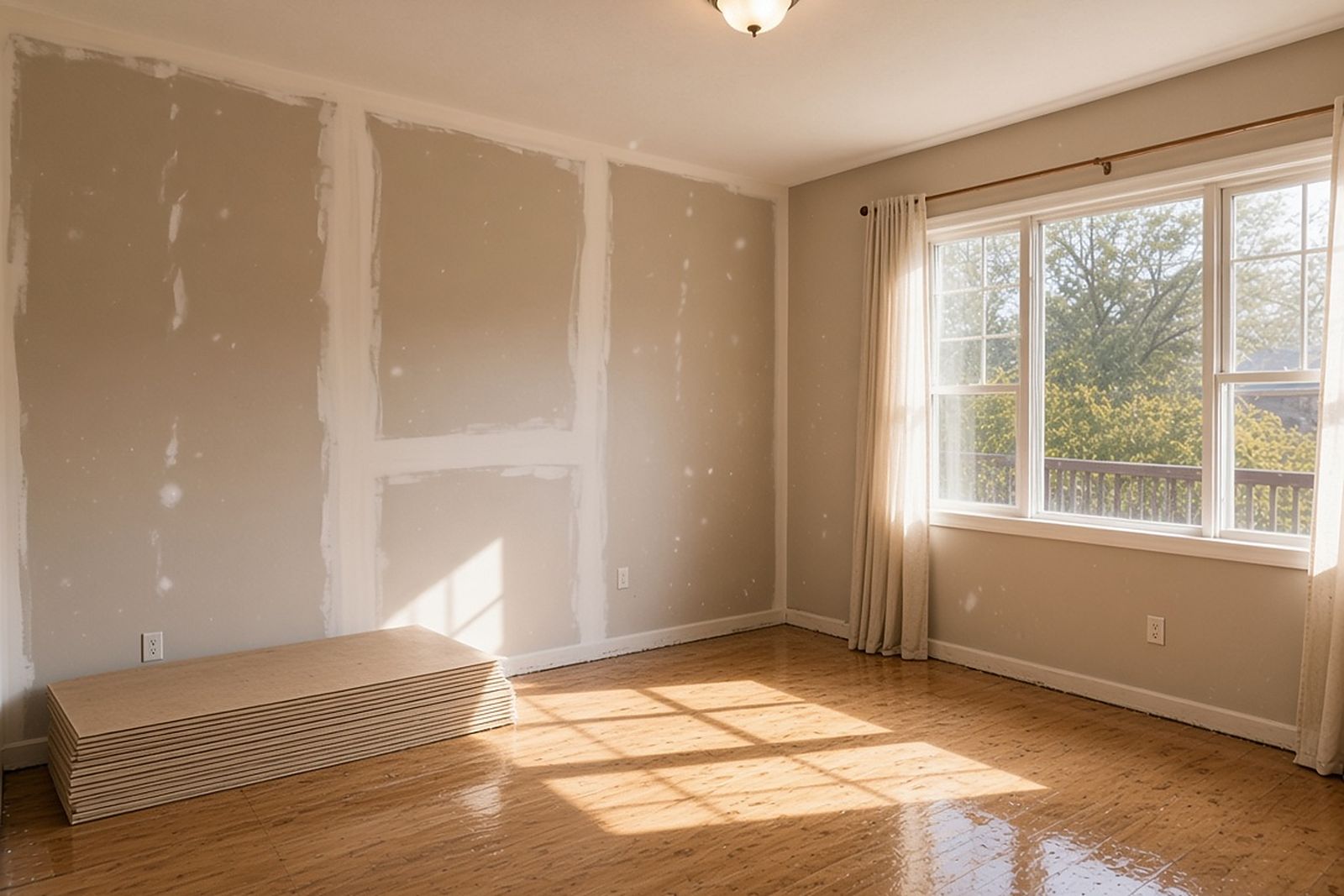
Porous materials that absorbed decomposition fluids generally cannot be cleaned or disinfected reliably. In unattended death scenes, this often includes carpet and pad, mattresses, upholstered furniture, bedding, curtains, sections of drywall, ceiling tiles, some laminate or vinyl flooring and unsealed wood.
These items are packaged and disposed of as regulated or special waste according to local rules. Once they are gone, the crew cleans and disinfects what lies beneath, such as a concrete slab or subfloor. If structural wood is affected, the crew may cut out the damaged section or, after thorough cleaning and disinfection, apply a sealer.
Waste requirements for this material differ across the country and are set largely by state environmental and health departments. A reputable provider should know the local rules and provide a disposal record.
The three steps in order, on one floor
On a job where fluids soaked through an armchair into carpet, pad and plywood subfloor, the order of operations is easy to follow. The crew removes the chair, carpet and pad as waste and lifts the flooring in stages until it reaches clean material.
It cleans the remaining subfloor with an enzyme-based cleaner in several passes, then applies a disinfectant with bloodborne pathogen claims and keeps it wet for the label contact time. Any plywood too damaged to clean is cut out and replaced. After inspection, the surrounding subfloor is sealed, and air scrubbers and a hydroxyl unit run for several days.
The family or executor should then receive photos of each stage, a disposal record and a note that the odor was checked with the windows closed before the job was closed out.
How can I confirm each step was actually done?
Ask for a completion summary that separates the three steps: what was removed and cleaned, what was disinfected and with which product, and what deodorization methods were used and for how long. Photos should show the progression, especially when flooring layers were lifted.
Some providers use ATP testing to confirm that organic residue was removed from cleaned surfaces. That test measures cleaning quality rather than disinfection, and an honest provider will explain it that way. For odor, the most meaningful check is often a closed-up period followed by a walkthrough.
If you cannot visit, ask a trusted local person, such as a neighbor or property manager, to walk through after the job. A fresh nose can notice what a crew that has been working in the space for days might miss. If odor returns later, contact the provider right away; a good company will want to find and address the remaining source.