Unattended Death Cleanup: Education
Science and technology used in some unattended death cleanup scopes, with explicit limits for ATP, disinfectants, enzymes, fogging, air equipment, and moisture tools.
Education posts explain what really happens to a building when a person dies and is not found for some time. Articles cover the science of body fluids and why they move through carpet, pad, and plywood. They explain the difference between cleaning and disinfecting these surfaces. They also show how to judge equipment such as moisture meters, air filters and plastic walls that keep dust inside the work area, and hydroxyl machines. You will find explainers on when enzyme cleaners help. Others cover when a quick swab test that shows leftover organic residue (it does not detect germs) is useful, and why these tools have limits on soft materials. Other posts explain why decay affects a wood frame differently than tile or sealed concrete. They also explain why a closed, warm home changes the chemistry of the odor.
Get an email reply about unattended death cleanup
Send a short message to the follow-up inbox. A coordinator can reply by email. This form does not send emergency help; call 911 first if anyone is in danger.
This background matters because quotes for this work often include items that sound optional but are not. A few others sound essential but can wait. You may learn why a carpet stain can signal a much wider problem underneath, or why ozone does not replace removal. Then you can question a scope with confidence. It also helps you explain choices to other heirs or a property owner who wants to know where the money is going. Just as important, it helps you judge whether an equipment list fits this home or is a standard package copied from another job.
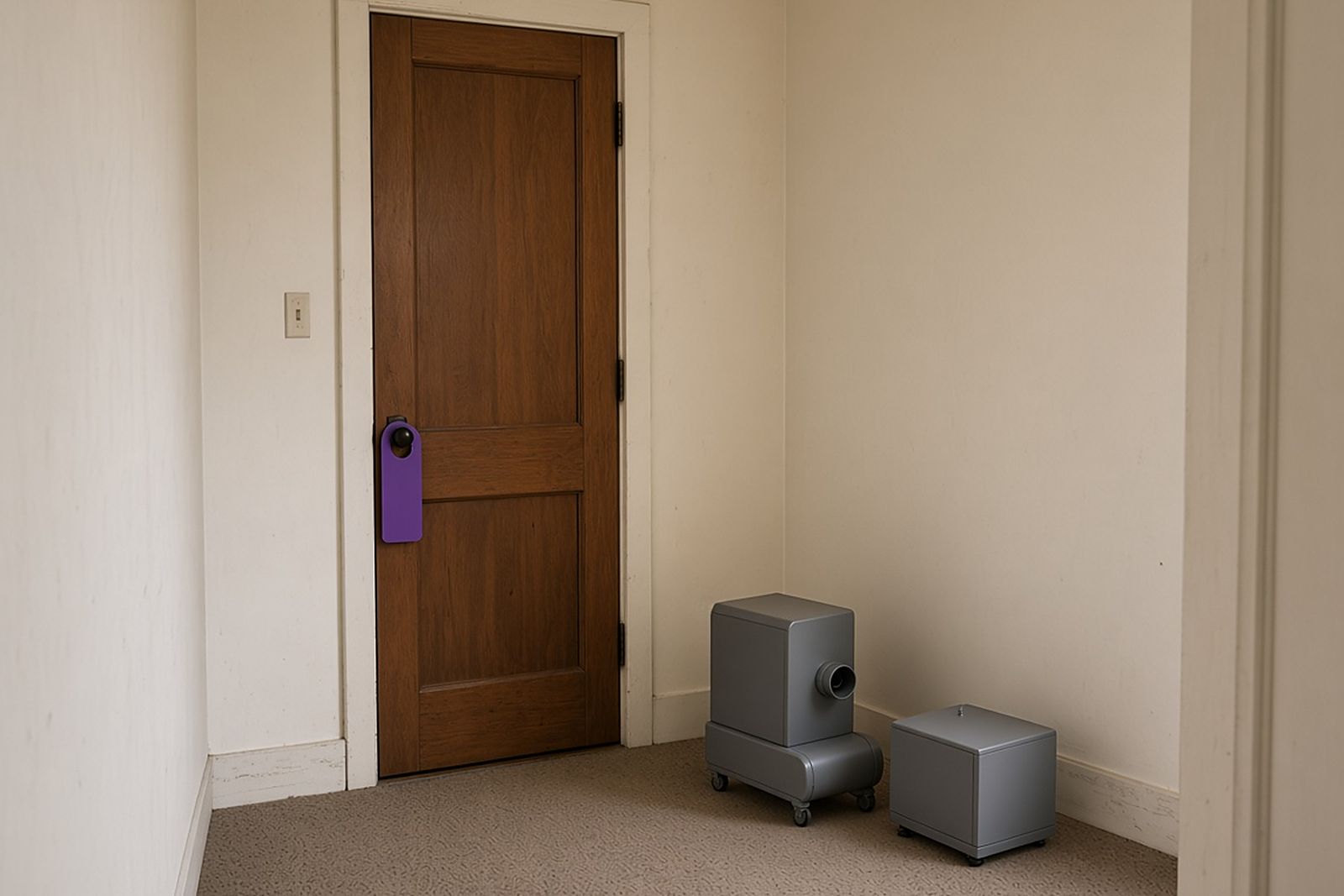
The Science Behind Unattended Death Cleanup
The science of unattended death cleanup: how decomposition, insects, odor and fluid migration change a home over time, and how crews reverse that damage.
When a death goes unnoticed, natural decomposition releases fluids and odor compounds that soak into flooring, walls and air, and insects may arrive within minutes. Unattended death cleanup uses that science to decide what to remove, how to clean and disinfect what stays, how to control insects and odor at the source, and how to verify the home is safe to enter, sell or live in again.
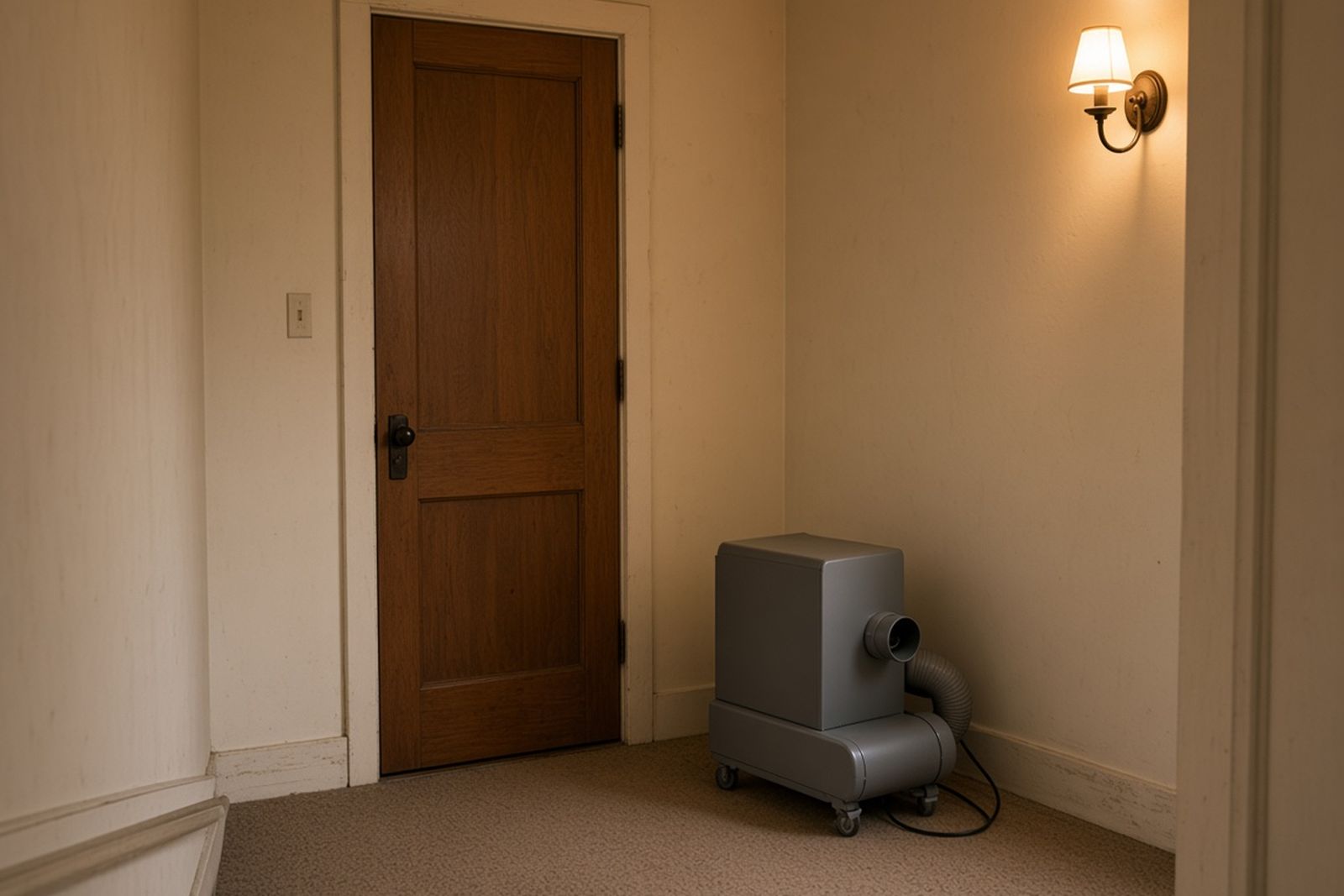
How to Evaluate Equipment Proposed for Unattended Death Cleanup
How to judge equipment in an unattended death cleanup proposal: respirators, structural tools, insect control, odor machines, sealers, HVAC care and testing.
Evaluate equipment proposed for unattended death cleanup by matching it to the home's condition: how long the person went undiscovered, how far fluids traveled, whether insects spread and how strong odor has become. Expect respirators for odor and dust, tools for removing flooring and subfloor, insect and odor control after source removal, encapsulating sealers, HVAC attention and verification records. Question anything generic, unexplained or used in place of removal.
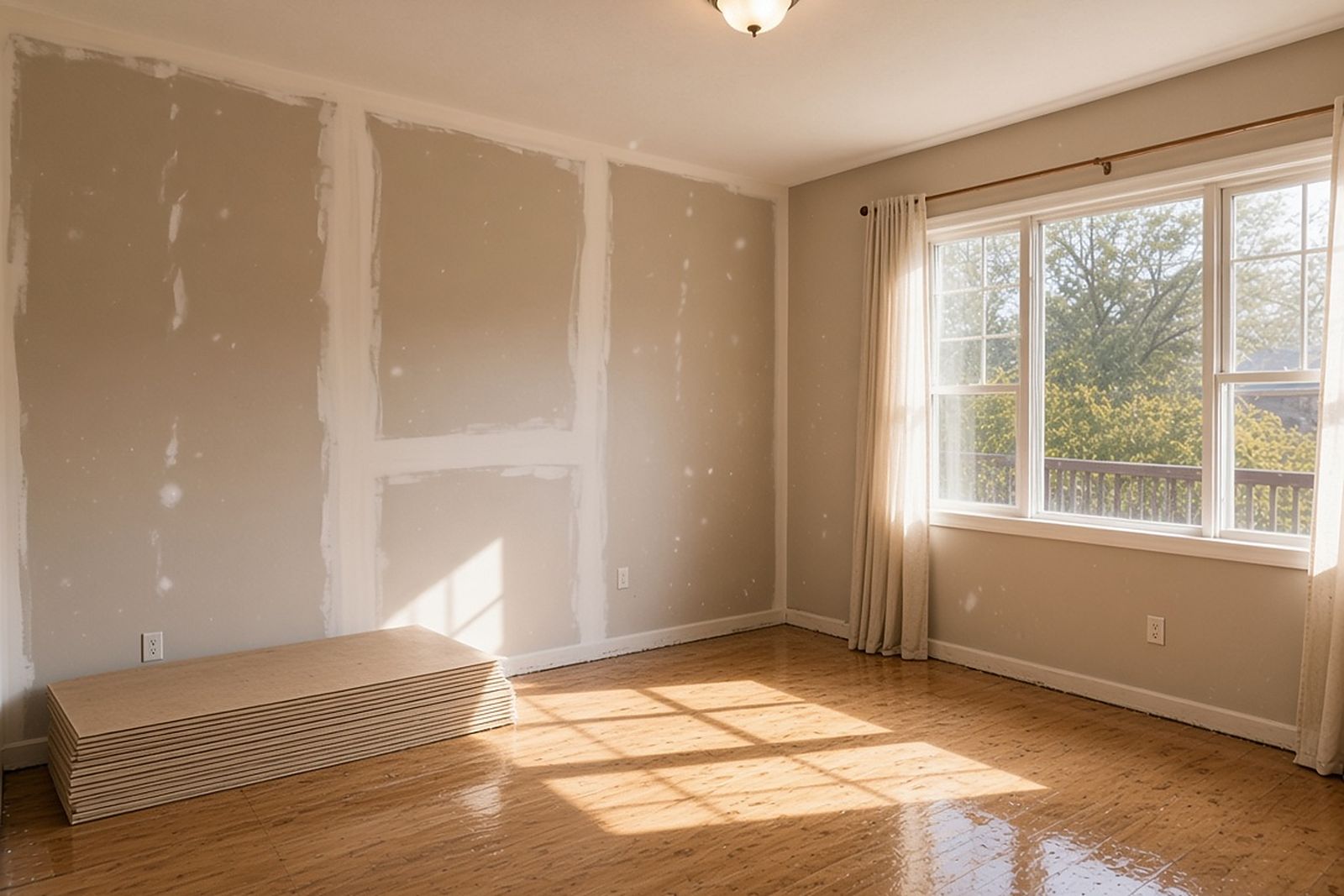
The Difference Between Cleaning and Disinfection in Unattended Death Cleanup
Why unattended death cleanup needs cleaning, disinfection and deodorization as separate steps, and why sealing or fragrance never substitutes for them.
In unattended death cleanup, cleaning removes decomposition fluids, residue and debris; disinfection applies a registered product for its full contact time to inactivate remaining pathogens; and deodorization addresses odor after the source is gone. Because fluids spread into porous and hidden materials over time, those materials are usually removed first. Sealers and fragrances are finishing tools, not substitutes for cleaning or disinfection.
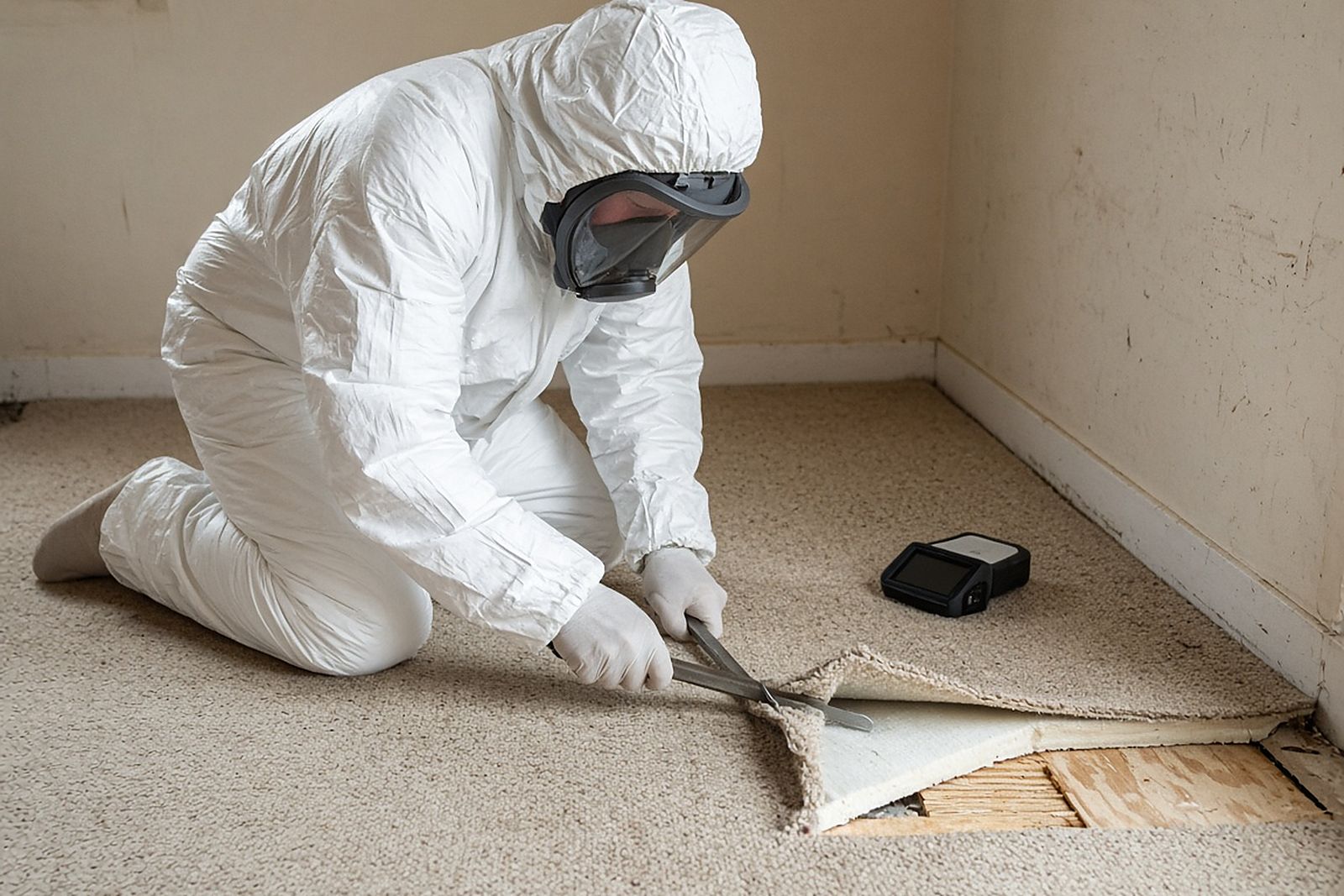
When ATP Testing Helps—and When It Does Not—in Unattended Death Cleanup
How ATP swabs fit an unattended death cleanup, why they cannot measure odor or check subfloor, and what else should prove the home is ready for repairs.
In unattended death cleanup, ATP testing is a spot check that hard, cleanable surfaces are free of organic residue after decomposition fluids are removed. It cannot measure odor, look beneath flooring, judge sealed subfloor, confirm insects are gone or identify pathogens. Ask for ATP as one piece of a written verification plan that also covers material removal, odor evaluation, photographs and disposal records.
How to Evaluate Technology Used in Unattended Death Cleanup
How to judge odor machines, sealers, cameras, meters and remote reporting in unattended death cleanup, and which claims deserve a skeptical follow-up.
Judge any technology in unattended death cleanup by the problem it solves: finding hidden fluid migration, removing odor after the source is gone, controlling insects, protecting shared air or keeping a distant family informed. Ask how it fits with removing contaminated materials, what its limits are and how results will be shown. No machine can clear odor while saturated flooring or furniture remains in the home.
When Enzymes or Microbial Products Fit Unattended Death Cleanup
When enzyme and microbial products help after a death went undiscovered, why they cannot save soaked flooring, and how they fit with disinfection and sealing.
Enzyme and microbial products fit unattended death cleanup as tools for breaking down decomposition residue and odor on concrete, sealed wood, grout, framing and other cleanable surfaces after saturated materials are removed. They are not disinfectants unless registered as such, they need time and moisture to work and they must be finished and dried before sealing. They never replace removing contaminated flooring, furniture or bedding.
Sourced figures on education
- 57%
57% of FEP claimants had not known about that benefit beforehand.
Read with care: Historical benefit-service experience, not current entitlement; entirely proxy-completed applications excluded.
Source: UK Department for Work and Pensions et al. (2021)765 UK Bereavement Support Payment (BSP) and 764 Funeral Expenses Payment (FEP) claimants; January 2021 interviews.
- 460
460 of 666 parents reported viewing their child's body in a formal setting.
Read with care: Observational; no causal effect established; item denominators differ.
Source: Omerov et al. (2014)666 Swedish suicide-bereaved parents; surveyed 2–5 years after loss.
- 49
Of 49 who chose to view or identify, 35 described it as the right decision; nine had mixed feelings.
Read with care: Purposeful sample; themes are experiences, not population frequencies.
Source: Chapple et al. (2010)80 UK adults bereaved by suicide or other traumatic death; interviews 2007–2008.
These figures are public research and agency data, not this network's own job records. Keep each number with its population, year and limits; none of them predicts cost, timing or outcome at a specific property.
What research has found
Findings from published studies of people and properties in situations like this one. They describe what researchers observed in a specific group; they are not predictions for your case.
Encountering the body at the site was not significantly associated with more nightmares or intrusive memories.
Family or friends were the most common initial information source for both claimant groups.
Education: common questions
Why does the odor after an unattended death stay even after the body is removed?
Odor comes from chemicals released as the body breaks down. Those chemicals soak into soft materials like carpet, pad, wood, drywall, and fabric. As long as those materials stay, they keep giving off odor, especially when it is warm or humid. That is why removing the source comes first and odor treatment comes second.
What does an enzyme cleaner do in this kind of cleanup?
Enzyme products break down body residue on surfaces that can be cleaned instead of removed. Examples are sealed concrete, or framing with only light staining. They help with cleaning but do not replace disinfecting. They cannot save soaked materials. The education posts explain where providers use them. They also explain why labels, and how long a product must stay on the surface, still matter.
Can a moisture meter really show where fluids traveled?
A moisture meter helps trace how far fluid soaked in. It shows where materials hold more moisture than the areas around them, especially in wood and drywall. It is not perfect, since older stains may have dried. But when a provider also lifts layers and looks closely, the meter gives a more reliable map than looking at the surface alone.
Why do articles keep treating the surface stain and the hidden damage as separate things?
Because they act very differently after a late discovery. The stain shows where fluids first pooled. The hidden damage follows gravity and seams into padding, subfloor, and nearby walls. Many costly mistakes come from treating only what you can see. Learning to ask how far damage reaches below the surface is one of the most useful habits you can bring to talks with providers.
What is source removal, and why does it come up so often?
Source removal means taking out the materials that hold body residue and odor. These include carpet, pad, pieces of subfloor, or furniture. The goal is to remove them, not to cover or treat them in place. The term comes up often because odor and germs tend to come back when the source stays. Most other steps, including deodorizing and sealing, depend on source removal being done first.
How can I learn the words providers use without feeling swamped?
Focus on a few terms first. They are release, authority, containment, source removal, disinfection, contact time (how long the disinfectant must stay wet), the waste shipping record, and clearance. Each one shows up again and again in the articles, with plain explanations. The site's quiz and study guide also introduce these terms in order. Knowing them helps you follow a provider's explanation and ask better questions, even if you never become an expert.
Are the education articles meant to help me do the cleanup myself?
No. They explain what happens and why, so you can make informed choices and spot a sound plan. The physical work after a late discovery involves dangers that trained crews are equipped to handle. Knowing the science helps you judge a scope, compare bids, and talk with insurers. The hands-on work should still go to professionals.
Related community polls
Every count is a real visitor vote; nothing is seeded or padded. One vote per poll per device, and you can change your answer.
As a landlord, how long would you wait for the tenant's family before arranging cleanup yourself?
Which part of an unattended death project would you find hardest to manage?
More on unattended death cleanup
Unattended Death Cleanup services
Learn what cleanup after a late discovery involves. It covers tracing how far fluid soaked into the subfloor, odor treatment, listing belongings, and move-back-in records.
Costs explained
What drives the price, published cost ranges, and how to read a written quote line by line.
Insurance and payment
Which policies may respond, how to document a claim, and what to do if coverage is denied.
Planning tools
Six tools for landlords, executors, and families caring for a property after an unattended death. They help from the first day through waste records and claims.
Community polls
See how other landlords, executors, and relatives handled belongings, talking with tenants, telling buyers, and subfloor choices. Share your own view without giving your name.
Knowledge quiz
Test what you know about odor signs, who is in charge, closing off rooms in shared buildings, taking out soaked materials, waste records, and final sign-off papers.
Field guides
Guides for landlords and executors. They cover access, who is in charge, telling the insurer, how long to hold belongings, and when people can safely move back in.
City guides
Find cleanup providers by city and state. Then check their licenses, waste handling, and how they inspect the subfloor yourself before you approve any work.