South · US

Unattended Death Cleanup Planning in Austin, Texas

Planning unattended death cleanup in Austin, TX

Austin cleanup help for east-side bungalow crawl spaces, fluid that spreads unseen under floating floors, and freight elevators in downtown towers. This is planning guidance, not a claim of a local office or crew in Austin.

Get an email reply about unattended death cleanup

Send a short message to the follow-up inbox. A coordinator can reply by email. This form does not send emergency help; call 911 first if anyone is in danger.

Tell us what you need help with. Share a short description; please leave out medical details, access codes, and other sensitive information.

A request does not confirm a booking. For immediate danger, contact local emergency services.

Or email info@prompartybuses.com

Direct answer

The short answer for Austin, TX

Austin has about 980,000 people. East-side bungalows, limestone homes at the Hill Country edge, downtown high-rise rentals, and suburban HOA tracts each bring their own problems after an unattended death. They differ in how crews get in and in how far fluid soaks. Long humid stretches and homes sealed up with the AC running can make the smell stronger when a death is found late. This page is a planning guide. It covers which soft materials to remove, how the air system spreads odor, working with the estate, privacy, and records. It does not make up local permits or promise response times.

Editorial guide · Biohazard Remediation NetworkUpdated 2026-07-22Location focus: Austin, TX

Local planning context

Older east and central Austin neighborhoods often have wood floors over pier-and-beam framing. Many suburban tracts sit on slabs with carpet or floating vinyl. In a pier-and-beam bungalow, a late discovery can send fluid into a crawl space that is already damp in some seasons. That raises the risk of mold on wet wood and fabric. Downtown and near-campus rentals bring elevator scheduling, tight stairwells, and neighbors who notice a strong smell in the hall right away. Learn the building type early. Fluid dripping into a crawl space and fluid soaking the layer on a slab call for different tear-out plans.

Homes at the Hill Country edge and limestone builds may have tile over concrete and many built-ins. Grout lines can look clean while the layer under the tile stays soaked where the person was found. When the AC runs all through the hot months, open returns pull odor chemicals through long duct runs. On mild evenings, families sometimes open every window. Without removing the source, fresh air only thins the smell for a while. In apartment buildings, it can also pull hallway air into other units. Insects around windows are a common sign of a late discovery in an empty rental.

The Travis County Medical Examiner and any police hold decide when work on the property may start. After release, landlords with short-term or tech-worker rentals should work closely with the estate. Talk through electronics, papers, and soiled soft goods. People expect a lot of privacy on crowded mixed-use Austin blocks. Covered waste handling and quiet staging matter as much as how long the disinfectant must stay wet. Keep records that work for insurance and probate. When you report progress to the people involved, do not treat renting an odor machine as if the biohazard cleanup were finished.

Property considerations

East-side bungalows: check the crawl space under bedrooms for fluid that dripped through and for damp insulation.

Downtown mid-rises: book the freight elevator, protect the hallways, and plan around quiet hours.

Floating vinyl or laminate over foam can hide fluid that spread far to the sides with little staining on top.

Suburban HOA tracts may limit where a dumpster can go and may want notice before anything is staged outside.

Built-in desks and closets in newer rentals can trap fluid in the kick space and particle board.

Mold risk goes up when long humid stretches and leftover moisture come together after a late discovery.

Response-planning framework

Permission, release, and who controls the rental

Check that the medical examiner or police have released the scene. Then find out whether the estate or the landlord controls the unit, or whether that is in dispute. Collect keys, gate remotes, and elevator access steps. Many homes hold a lot of personal electronics. Write down who will decide what to save before any tear-out begins.

Check moisture layer by layer

Find out whether the home is pier-and-beam or slab. Note the floor layers and the walls next to where the person was found. Probe under floating floors past the stain line. Take photos that show why the foam or pad must go, even when the top planks look fine.

Close off the air system along long duct runs

Close or bag the returns that serve the worst area. Do not use fans that push air between units. Put HEPA air scrubbers inside the sealed-off space. Do not promise new ductwork for the whole home without proof from smell and dust tests. Check again after the source is gone. Many smell complaints fade once the pad and foam are out.

Private load-out and handoff

Use covered carts through lobbies and protect the floors. Time the load-out so fewer people are watching. Give a written rebuild list for floors, drywall, and paint that is separate from the cleanup report. Keep the waste and photo records for the estate and insurance files.

Documentation checklist

  1. 1Official release and permission-to-enter records
  2. 2Notes on building type: pier-and-beam, slab, or mid-rise
  3. 3Sketch of floor layers showing how far fluid soaked in
  4. 4Time-stamped photos from before and after tear-out
  5. 5Choices about which belongings to keep, signed by the estate or landlord
  6. 6Notes on closing off the air system and filter condition
  7. 7Regulated waste paperwork when it applies
  8. 8Rebuild list given to the person responsible

Official resources

Questions for this location

Why can floating floors in Austin rentals hide a bigger problem after an unattended death?

Floating vinyl and laminate often sit on a foam layer that soaks up body fluids like a sponge. Liquid can spread sideways under the planks far past the body outline, while the top of the floor still looks mostly fine. Families who replace just a few planks often leave wet foam behind. It keeps smelling each time the AC runs. A good check lifts the edges, measures moisture, and sets a removal line based on the foam, not the surface. In humid weather, damp foam left behind can also grow mold on dust and debris. An honest plan treats the foam as a main source. It records why removing more protects the next people who live there and keeps the move-in date on track.

How do downtown Austin elevators and hallways affect cleanup?

Tall buildings put privacy and cleanliness problems into shared lobbies, elevators, and trash rooms. Soaked materials must move through those spaces without dripping or exposing neighbors to strong smells. That means sealed bags, covered carts, floor protection, and often a booked time on the freight elevator. Hallway returns and air pressure can pull odor out of an open apartment door if the seal is weak. Managers should tell residents about short access limits without sharing private details. Plan the load-out path before tear-out starts. That avoids last-minute routes that soil clean lobbies. It also gives building owners and insurers a clearer record of the loss.

How can mold become a second problem after a late discovery in Austin?

Body fluids add moisture and organic matter to carpet, drywall paper, and crawl-space materials. In humid stretches, those materials can stay damp long enough to grow mold, even after the body is gone. The smell then becomes a mix of odor chemicals from the body and from the mold. That confuses anyone who only sprays deodorizer. A good plan dries the structure after the source is removed. It checks for mold on anything that was wet, especially in pier-and-beam crawl spaces. EPA pages on moisture and mold explain why drying and removal work better than scent. Treating mold as a side effect of a late discovery keeps anyone from calling a unit ready while hidden growth remains behind the baseboards.

How should an estate handle phones and computers found near where the person died?

Electronics may hold data you cannot replace, yet they may sit where fluid splashed or vapor settled. Do not turn on a device that still has wet residue on it. Seal it in a bag so the estate can decide on it later. When it helps the probate list, photograph serial numbers and where each item sat before moving it. Items with soft or fabric cases, or heavy fluid contact, may not be savable. Hard devices in dry rooms nearby might be wiped clean with the right safety steps. Put these choices in writing so the cleanup team is not guessing. Clear rules ease tension between a landlord eager to restore the unit and a family who needs time-sensitive records. They also avoid delays in removing soaked soft goods that cause the smell and the germ risk.

When does the crawl space need work after a bedroom discovery in an older bungalow?

If the floor is wood over an open space, fluid can drip through seams, knot holes, or worn subfloor onto the joists and insulation. A smell that stays after the upstairs floor is replaced is a classic sign that the crawl space still holds soiled material. Check for stains, insects, and damp insulation under the room and a little beyond it. Base removal choices on what you find. Not every bungalow needs a full crawl-space tear-out. Take moisture readings and photos before and after any work under the house. That proof helps estate and insurance reviewers see why upstairs repairs alone would have failed after a late discovery.

Who confirms release for an Austin address before cleanup starts?

In Austin, the Travis County Medical Examiner and any police investigation decide when the scene is released. Suburban homes in nearby counties may be handled by a different office, so check which county the home is in. Wait for confirmation before anyone goes in to clean. After release, the landlord, HOA, or estate representative still needs to approve entry and disposal in writing before work begins.

What changes when the home is on a Hill Country-edge lot with a long drive?

Homes on the west edge of Austin can sit at the end of steep, narrow drives with limestone walls and tight turnarounds. Crews may need smaller trucks or may need to stage bins near the street. Plan where covered bins can sit without blocking neighbors or emergency access. The distance also means fewer quick trips back, so agree on the job and what to save before the crew arrives. In summer heat, a closed, sealed house needs attention sooner.
Contact

Get help by email

Send a short message for an email reply about unattended death cleanup planning questions for the Austin area.

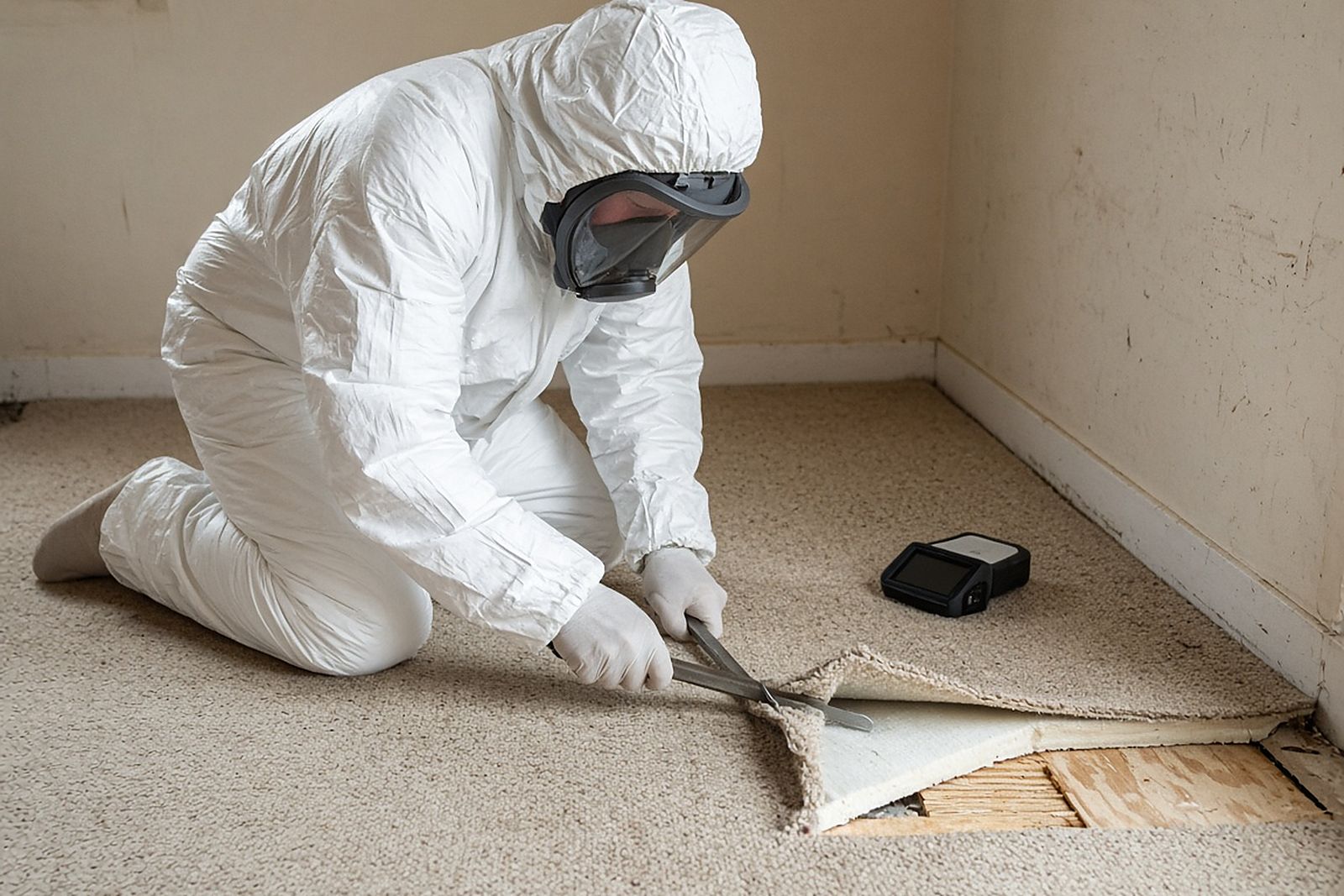
Technician in a full-face respirator cutting back carpet and pad to expose the subfloor
Illustrative photo, not a job record. Technician in a full-face respirator cutting back carpet and pad to expose the subfloor.
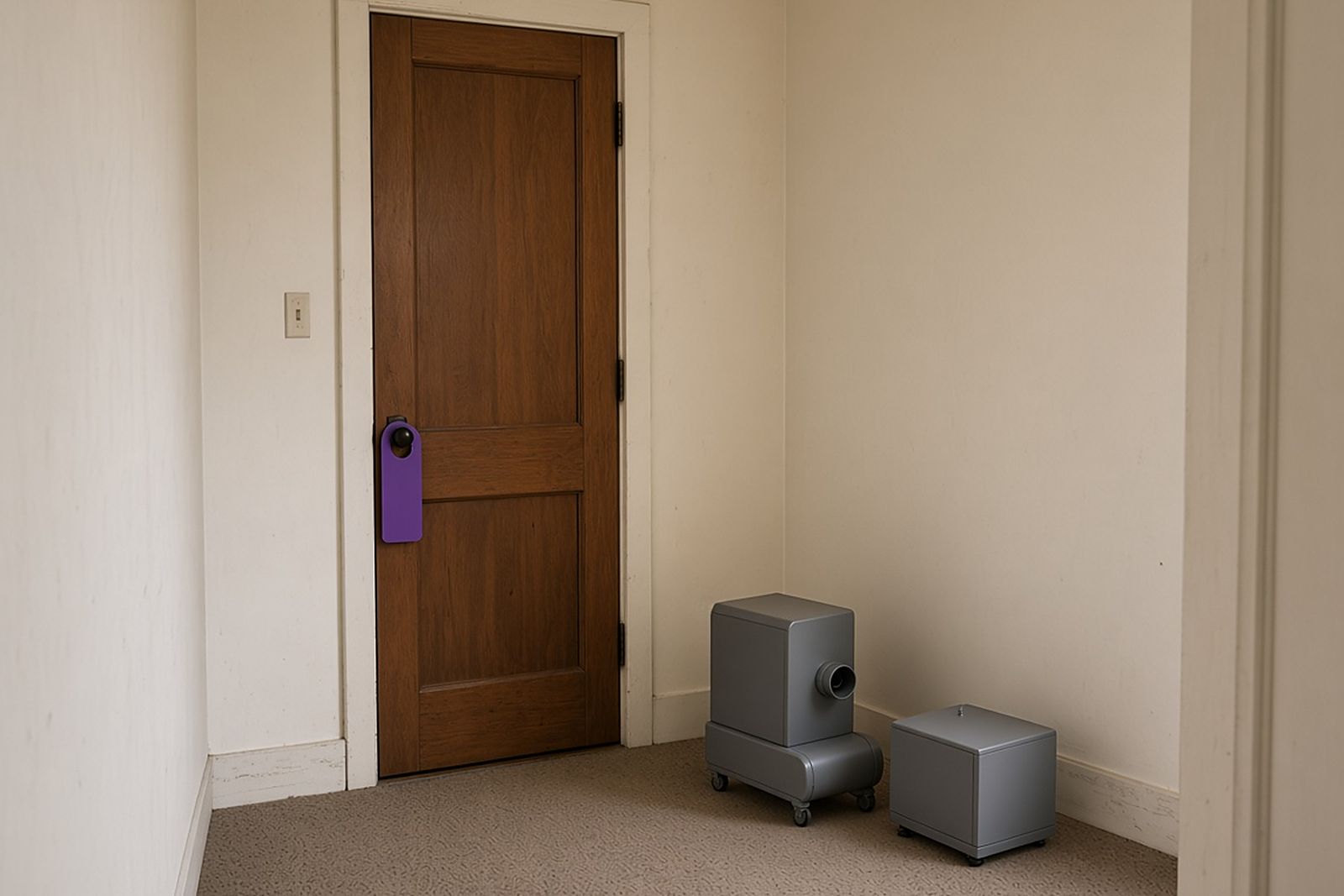
Air-filtration and odor-control units staged outside a closed door with a do-not-enter tag on the handle
Illustrative photo, not a job record. Air-filtration and odor-control units staged outside a closed door with a do-not-enter tag on the handle.

Unattended Death Cleanup figures to keep in mind

National and research figures, not Austin data. Local conditions, rules and providers vary; use these for scale and context only.

1-3 days

Blow flies can locate a body and begin laying eggs within minutes of death, and the eggs hatch in 1 to 3 days.

Read with care: Fly access indoors depends on open windows, vents and season.

Source: North Carolina State University, Department of Entomology (2024)General forensic entomology reference, outdoor and accessible indoor remains

3 days

Parchment-like skin desiccation (early mummification) was observed in indoor bodies as early as 3 days after death, with full-body desiccation from 18 days.

Read with care: Indoor temperature, humidity and airflow strongly affect the timeline.

Source: International Journal of Legal Medicine (peer-reviewed) (2023)Sweden, 102 indoor forensic cases, 2010-2019

76,020

A total of 76,020 people died alone at home in Japan in 2024, and 76.4% of them were aged 65 or older.

Read with care: Japanese national police data; no equivalent U.S. national count of unattended deaths exists, so use only as an international illustration.

Source: Japan National Police Agency (reported by Xinhua) (2024)Japan, calendar year 2024, deaths at home of people living alone

These figures are public research and agency data, not this network's own job records. Keep each number with its population, year and limits; none of them predicts cost, timing or outcome at a specific property.

Plan before you reach out

Use the first 24 hours planner for immediate steps and the provider vetting checklist to confirm any Austin provider's training, insurance and waste path in writing.

What research has found

Findings from published studies of people and properties in situations like this one. They describe what researchers observed in a specific group; they are not predictions for your case.

Encountering the body at the site was not significantly associated with more nightmares or intrusive memories.
Who was studied: Same 666-parent Swedish cohort as S004; 147 encountered the body and 512 did not.Limits: Not independent of S004; site discovery differs from later formal viewing; no proof of harmlessness.Encountering the Body at the Site of the Suicide: A Population-Based Survey in Sweden (2017)
Family or friends were the most common initial information source for both claimant groups.
Who was studied: 765 UK Bereavement Support Payment (BSP) and 764 Funeral Expenses Payment (FEP) claimants; January 2021 interviews.Limits: Historical benefit-service experience, not current entitlement; entirely proxy-completed applications excluded.Bereavement services customer experience survey report (2021)

Unattended Death Cleanup community polls

Poll results

Every count is a real visitor vote; nothing is seeded or padded. One vote per poll per device, and you can change your answer.

Your experience

As a landlord, how long would you wait for the tenant's family before arranging cleanup yourself?

No visitor votes yet
Process

Which part of an unattended death project would you find hardest to manage?

No visitor votes yet

Planning cleanup in Austin?

Send a short message about the property to the follow-up inbox. A coordinator can reply by email with next steps.

Your request is sent to the follow-up inbox. A coordinator can reply by email.

If anyone is hurt or in danger, call 911 first.