South · US

Unattended Death Cleanup Planning in Fort Worth, Texas

Planning unattended death cleanup in Fort Worth, TX

Fort Worth cleanup planning for pier-and-beam bungalows, where fluid can drip to the crawl-space soil, and for open lofts, where the smell can travel far. This is planning guidance, not a claim of a local office or crew in Fort Worth.

Get an email reply about unattended death cleanup

Send a short message to the follow-up inbox. A coordinator can reply by email. This form does not send emergency help; call 911 first if anyone is in danger.

Tell us what you need help with. Share a short description; please leave out medical details, access codes, and other sensitive information.

A request does not confirm a booking. For immediate danger, contact local emergency services.

Or email info@unattendeddeath.online

Direct answer

The short answer for Fort Worth, TX

Fort Worth is part of the DFW metro, with about 957,000 people. Homes range from older wood-frame houses near historic districts to wide suburban houses on slabs and lofts in old industrial areas. When a death is found after days or weeks, fluids have often soaked deep into soft materials. Insects may be present, and odor can travel through crawl spaces or shared mechanical rooms. This guide covers how far fluid soaked in, removing the source of the smell first, working with landlords and the estate, privacy, and records. You will not find invented Fort Worth ordinances here, and no claim that a crew is standing by.

Editorial guide · Biohazard Remediation NetworkUpdated 2026-07-22Location focus: Fort Worth, TX

Local planning context

Fort Worth has pier-and-beam bungalows, brick ranches on slabs, and warehouse-style lofts with open ducts. In a pier-and-beam house, body fluids can drip through the floor onto the joists and the crawl-space dirt. That creates a hidden pocket of smell that room sprays never reach. Converted lofts may share big open spaces. Once doors open, odor chemicals can drift farther than people expect. Deaths are often found after a wellness check when someone lived alone. Before anyone rips up carpet, look at the main room and any empty spaces below or beside it.

North Texas heat keeps many homes on the west and south sides closed up with the AC running. Older Fort Worth neighborhoods also use window units, and the airflow there is less even. So one bedroom can be badly affected while the hallway only smells a little musty. That can fool managers into planning too small a job. Flies gathered on windowsills and light fixtures often mean more time has passed. They may also have carried residue into pantries or laundry rooms. Treat insects as a sign of how big the job is, not only as a pest call. Remove the affected soft items inside a sealed-off area so larvae and pupae are not carried through the home.

The Tarrant County Medical Examiner and any police hold decide when cleanup may legally begin. Cleanup does not replace their work. After release, landlords and estate representatives should agree on what happens to belongings. This matters when family members want to save photos or jewelry from rooms still wet with body fluid. On tight city lots and in shared apartment halls, privacy means covered waste paths and short notices from management. It does not mean drawing attention. Keep written job scopes that split the biohazard tear-out from the later flooring and paint. Then the rebuild crew starts with a dry, well-documented base.
Property considerations

Pier-and-beam crawl spaces: after a bedroom or bathroom discovery, check the joists, insulation, and soil for fluid that dripped through.

Open ceilings and exposed ducts in warehouse lofts can carry smell through a large space if the seal fails.

Suburban houses on slabs still need checks under the floor layer and inside baseboard gaps, even though the floor is easier to reach.

Rooms cooled by window units may hide dampness and mold where fluid kept materials wet for weeks.

Relatives sometimes move soaked soft goods into detached garages or sheds before anyone assesses the home.

Narrow alleys and HOA streets limit staging space. Plan a quiet load-out that does not block fire access.

Response-planning framework

Release, access, and a list of who must approve

Confirm the scene is released. Name every person who must approve tearing out floors or throwing out belongings. That may be the landlord, the executor, or a lender if one is involved. Write down how to get in: gate codes, freight elevators, alley load-out, or HOA quiet hours. Pick one person to make final calls before anyone opens walls or crawl-space hatches.

Check down into the crawl space, not just across

In a pier-and-beam house, look down as carefully as you look across the room. Moisture meters, smell, and stains on the joists show whether new subfloor is enough. They also show whether the insulation and the soil under it need work too. Record what you find before tearing anything out. Then any change to the job is based on proof.

Seal the area, deal with insects, and protect halls

Close off the worst area. Handle insect-covered materials as contaminated waste. Protect shared stairwells while bags go out. Do not use a household vacuum on dried residue. Run HEPA air scrubbers inside the sealed area instead of blowing air toward hallways that have not been cleaned.

Remove the source, then treat the smell

Take out soaked soft materials back to a clean edge. Clean the hard surfaces you can keep, letting the disinfectant stay wet as long as its label says. Then dry the structure. Only after the sources are gone should hydroxyl or similar machines be used, and only with the room empty as required. Give the estate or owner a rebuild list with photos of what is left.

Documentation checklist

  1. 1Proof the scene was released and written permission to enter
  2. 2Contact list for the estate, landlord, and property manager
  3. 3Labeled photos from inside the crawl space or loft ceiling space
  4. 4Moisture and stain-edge records taken before tear-out
  5. 5List of soft goods and absorbent finishes removed
  6. 6Notes on insects and the rooms they reached
  7. 7Waste handling records for regulated materials, when used
  8. 8Rebuild list after cleanup, with photos of the bare surfaces

Official resources

Questions for this location

How does a Fort Worth pier-and-beam home change the cleanup compared with a slab house?

A pier-and-beam house has an open space under the floor. Body fluids can drip onto the joists, insulation, and dirt below. A family that only replaces the bedroom carpet may leave a source of smell under the house. It tends to come back when the air gets humid. A good assessment opens the hatch, looks at the framing, and decides what to do with soaked insulation. A slab house is different. Fluid collects in the floor layer and against the concrete, which needs its own cleaning and drying. In either type of house, a late discovery raises the chance that insects and vapor have moved past the main room. Knowing which kind of floor you have helps prevent a bid that is too low and repeat visits after a surface-only clean.

What should a property manager do first when a smell suggests an unattended death in a Fort Worth rental?

Put safety first and call the proper authorities. Do not go in alone. Once the death has been handled and the scene is released, stop any do-it-yourself cleaning that could spread the mess. Lock the unit and limit who can go in. Reach out to the estate or the emergency contact. If it is safe, take photos from the doorway and note any insects. Do not run an air system that is shared with other units. Get an assessment that shows how far fluid soaked in before you promise a move-in date to anyone. Tell neighbors about the temporary barriers without sharing private medical details. That helps calm hallway worries while staff protect privacy and keep records for insurance.

Why do insects matter when planning cleanup after a late discovery in Fort Worth?

Flies and larvae show that time has passed and that tissue and fluids were there for them to breed in. Insects carry material to windows, curtains, and nearby rooms. That makes the affected area bigger than the spot where the person was found. Large groups of maggots also mean moisture, which can lead to mold on wood and fabric. So cleanup plans treat soft goods with insects in them as contaminated waste, not normal trash. The plan also checks the nearby rooms. Crushing or sweeping insects without protective gear can put residue into the air. Adding insect notes to the moisture and odor map gives a more honest picture than stain size alone. It also lowers the chance that a room called clean still has pupae hiding in the carpet edges.

In what order should odor machines be used in a Fort Worth loft with open ceilings?

In a large open space, the smell seems to be everywhere, so people want to run ozone or foggers early. That fails when fluid is still in furniture, under a mezzanine floor, or in the dust inside exposed ducts. First, seal off what you can. Remove soaked soft items and clean the hard surfaces. Run HEPA air scrubbers inside the work area. Only after the sources are gone should stronger odor treatments be used. They need the space to be empty and must be safe for the materials in the loft. Shared or open air paths must be closed off so untreated air does not reach the lofts next door. Removing the source first protects the air and makes any later sign-off more believable to owners and insurers.

What privacy steps matter on crowded Fort Worth blocks when waste goes out?

Neighbors notice open biohazard bags and uncovered dumpsters far more than plain vans. Use covered carts and time the load-out so no one waits around outside. Protect hallway floors so residue is not tracked into shared spaces. Management should share only what people need to know, like work hours and short access limits. They should not describe the death. The estate may want to look through belongings in private before anything is thrown out. Set a short, written time window for this so grief does not hold up the cleanup forever. Photograph items marked for disposal when probate may need proof. Privacy steps do not replace a sealed work area, but they reduce conflict on Tarrant County streets. Homes sit close together there, and alley staging is easy to see.

Which office releases a Fort Worth home or apartment after an unattended death?

Fort Worth addresses fall under the Tarrant County Medical Examiner and any police agency that is investigating. Cleanup should wait until they confirm the scene is released. If a home sits near a county line in the wider metro, check which county's office handled the case. Do not assume. After release, the owner, landlord, or estate representative decides who may go in and what may be thrown out. Get that in writing too.

Can the original hardwood floors in an older Fort Worth house be saved?

Sometimes, but it depends on how far the fluid traveled. Older wood-frame homes near Fort Worth's historic neighborhoods often have narrow oak boards with small gaps. Fluid can pass through those gaps to the subfloor and the space below. Boards that are stained all the way through or still smell after cleaning usually need to come out. Boards farther away may be cleaned and refinished. Ask for moisture readings and photos. Then your family can weigh what the floor means to you against what the evidence shows.

Contact

Get help by email

Send a short message for an email reply about unattended death cleanup planning questions for the Dallas-Fort Worth area.

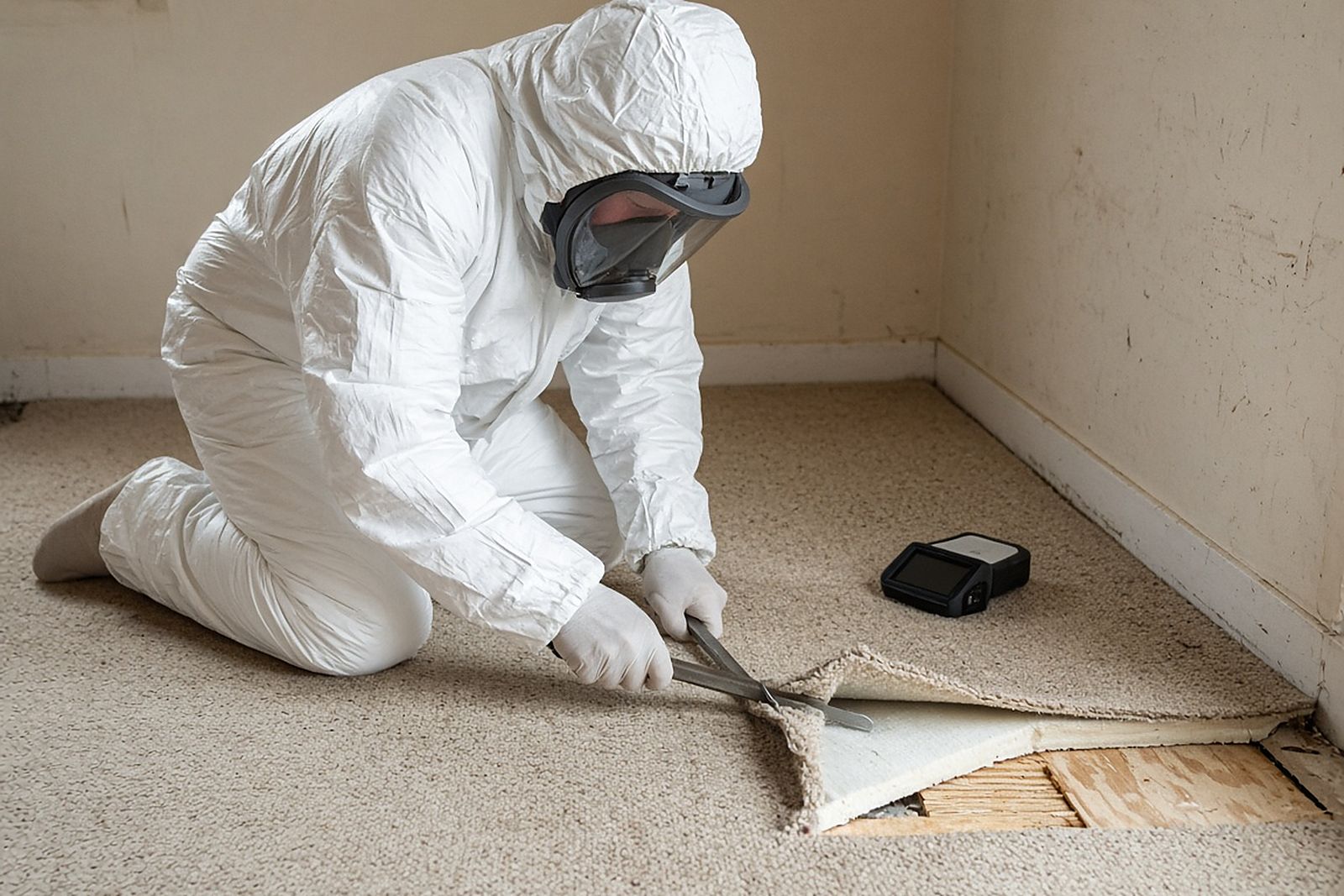
Technician in a full-face respirator cutting back carpet and pad to expose the subfloor
Illustrative photo, not a job record. Technician in a full-face respirator cutting back carpet and pad to expose the subfloor.
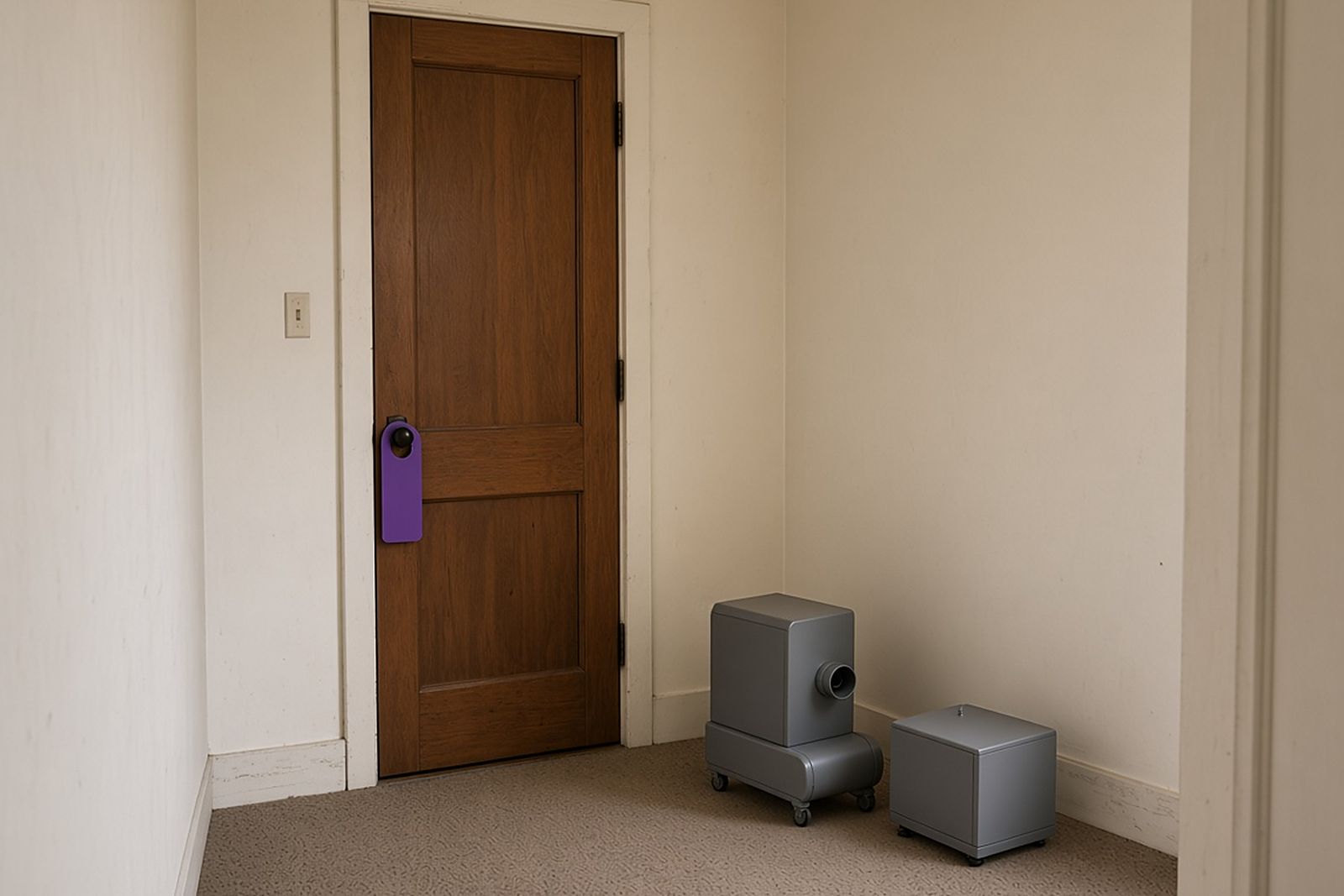
Air-filtration and odor-control units staged outside a closed door with a do-not-enter tag on the handle
Illustrative photo, not a job record. Air-filtration and odor-control units staged outside a closed door with a do-not-enter tag on the handle.

Unattended Death Cleanup figures to keep in mind

National and research figures, not Fort Worth data. Local conditions, rules and providers vary; use these for scale and context only.

3 days

Parchment-like skin desiccation (early mummification) was observed in indoor bodies as early as 3 days after death, with full-body desiccation from 18 days.

Read with care: Indoor temperature, humidity and airflow strongly affect the timeline.

Source: International Journal of Legal Medicine (peer-reviewed) (2023)Sweden, 102 indoor forensic cases, 2010-2019

1-3 days

Blow flies can locate a body and begin laying eggs within minutes of death, and the eggs hatch in 1 to 3 days.

Read with care: Fly access indoors depends on open windows, vents and season.

Source: North Carolina State University, Department of Entomology (2024)General forensic entomology reference, outdoor and accessible indoor remains

430

430 of 446 consistent respondents to the viewing-regret question reported no regret.

Read with care: Observational; no causal effect established; item denominators differ.

Source: Omerov et al. (2014)666 Swedish suicide-bereaved parents; surveyed 2–5 years after loss.

These figures are public research and agency data, not this network's own job records. Keep each number with its population, year and limits; none of them predicts cost, timing or outcome at a specific property.

Plan before you reach out

Use the first 24 hours planner for immediate steps and the provider vetting checklist to confirm any Fort Worth provider's training, insurance and waste path in writing.

What research has found

Findings from published studies of people and properties in situations like this one. They describe what researchers observed in a specific group; they are not predictions for your case.

Housing insecurity competed with grieving for families' attention.
Who was studied: UK interviews: 14 bereaved people experiencing poverty and 15 supporting professionals.Limits: Small purposive sample; UK housing context; not current legal guidance.How does housing affect end-of-life care and bereavement in low-income communities? (2022)
Some non-viewers said officials advised against viewing because of damage or decomposition.
Who was studied: 666 Swedish suicide-bereaved parents; surveyed 2–5 years after loss.Limits: Observational; no causal effect established; item denominators differ.Viewing the Body after Bereavement Due to Suicide: A Population-Based Survey in Sweden (2014)

Unattended Death Cleanup community polls

Poll results

Every count is a real visitor vote; nothing is seeded or padded. One vote per poll per device, and you can change your answer.

Your experience

As a landlord, how long would you wait for the tenant's family before arranging cleanup yourself?

No visitor votes yet
Process

Which part of an unattended death project would you find hardest to manage?

No visitor votes yet

Planning cleanup in Fort Worth?

Send a short message about the property to the follow-up inbox. A coordinator can reply by email with next steps.

Your request is sent to the follow-up inbox. A coordinator can reply by email.

If anyone is hurt or in danger, call 911 first.