Northeast · US

Unattended Death Cleanup Planning in New York City

Planning unattended death cleanup in New York, NY

New York City cleanup planning: medical examiner release, the housing mix in each borough, freight and walk-up planning, and managing agent records. This is planning guidance, not a claim of a local office or crew in New York.

Get an email reply about unattended death cleanup

Send a short message to the follow-up inbox. A coordinator can reply by email. This form does not send emergency help; call 911 first if anyone is in danger.

Tell us what you need help with. Share a short description; please leave out medical details, access codes, and other sensitive information.

A request does not confirm a booking. For immediate danger, contact local emergency services.

Or email info@unattendeddeath.online

Direct answer

The short answer for New York, NY

About 8,340,000 people live in New York City, in a vertical mix of tenement walk-ups, prewar elevator co-ops, condo towers, and loft conversions across five boroughs. When a death is found late in a sealed apartment, body fluid spreads through layered floors. Steam heat or summer cooling pushes the smell into shared halls.

Editorial guide · Biohazard Remediation NetworkUpdated 2026-07-22Location focus: New York, NY

Local planning context

Soiled materials rarely leave through a private driveway here. They share stairs, passenger elevators, sidewalk sheds, and curb lanes with strangers. Built-in closets, old dumbwaiter shafts in some prewar buildings, cast-iron radiator covers, and decades of layered flooring hide fluid that a surface wipe will never reach. Planning starts with who may sign for work that touches a co-op unit or a condo's shared areas, not with a painting schedule. Each borough differs in access. Brownstone stoops, elevator towers, and garden apartments each set their own path for bags. But the way fluid soaks into soft materials is the same everywhere.

In a city this crowded, privacy is a planning problem. Court windows and air shafts put the neighbors' kitchens a few feet away. Doormen and package rooms see every cart. Tourist and school rush hours on the sidewalk expose any stoop load-out. Freight elevators, when a building has them, need booked times and padding. Without freight, protected passenger cars and moves at quiet times are the only path that works. Keep compactor rooms and cellar bike cages off the dirty route. Opaque sealed bins, quick curb transfers, and notices that give only hours and closed floors protect dignity while the source is removed.

The New York City Office of Chief Medical Examiner and any police hold control when work on the property may legally begin. After release, the paper trail usually includes a shareholder or deeded owner, a managing agent, a board, an insurer, and sometimes an estate lawyer. The NYC Department of Health and Mental Hygiene offers city public health resources. Photograph the apartment and the shared path before any protection goes down. List the soft items thrown out apart from the surfaces disinfected in place. Winter steam heat dries the air differently than humid summer weeks with sealed windows, so check for real dryness. Keep the biohazard work separate from any later renovation under the building's alteration agreement.
Property considerations

Tenement and brownstone walk-ups force sealed bags onto stairs and stoops. Protect the handrails other households use all day.

In co-op and condo towers, book the freight car or plan a padded passenger car. Get the managing agent's OK in writing before any hall is closed.

Prewar plaster, built-in closets, and cast-iron radiator covers can hide residue that calls for opening areas past the stain outline.

Because court windows and air shafts sit so close, time any airing out and cover carts with the neighbors across the gap in mind.

Basement compactor rooms and package desks are never OK places to stage biohazard materials.

Work with the doorman and super on keys, alarm panels, and quiet hours, without graphic talk in the lobby.

Sidewalk sheds or scaffolding can shrink curb space. Plan a backup loading spot when a shed blocks the stoop.

Old city apartments often have one wood floor laid over another, and fluid can travel between them unseen.

Response-planning framework

Get the medical examiner or police release and co-op or condo signing authority

Confirm the official release. Then find out whether a shareholder, deeded owner, managing agent, or board must approve cutting into floors or shared halls. In co-ops, relying by mistake on a roommate or broker can stop the work when the alterations desk objects. Record who holds keys and who controls the elevators before any tear-out tools enter the apartment.

Book the path down and plan the sidewalk handoff

Map the route from the apartment door to the curb. Use the freight car if there is one. If not, use a padded passenger elevator at quiet times. When you can, avoid school dismissal and busy tourist blocks for stoop loading. Keep sealed bins out of package rooms and off lobby benches. Set out clean protective gear on a controlled landing, not next to the doorman's desk. If a sidewalk shed narrows the curb, write the backup loading spot into the plan.

Work carefully on built-ins, plaster, and layered floors

Check the closets, baths, radiator covers, and floor seams common in city apartments. Put soft materials that cannot be saved into regulated packaging. Clean the hard surfaces you can keep only after the bulk residue is gone, and let the disinfectant stay wet for the full time on its label. Use HEPA tools for plaster dust. Photograph each opened area for insurers and for the contractors who will later close up the alteration work.

Close the managing agent's file apart from any renovation

Hand over before-and-after photos, the list of products used, notes on the waste path, photos of how shared paths were protected, and a vacancy statement listing any unfinished rebuild. Clearly separate the finished biohazard work from any board-approved alteration that may restore finishes later. Keep copies with both the unit's decision maker and the managing agent.

Documentation checklist

  1. 1Medical examiner or police release, plus approval from the managing agent or board naming who may disturb shared areas
  2. 2Photos of the apartment, including built-in closets, baths, and cast-iron radiator covers
  3. 3Photos of hallway runners and elevator protection taken before the first sealed cart moved
  4. 4Notes on the stoop or curb handoff, including any sidewalk shed that changed the loading spot
  5. 5List of soft items thrown out, tied to room names inside the apartment
  6. 6Names of the EPA-registered disinfectants used and how long each stayed wet on the hard surfaces kept
  7. 7Which radiator zone or window unit was shut in the apartment, plus filter state if any
  8. 8Regulated packaging and hauler records suitable for insurer and board files
  9. 9Vacancy statement plus alteration-agreement handoff listing unfinished finish work still required

Official resources

Questions for this location

How should New York co-op boards handle approval after an unattended death?

Confirm the medical examiner or police release first. Then decide whether the work touches only the inside of the unit or also shared areas that need the board's or managing agent's sign-off. The written approval should keep the biohazard work apart from any later renovation under the alteration agreement. Require photos of hallway and elevator protection, a list of products and how long each stayed wet, notes on the waste path, and a vacancy statement. Tell residents only the hours and closed floors, never graphic details on building apps. Clear papers cut down on disputes and help insurers see why shared paths were controlled.

Why is loading from the stoop so hard in walk-ups?

With no freight elevator, every sealed bag goes down the stairs to a public stoop where neighbors, delivery workers, and people walking by all meet. Runners, opaque covers, and quick curb handoffs become must-have health steps. When you can, move loads outside commute rush hours. Change protective gear on a controlled landing, not on the open sidewalk. Photograph the stair protection for the claim file. These choices limit exposure to others and ease hallway tension when carts pass apartment doors.

Which prewar details most often hide residue after a late discovery?

Built-in closets, spaces inside plaster walls, layered wood floors, cast-iron radiator covers, and bathroom thresholds often hide how far fluid spread. Some buildings also have unused dumbwaiter shafts or odd gaps behind old trim. When it is safe, check the edges and under built-ins that can be moved. Soft goods in closets may fail the checks even when the parlor looks better. Throw out materials that cannot be proven clean. Disinfect the hard surfaces you keep only after the residue is removed, and give the product its full label time. Photograph the openings so alteration contractors know what to close.

How do court windows and air shafts affect privacy planning?

Neighbors' kitchens and bedrooms sit only a few feet away across courts and shafts, so strangers can see the airing out and the carts. Do not stage next to open court windows. Keep talk with the doorman to access times. Keep package rooms clear of sealed biohazard bins. Sidewalk handoffs should be quick and under opaque covers. Store photos in private claim files, not on building portals. Careful privacy protects dignity and draws fewer onlookers during curb loading.

What should managing agents file after the biohazard work ends?

Keep the release, photos of the apartment, photos of how shared paths were protected, and lists of soft items thrown out. Add the disinfectants used and how long each stayed wet, plus the waste path records. Include notes on closing off the air system or radiators, and a vacancy statement tied to any pending alteration work. After a late discovery, a clean look alone is not enough. Share copies with the unit's decision maker. When the apartment is later sold or sublet, the board can point to that file instead of hallway rumors.

Should a New York tenant call 311 or the landlord about a smell next door?

If you think someone may be in distress or may have died, call 911 for a welfare check first. After that is handled, for ongoing building problems like a smell in the halls, you can contact the landlord or managing agent. 311 can also send building complaints to the right city agency. Do not go into a neighbor's apartment yourself. Let the professionals and the building handle access.

How do steam-heat risers affect odor in New York apartments?

Many older New York buildings have steam or hot-water pipes, called risers, that pass up through the floors. There are often gaps around those pipes. Odor from a sealed apartment can travel along these gaps to the units above and below. After the soft materials are removed, crews may need to seal around the risers in the affected unit. If neighbors report a smell near their radiators, tell the crew so they check those paths.

Contact

Get help by email

Send a short message for an email reply about unattended death cleanup planning questions for the New York City area.

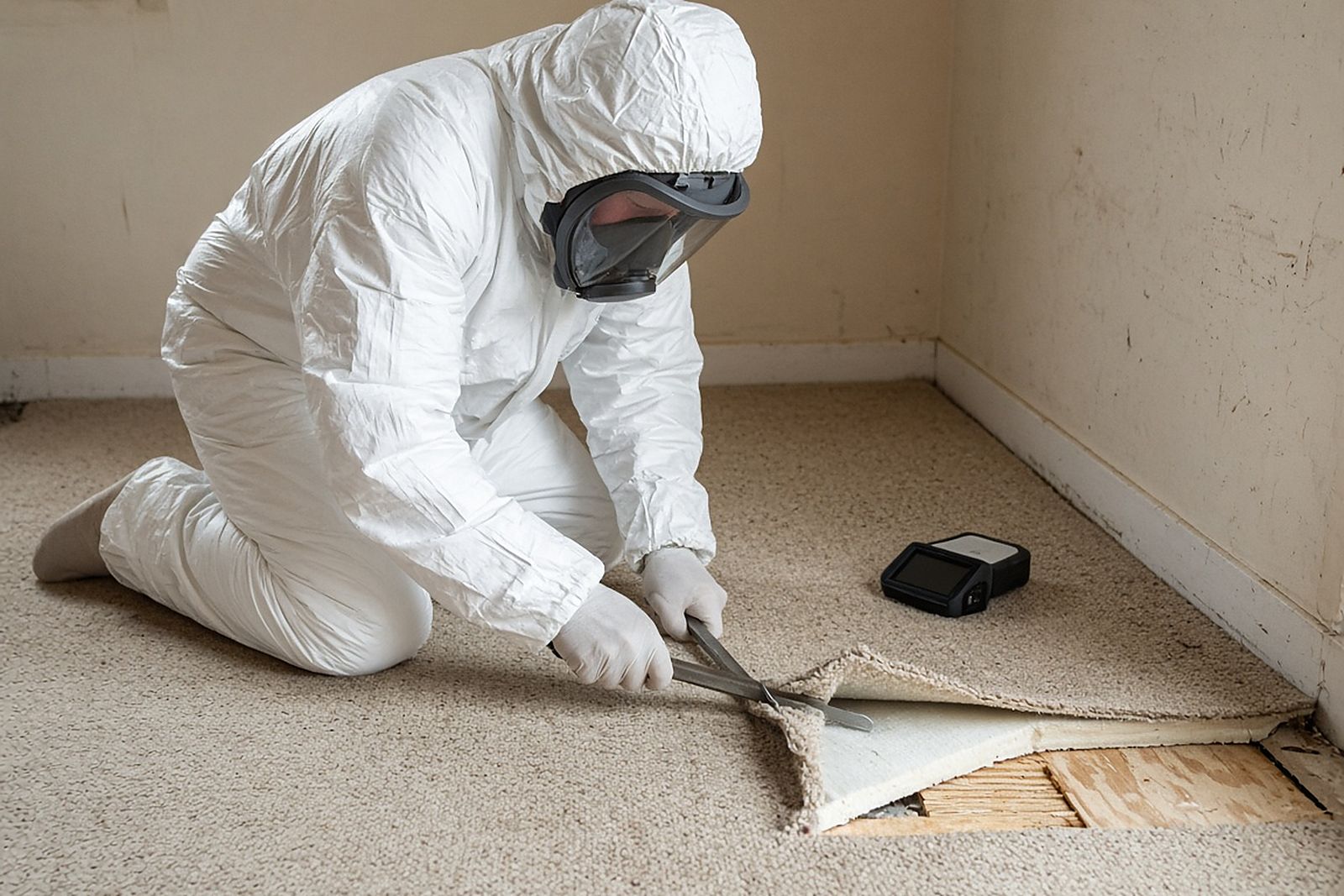
Technician in a full-face respirator cutting back carpet and pad to expose the subfloor
Illustrative photo, not a job record. Technician in a full-face respirator cutting back carpet and pad to expose the subfloor.
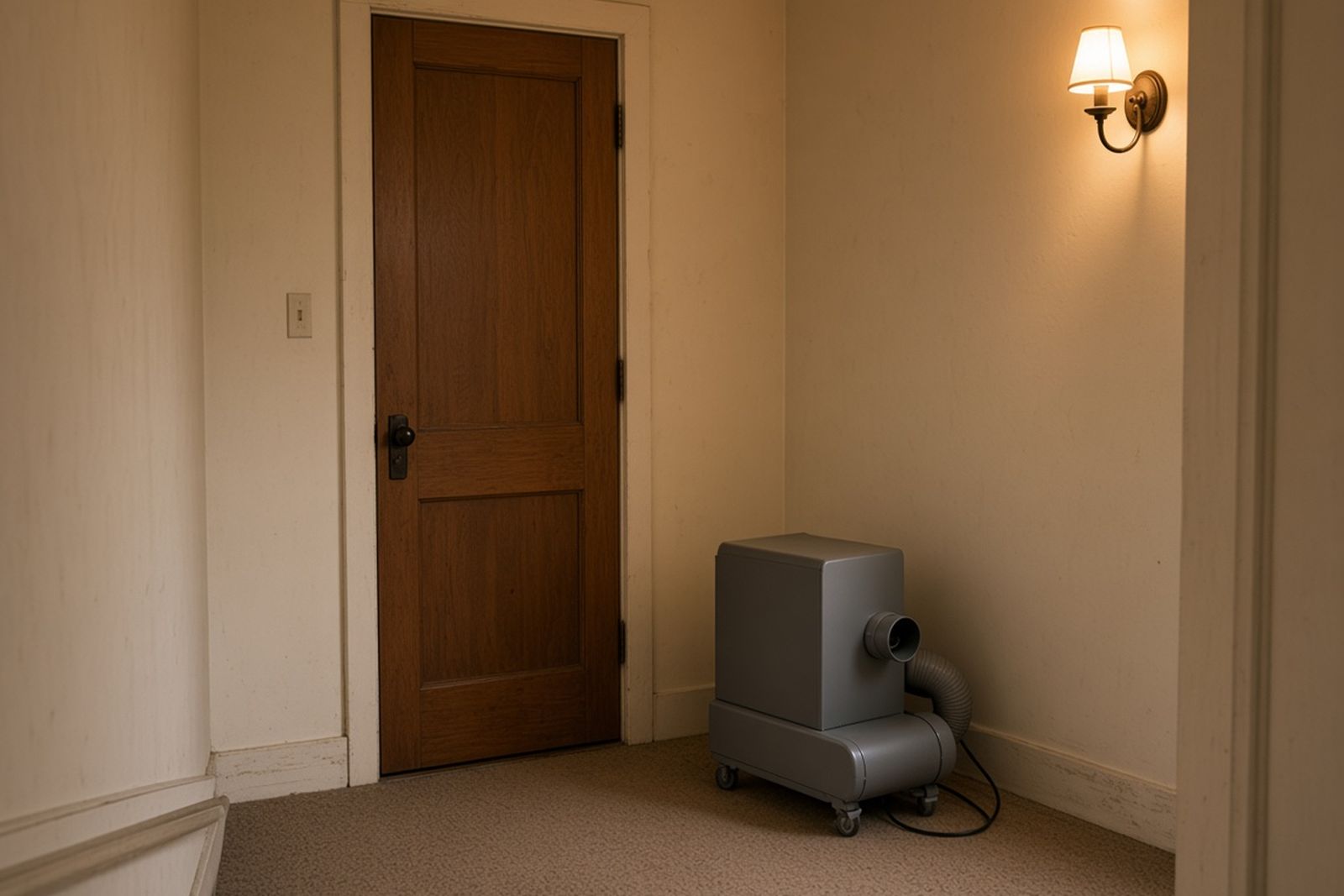
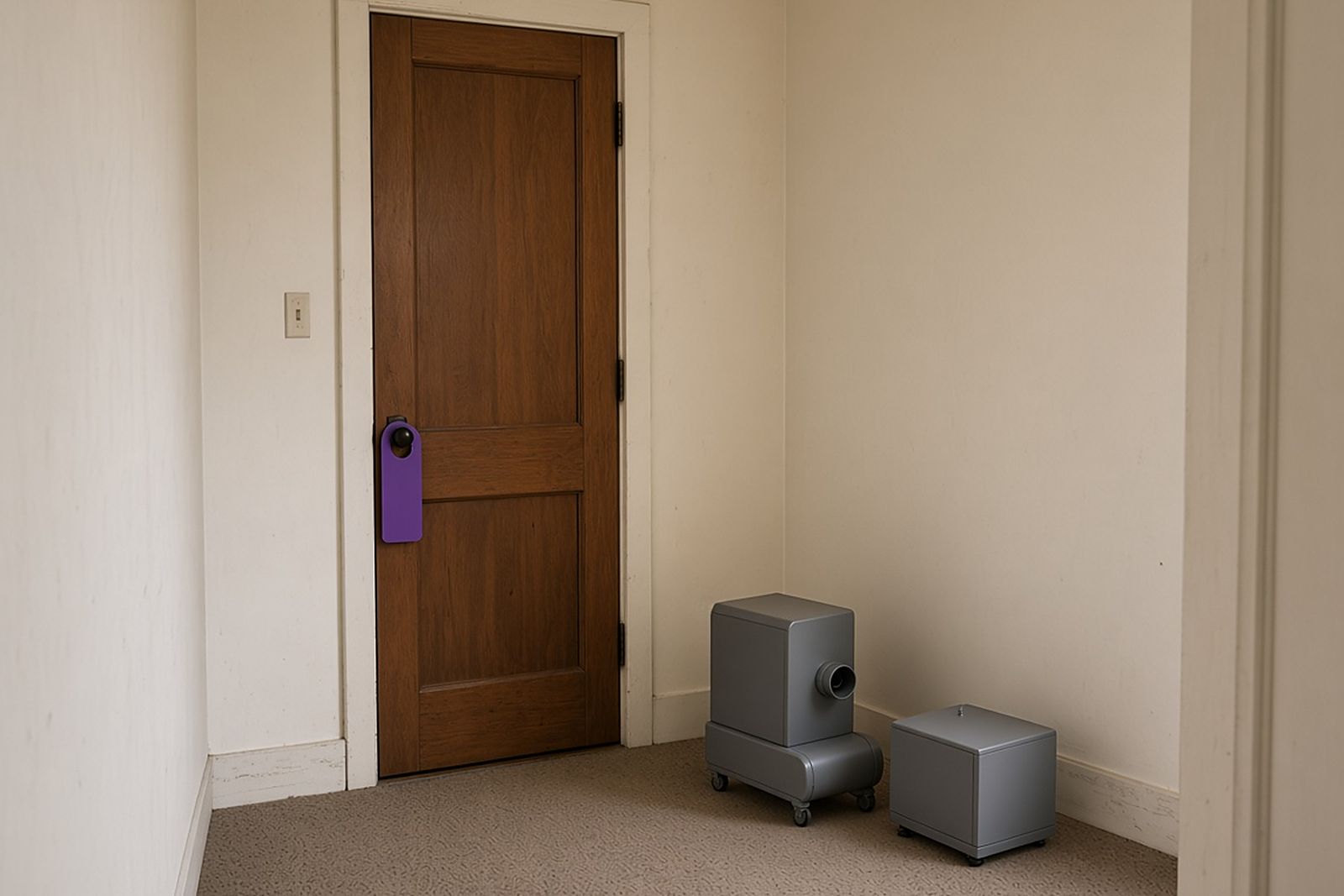
Air-filtration and odor-control units staged outside a closed door with a do-not-enter tag on the handle
Illustrative photo, not a job record. Air-filtration and odor-control units staged outside a closed door with a do-not-enter tag on the handle.

Unattended Death Cleanup figures to keep in mind

National and research figures, not New York data. Local conditions, rules and providers vary; use these for scale and context only.

3 days

Parchment-like skin desiccation (early mummification) was observed in indoor bodies as early as 3 days after death, with full-body desiccation from 18 days.

Read with care: Indoor temperature, humidity and airflow strongly affect the timeline.

Source: International Journal of Legal Medicine (peer-reviewed) (2023)Sweden, 102 indoor forensic cases, 2010-2019

1-3 days

Blow flies can locate a body and begin laying eggs within minutes of death, and the eggs hatch in 1 to 3 days.

Read with care: Fly access indoors depends on open windows, vents and season.

Source: North Carolina State University, Department of Entomology (2024)General forensic entomology reference, outdoor and accessible indoor remains

430

430 of 446 consistent respondents to the viewing-regret question reported no regret.

Read with care: Observational; no causal effect established; item denominators differ.

Source: Omerov et al. (2014)666 Swedish suicide-bereaved parents; surveyed 2–5 years after loss.

These figures are public research and agency data, not this network's own job records. Keep each number with its population, year and limits; none of them predicts cost, timing or outcome at a specific property.

Plan before you reach out

Use the first 24 hours planner for immediate steps and the provider vetting checklist to confirm any New York provider's training, insurance and waste path in writing.

What research has found

Findings from published studies of people and properties in situations like this one. They describe what researchers observed in a specific group; they are not predictions for your case.

Some women found taking over household finances their hardest adjustment.
Who was studied: 21 community-dwelling Australian widows aged over 65; serial interviews.Limits: Small selected sample; themes do not quantify all widows.The business of death: a qualitative study of financial concerns of widowed older women (2015)
Some carers faced losing their home after the person they cared for died.
Who was studied: UK interviews: 14 bereaved people experiencing poverty and 15 supporting professionals.Limits: Small purposive sample; UK housing context; not current legal guidance.How does housing affect end-of-life care and bereavement in low-income communities? (2022)

Unattended Death Cleanup community polls

Poll results

Every count is a real visitor vote; nothing is seeded or padded. One vote per poll per device, and you can change your answer.

Your experience

As a landlord, how long would you wait for the tenant's family before arranging cleanup yourself?

No visitor votes yet
Process

Which part of an unattended death project would you find hardest to manage?

No visitor votes yet

Planning cleanup in New York?

Send a short message about the property to the follow-up inbox. A coordinator can reply by email with next steps.

Your request is sent to the follow-up inbox. A coordinator can reply by email.

If anyone is hurt or in danger, call 911 first.