Northeast · US

Unattended Death Cleanup Planning in Stamford, Connecticut

Planning unattended death cleanup in Stamford, CT

Stamford cleanup planning for Harbor Point and North Stamford: Connecticut examiner release, condo docks, wooded drives, and closing off the air system. This is planning guidance, not a claim of a local office or crew in Stamford.

Get an email reply about unattended death cleanup

Send a short message to the follow-up inbox. A coordinator can reply by email. This form does not send emergency help; call 911 first if anyone is in danger.

Tell us what you need help with. Share a short description; please leave out medical details, access codes, and other sensitive information.

A request does not confirm a booking. For immediate danger, contact local emergency services.

Or email info@unattendeddeath.online

Direct answer

The short answer for Stamford, CT

Stamford is a coastal Connecticut city of about 135,000 people on the main New York rail line. It pairs condo towers at Harbor Point and downtown with acreage homes in North Stamford. Corporate leases that turn over often along the I-95 housing belt, and homes sealed tight in winter, can leave a death unfound long enough for fluid to soak far. This guide covers release by Connecticut's Office of the Chief Medical Examiner, planning with condo associations, privacy on North Stamford driveways, moisture mapping, and records ready for probate. Stamford readers will find no claim here of a storefront, a named crew, or an arrival time.

Editorial guide · Biohazard Remediation NetworkUpdated 2026-07-22Location focus: Stamford, CT

Local planning context

Condo towers at Harbor Point and downtown depend on service elevators, loading docks, and association quiet-hour calendars. The smell from one suite found late can travel into shared hallways when the returns stay open. Acreage lots in North Stamford flip the problem. They have long wooded driveways, private wells or septic on some older lots, and wood-frame or slab houses where screening for privacy matters more than lobby pads. A renter along the rail corridor may go unnoticed until an automatic rent payment fails. A North Stamford household may wait on a missed oil delivery or a landscaper's visit. Name the building type before writing a scope.

Short corporate leases and empty investor units sit closed with the heat or AC running for weeks. Opening a hallway door to air out the suite while wet bedding is still inside often spreads odor to the neighbors' doors. Fabric stuffed into association storage cages becomes a second source. In North Stamford, leaving deck doors open thins the smell for an hour but does nothing about the soaked pad. Flies on south-facing glass point to a longer gap. In remodeled Stamford rentals, the plank on top can look untouched while the foam beneath carries fluid well across the room.

The state examiner and Stamford police clear towers and acreage homes alike. After release, executors, association managers, and North Stamford trustees should put the rules for saving items in writing. For state health guidance, Stamford families can turn to the Connecticut Department of Public Health. A new kitchen or floor is a separate bill from the biohazard work. Downtown jobs need opaque carts through lobbies. North Stamford jobs need covered bins in the driveway, screened from the road.
Property considerations

Harbor Point and downtown towers: book service elevator times and pad the lobby finishes before sealed carts move.

North Stamford acreage: stage covered bins in the driveway for privacy without blocking fire truck turns.

Association storage cages may hide bedding moved before a formal walkthrough. List them in the check.

Foam under rental plank floors often stays wet well beyond the bed's footprint.

Quiet-hour rules and dock calendars often set when noisy tear-out is allowed.

Some rentals use heat pumps built into the wall. Note how those were shut off, apart from any central air handler.

Multilevel homes in North Stamford may need checks in the lower rooms for drips under upstairs suites.

Rail-corridor turnovers mean units sit sealed and empty longer. Expect wider cut lines when leases came and went.

Response-planning framework

Confirm the release and the association's or trustee's approval

Floors stay in place until Stamford police and the state examiner release the home. The estate's representative signs a Stamford entry letter. For condos, also get it from the association or management firm. Log the service elevator times or North Stamford driveway access. When it is safe, take doorway photos so the stain edges are on record.

Plan downtown towers apart from North Stamford acreage

In Harbor Point towers, start with the unit's air and the hallway. On North Stamford lots, focus first on driveway staging and, in multilevel homes, a check of the lower rooms. Probe under the vinyl and carpet past the stain. Check the tile joints if fluid reached a bathroom. A Harbor Point or North Stamford cut line follows the meter, never the stain.

Stop untreated air from moving before any odor machines

Ask the building engineer to shut off the unit's heat pump. Keep the entry door closed between trips. Do not point portable fans at wet bedding. Look at the ducts or wall units again only if the smell still points there after the soaked materials are gone.

Put together closeout packets for the association and for probate

Record what was trashed, what the family kept, and how the stripped floor looks. Hand off a rebuild list for flooring, baseboards, and paint. Keep the tear-out bill apart from remodel proposals so association files and the probate lawyer can clearly read the health work.

Documentation checklist

  1. 1Confirmation that the Connecticut examiner and police holds were released
  2. 2Written permission to enter from the estate and, if needed, association management
  3. 3Notes on service elevator or North Stamford driveway access, and quiet-hour limits
  4. 4Doorway photos of stain edges, soft goods, piles in storage cages, and insect signs
  5. 5Readings for the condo floor or the North Stamford lower level
  6. 6List of carpet, drywall, and furniture carried out of the Stamford unit or house
  7. 7Steps taken to close off returns, notes on any wall heat pump, and what the filters looked like
  8. 8Keep-or-toss sheet for the Stamford condo or house, signed by the decision maker
  9. 9Hauler paperwork and the Harbor Point board's closeout checklist

Official resources

Questions for this location

Why should Harbor Point towers and North Stamford acreage homes start with different checks?

Towers fail mostly through shared returns, pressurized halls, and service elevator routes that carry complaints to neighbors. North Stamford homes fail mostly through private duct runs, possible drips into lower rooms, and piles moved to garages. Soaked foam under vinyl can show up in both. Name the building type first. Then choose hallway protection or driveway staging. One citywide checklist that ignores the difference leaves behind either a lobby complaint or a smell in the lower rooms.

How do corporate leases that turn over along the rail corridor make the soak bigger?

Empty investor or corporate suites can sit sealed for weeks between tenants. Fluid spreads farther, insects settle in, and odor chemicals build before anyone notices. Spare linens in closets soak up vapor. Association storage cages deserve a line on the checklist. Plan the job from how long the unit sat empty and how its floors are built, not from the shape of the mattress alone. Scent machines without a tear-out fail once the next lease starts and the heat pump cycles again.

Which association dock rules most often stall the carts?

Quiet hours, booked service elevator times, and lobby protection rules can pause the load-out even after the examiner's release. Put dock permissions in writing next to the estate's approval. Use opaque carts. Residents only need to know which elevator is busy and when. Settling cart routes with the association up front keeps work from stalling halfway.

What should a condo board ask for in a closeout packet?

The release, photos of hallway and elevator protection, and lists of soft goods thrown out. Also the names of the disinfectants used on hard surfaces and how long each stayed wet, notes on the waste path, and a vacancy statement that lists any unfinished rebuild. A shiny surface alone is not enough. Give copies to the person who makes decisions for the unit. The packet answers resale questions without drama and shows the shared paths were kept under control.

Do heat pumps built into the wall have to be replaced after a late discovery?

Not automatically. Turn off or close off the unit that serves the worst area and remove the soaked materials. Clean the area around it only as the evidence supports. Replace badly soiled filters as part of a planned step. Replace more equipment only where the smell still points to it after the sources are gone. Record the filter's condition so boards do not mistake normal dust for unfinished biohazard work.

Who tells a Stamford family or condo board that cleanup may start?

Stamford falls under Connecticut's statewide Office of the Chief Medical Examiner and Stamford police. That is true for Harbor Point towers and North Stamford houses alike. Wait for their release before scheduling cleanup. After release, the executor, landlord, or condo management approves entry in writing. Building staff should get a copy so they can allow freight and parking access.

What should neighbors on nearby floors of a Stamford tower expect?

Residents on nearby floors may notice a smell before or during cleanup. Management can tell them that work is happening, when it will take place, and which elevators or halls are affected, without sharing personal details. Crews should seal the unit, protect the hallway, and use the freight elevator. If the smell reaches a neighbor's unit, report it so the building can check shared ducts or gaps around pipes.

Contact

Get help by email

Send a short message for an email reply about unattended death cleanup planning questions for the New York City area.

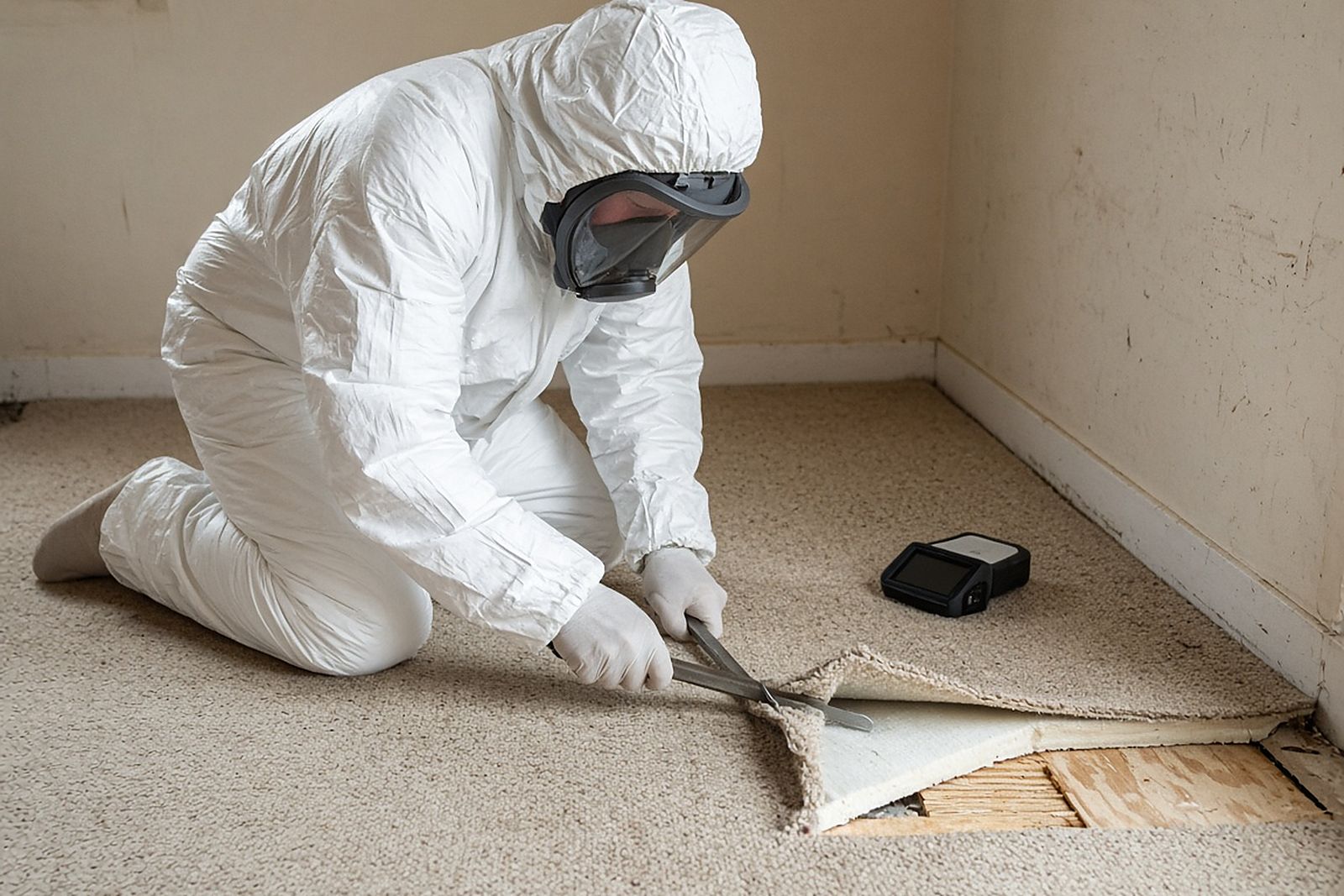
Technician in a full-face respirator cutting back carpet and pad to expose the subfloor
Illustrative photo, not a job record. Technician in a full-face respirator cutting back carpet and pad to expose the subfloor.
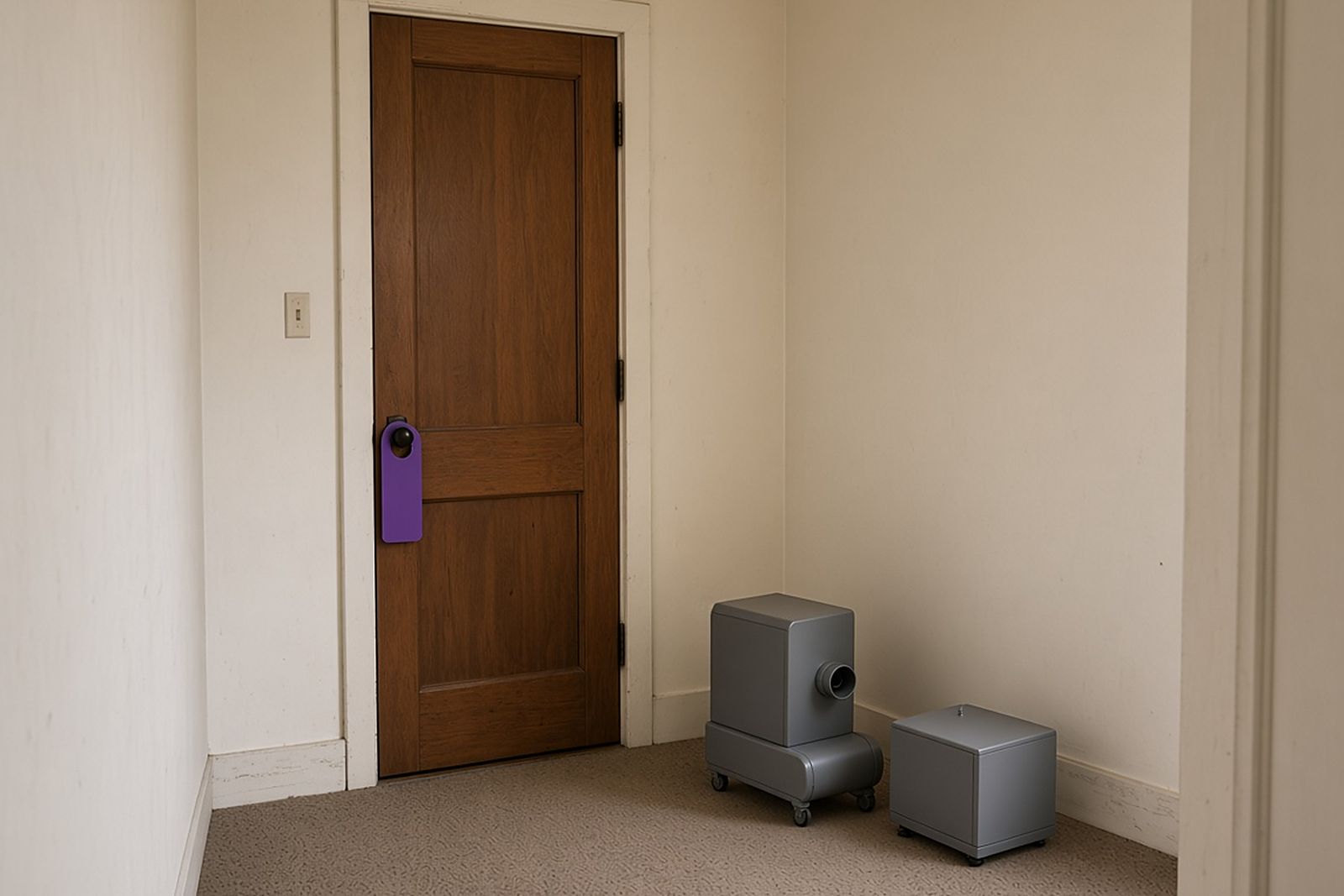
Air-filtration and odor-control units staged outside a closed door with a do-not-enter tag on the handle
Illustrative photo, not a job record. Air-filtration and odor-control units staged outside a closed door with a do-not-enter tag on the handle.

Unattended Death Cleanup figures to keep in mind

National and research figures, not Stamford data. Local conditions, rules and providers vary; use these for scale and context only.

1 in 3

About 1 in 3 U.S. adults report feeling lonely and about 1 in 4 report lacking social and emotional support.

Read with care: Applies to all adults; CDC notes older adults are at higher risk but gives no age-specific figure here.

Source: CDC (2024)United States, adults, national survey estimates

2.6%

Hoarding disorder affects about 2.6% of the population, with higher rates in people over 60.

Read with care: Prevalence estimates range 2-6% across studies.

Source: American Psychiatric Association (2024)General population prevalence estimate

$200-$300 per hour

Fixr's 2025 guide lists unattended death cleanup at $200 to $300 per hour and hoarding cleanup at $25 to $150 per hour or about $1,000 per day.

Read with care: Fixr figures are editorial cost estimates compiled from contractor and industry data, not a statistical survey of completed jobs; local prices vary widely.

Source: Fixr (2025)United States, residential biohazard cleanup estimates, January 2025

These figures are public research and agency data, not this network's own job records. Keep each number with its population, year and limits; none of them predicts cost, timing or outcome at a specific property.

Plan before you reach out

Use the first 24 hours planner for immediate steps and the provider vetting checklist to confirm any Stamford provider's training, insurance and waste path in writing.

What research has found

Findings from published studies of people and properties in situations like this one. They describe what researchers observed in a specific group; they are not predictions for your case.

Encountering the body at the site was not significantly associated with more nightmares or intrusive memories.
Who was studied: Same 666-parent Swedish cohort as S004; 147 encountered the body and 512 did not.Limits: Not independent of S004; site discovery differs from later formal viewing; no proof of harmlessness.Encountering the Body at the Site of the Suicide: A Population-Based Survey in Sweden (2017)
Family or friends were the most common initial information source for both claimant groups.
Who was studied: 765 UK Bereavement Support Payment (BSP) and 764 Funeral Expenses Payment (FEP) claimants; January 2021 interviews.Limits: Historical benefit-service experience, not current entitlement; entirely proxy-completed applications excluded.Bereavement services customer experience survey report (2021)

Unattended Death Cleanup community polls

Poll results

Every count is a real visitor vote; nothing is seeded or padded. One vote per poll per device, and you can change your answer.

Your experience

As a landlord, how long would you wait for the tenant's family before arranging cleanup yourself?

No visitor votes yet
Process

Which part of an unattended death project would you find hardest to manage?

No visitor votes yet

Planning cleanup in Stamford?

Send a short message about the property to the follow-up inbox. A coordinator can reply by email with next steps.

Your request is sent to the follow-up inbox. A coordinator can reply by email.

If anyone is hurt or in danger, call 911 first.