Short answer
After an unattended death, a medical examiner or coroner decides when the home is released, and state probate or landlord-tenant law decides who can authorize cleanup. OSHA or a state plan protects workers, federal DOT rules cover waste transport, and states control most medical waste disposal. Local health, code enforcement and building offices may add requirements, especially if a property has been declared unsafe.
Many systems, one home
When someone dies alone and is not found for some time, several systems become involved at once. A death investigator determines what happened. A court or state law determines who can act for the person who died. Worker safety agencies protect the cleanup crew. Waste regulators decide how contaminated materials leave the home. Local offices may weigh in on whether the building is safe to occupy.
No single agency oversees all of this, and the rules differ by state and often by county. That can feel overwhelming, especially for relatives or executors handling affairs from a distance.
The good news is that you do not have to master every requirement. Knowing the layers simply helps you ask the right questions and recognize a provider who understands them.
Who releases the home after an unattended death?
Most unattended deaths are reported to a medical examiner or coroner, who determines the cause and manner of death. These offices handle an enormous volume of cases. In 2018, according to the Bureau of Justice Statistics, offices accepted 605,000 of the more than 1.3 million deaths referred to U.S. medical examiner and coroner offices for investigation.
The system itself is decentralized. According to the same Bureau of Justice Statistics report, nearly 2,040 medical examiner and coroner offices operated in the United States in 2018, and only about 17% were accredited. Some states use appointed medical examiners, others use elected coroners and some mix both. Practices for releasing a home can differ accordingly.
Cleanup should begin only after the investigating office, and law enforcement if involved, has released the property. If you are unsure, call the office handling the case and ask for confirmation.
The investigating office may also collect medications, firearms or documents from the home. Those items are not part of the cleanup, and the office can tell the family how and when they may be returned or released.
Legal authority to hire a cleanup company
Authority depends on state law and the circumstances. It may rest with a named executor, a court-appointed administrator, next of kin, a landlord or a property manager. When no family can be found, some counties appoint a public administrator to handle the estate.
Many providers require written authorization from someone with legal standing before they start. In a rental, the landlord may authorize cleaning the unit while the family decides what to do with belongings. In an owned home, the executor or administrator usually signs.
If you are not sure whether you have authority, an estate attorney, the probate court clerk or the landlord can help clarify. Acting without authority can create conflicts with other relatives or the estate later.
Timing can be tight. The home may need attention before a court has formally appointed anyone, particularly when odor or insects affect neighbors. In some places, an attorney can seek temporary authority, or a landlord can act under the lease. Ask for guidance rather than guessing, because the answer depends on the jurisdiction.
Federal and state rules for the work and the waste
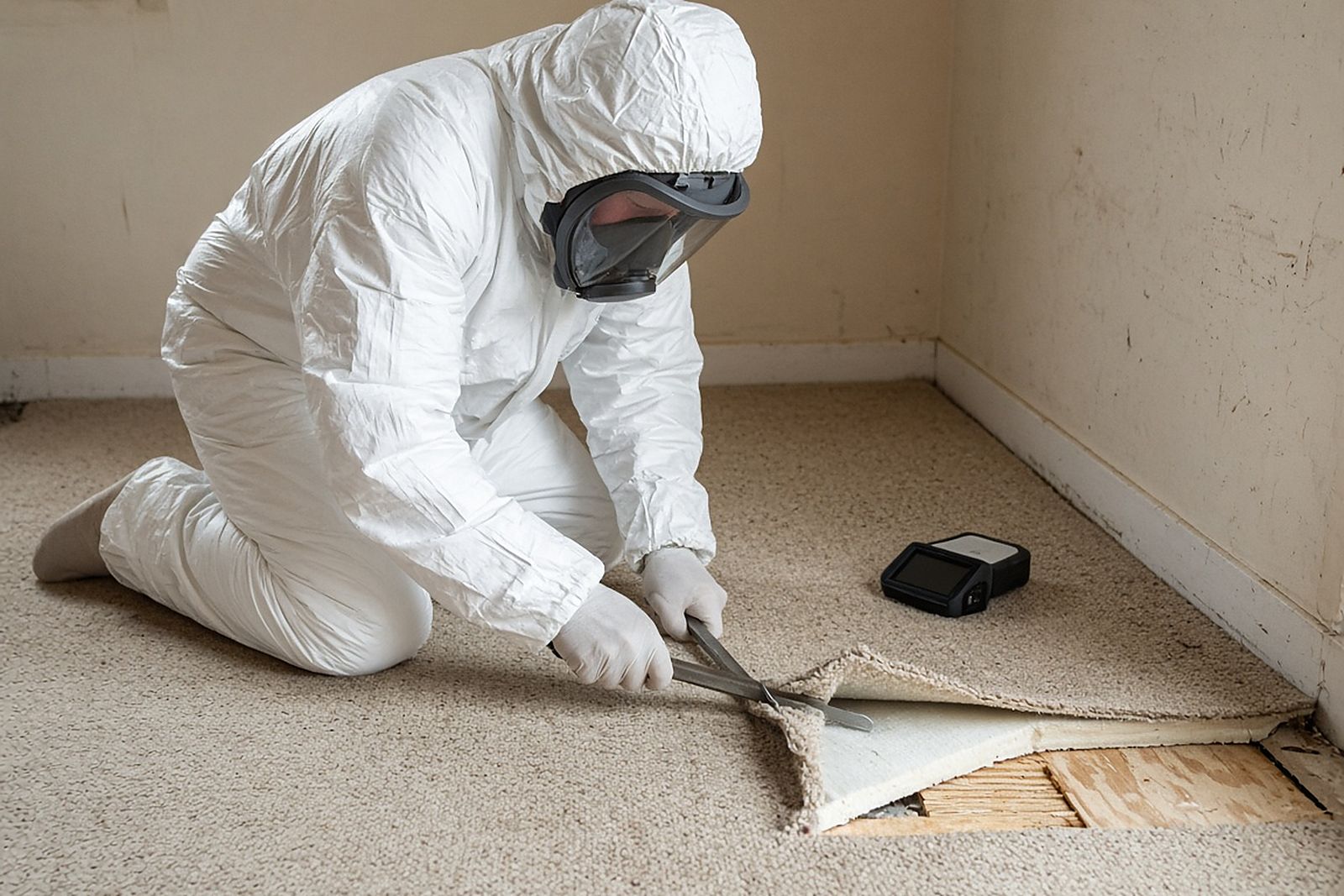
Federal OSHA standards protect the crew. The Bloodborne Pathogens Standard governs how workers handle blood and body fluids, including those released during decomposition. The respiratory protection standard is especially important in these homes, since odor, particles and cleaning vapors affect air quality. Other standards address protective equipment and chemical hazards.
Some states run their own occupational safety plans, which replace federal enforcement for private employers and must be at least as effective as federal rules.
Federal DOT rules govern how regulated medical waste is packaged, labeled and transported on public roads. They apply whether the cleanup company hauls its own waste or hires a licensed transporter.
Families sometimes ask whether these federal rules mean a government agency will inspect the cleanup. Inspections are uncommon for any single job. The rules are enforced mainly through the company's own programs, records and training, which is why asking a provider about them is so useful.
States hold most of the authority over what happens to contaminated materials. EPA reports that the federal Medical Waste Tracking Act regulations expired on June 21, 1991, leaving medical waste primarily regulated by state environmental and health departments.
Unattended death cleanups can produce large volumes of saturated materials: mattresses, upholstered chairs, carpet, pad, subfloor sections and sometimes drywall. Your state decides whether these must go to a permitted medical waste treatment facility, how they must be packaged and whether the hauler must be registered.
Some states also require cleanup businesses to register or follow specific procedures for trauma or death scene work. A provider should be able to name the state agency that oversees its disposal and supply records showing where the waste went.
- Classification of contaminated materials as regulated waste
- Packaging, storage and transport requirements
- Permitted treatment and disposal facilities
- Registration of haulers or cleanup businesses, where required
Local rules, and how the layers stack up
Local agencies are often more involved after an unattended death than after other biohazard events. A county or city health department may receive complaints about odor or insects from neighbors. Code enforcement may inspect a property that appears unsafe, and in serious cases a home can be posted as unfit for occupancy until conditions are corrected.
When a property has been posted, the local agency may require specific steps or documentation before lifting the order. Building departments may require permits if subflooring, joists or walls are removed and replaced.
In apartment buildings and condominiums, associations and property managers may set rules for access, elevator use, waste staging and work hours. Local pest control rules can also apply if insect activity has spread.
Utilities can matter too. If power or water was shut off after the death, crews may need them restored to run air filtration, lighting and cleaning equipment. The executor or landlord usually arranges this, and some utilities require proof of authority before reconnecting service.
In practice, the layers tend to arrive in a predictable order. The coroner or medical examiner investigates and releases the home. If the only relative lives far away, the probate court may need to appoint an administrator before anyone can formally act for the estate, and an estate attorney may seek temporary authority if the work cannot wait.
Meanwhile, a neighbor's odor complaint can lead the county health department to post the house until it is cleaned. The crew works under federal OSHA or a state plan, with respirators chosen through a hazard assessment. Saturated furniture, carpet, pad and subfloor are packaged under state medical waste rules and taken by a hauler, registered where required, to a permitted facility. If a floor joist has to be replaced, the repair may need a county building permit.
At the end, photos, disposal records and a completion report give the executor something to send the health department so it can lift the posting.
Confirming what applies at the home's address
Start with the office that investigated the death to confirm release. Then contact the probate court or an estate attorney to confirm authority. Your state health or environmental agency publishes medical waste rules. OSHA's website shows whether the state runs its own safety plan. The local health department and building office can explain their requirements.
Ask each provider to explain the rules it follows at that address. A knowledgeable company will answer clearly and may already have worked with the same local offices. Rules vary by state and county; verify with the local authority.
Keep every document in one place: the release confirmation, proof of authority, the cleanup agreement, disposal records and the completion report. Estates often take months to settle, and these papers may be requested by the court, an insurer, a buyer or other heirs.
- Has the medical examiner or coroner released the property?
- What written authorization do you need from me?
- Which state agency regulates the waste you will remove?
- Will you provide disposal records and a completion report?
- Will the county or city require a permit or a health clearance for this work?
- How will you coordinate with the landlord or association?
What should families remember through all of this?
Unattended deaths often happen to people who lived independently and valued their privacy. A delay in discovery is not a failure on anyone's part. The rules described here exist to protect workers, neighbors and future occupants, not to assign blame.
Let the professionals handle the technical requirements. Your part is to confirm authority, choose a provider you trust and take care of yourself as you grieve.